Taekwondo White Rock: The Essential 2026 Guide to Belts and Forms
October 27, 2026•22 min read•Boxing & Martial Arts, Training Tips
If you have been searching for taekwondo White Rock classes, you have probably noticed that most pages tell you what taekwondo does for you and very little about what taekwondo actually is. This taekwondo White Rock guide fixes that. It covers the Korean roots of the art, the words you will hear on your first night, the Olympic sport versus traditional practice, and how the belt path runs at Seung-ri Academy, which teaches inside Kingdom Athletics at 1493 Johnston Road.
We have written plenty about martial arts in general. Our comparison of martial arts styles in South Surrey helps families choose between disciplines, and our guide to ATA taekwondo for kids focuses on children. This article is the taekwondo White Rock reference we wish every new student read before stepping onto the mat, whether they are four, fourteen or fifty-four.
What Taekwondo White Rock Beginners Should Know First
Taekwondo is a Korean martial art built around the kick. The name breaks into three syllables: tae (to strike or break with the foot), kwon (to strike or break with the fist) and do (the way, or the path). Put together, it means something close to “the way of the foot and the fist.” The order is telling. Hands matter, but legs lead.
That emphasis shapes everything about how a taekwondo White Rock class feels compared with a boxing class down the hall. You will stretch more. You will spend time on one leg. You will learn to chamber a kick, which means lifting the knee into a loaded position before the foot shoots out, and you will repeat that chamber hundreds of times before it looks easy. Balance, flexibility and hip control become the currency of progress.
Three things tend to surprise new students:
- How much of it is quiet practice. Forms, stance work and slow kicks make up a large share of training. The flashy spinning kicks you see online sit on top of a very plain foundation.
- How structured the room is. Bowing, lining up by rank and answering the instructor are not theatre. They make a room full of moving legs safe and efficient.
- How visible progress is. A belt system turns a long, abstract goal into a series of short, concrete ones. Most people find that motivating in a way a gym membership alone rarely is.
If you want to see where taekwondo sits in our full program, the martial arts program page lists every belt level, and the weekly class timetable shows when each one runs. Kids classes begin from 3:15 in the afternoon on weekdays, and the Adult/Teen class for ages 13 and up runs on weekday evenings at 6:30.
Where Taekwondo Comes From: The Korean Roots
Taekwondo is young as a formal system and old in its influences. Understanding both halves makes the traditions in class easier to respect, because you know what they are carrying forward.
Older Korean foot fighting
Korea has a long history of kicking arts. The best documented is taekkyeon, which UNESCO added to its Representative List of the Intangible Cultural Heritage of Humanity in 2011. UNESCO describes it as a traditional martial art that uses fluid, rhythmic, dance-like movements to strike or trip an opponent, where the feet play as important a role as the hands. It also notes that a true master knows how to make an opponent withdraw without causing damage.
Taekkyeon and taekwondo are separate arts today, but the value placed on skilled kicking, and on restraint, runs through both. Every taekwondo White Rock student inherits that idea the first time an instructor asks for control over power.
The post-war system
Modern taekwondo took shape in the middle of the twentieth century. The Canadian Olympic Committee’s taekwondo history page notes that it began to develop as a sport on the Korean peninsula in the aftermath of the Second World War. During those years, several Korean schools, called kwans, unified their teaching under one name and gradually built the shared curriculum of stances, blocks, kicks and forms that students around the world learn today.
Two organisations grew out of that period and still shape the art. The Kukkiwon in Seoul serves as the world headquarters for the traditional side and registers black belt ranks. World Taekwondo governs the Olympic sport. Other large groups, such as the International Taekwon-Do Federation and the American Taekwondo Association, teach their own curricula and forms. None of them is the only “real” taekwondo, and a good school will tell you plainly which tradition it follows.
From Seoul to the Olympics
Taekwondo appeared as a demonstration sport at the Seoul 1988 Games, returned as a demonstration sport at Barcelona 1992, and gained full medal status at Sydney 2000. Canada won a medal in that very first Olympic tournament, when Dominique Bosshart took bronze in the women’s heavyweight division. So the sport behind every taekwondo White Rock class is one Canadians have competed in at the Olympic level for a quarter of a century.
The Vocabulary You Will Hear on Day One
Korean terms are part of the culture of every class. You do not need to memorise them before you arrive, but knowing the core words will make your first few weeks far less confusing. Here are the ones you will hear most often in any taekwondo White Rock dojang.
| Term | Meaning | What it looks like in class |
|---|---|---|
| Dobok | The training uniform | A loose jacket and trousers, traditionally white, tied with your belt |
| Ti (or tti) | Belt | Colour shows your rank; you tie it the same way every class |
| Dojang | Training hall | The mat space; you bow on entering and leaving |
| Poomsae | Forms | A set sequence of blocks, strikes and kicks against imaginary opponents |
| Kyorugi | Sparring | Controlled exchanges with a partner, introduced gradually by rank |
| Kyeokpa | Breaking | Striking boards to test power and accuracy, usually at gradings or demos |
| Kihap | Focused shout | A sharp yell on a committed technique that tightens the core |
| Charyeot and kyeongnye | Attention and bow | The start and finish of drills, partner work and class |
| Sabeom | Instructor | Many schools use this or the instructor’s name; ask what your school prefers |
The dobok
The dobok is designed to move. It is cut loose at the hips and shoulders so high kicks do not bind. Keep jewellery at home, and treat a clean dobok as a small daily sign of respect for your partners. Ask the front desk at the gym what uniform is expected at your level before buying anything.
The belt
Your belt holds the jacket closed, but its real job is to communicate. Colour tells the instructor what you should know, what drills are safe to give you, and who you should partner with. Belt names at Seung-ri Academy show up directly in class titles, such as Camo-Purple BBT and Blue-Red BBT. Learn to tie your belt flat and square in your first week.
Poomsae
Poomsae are the choreographed patterns that carry taekwondo’s technical library from one generation to the next. Kukkiwon-style schools teach eight Taegeuk forms for coloured belts, followed by black belt forms, while other organisations teach their own sets. Practising them builds balance, memory and precision, and they are ideal home practice between classes. Ask your instructor which forms your school uses before you start learning from videos.
Kyorugi
Kyorugi is sparring, and it is the part most people picture when they hear the word taekwondo. In reality, it is introduced carefully and progressively. Most schools begin with step sparring, where partners exchange pre-arranged techniques, before moving to light, controlled free sparring with protective gear. How and when sparring is introduced varies by school and by rank, so ask our coaches how it works in your class rather than assuming.
Olympic Sport vs Traditional Practice
One of the most common questions we hear from taekwondo White Rock newcomers is whether they are signing up for a combat sport or a traditional martial art. The honest answer is that taekwondo is both, and good schools teach the two sides as complements rather than rivals.
The Olympic sport is fast and athletic. According to Team Canada’s taekwondo overview, competitors score by landing kicks and punches on an electronic trunk protector and kicks to the head, with more points for turning kicks. Matches are best of three rounds of two minutes each. Taekwondo Canada, the national sport organisation recognised by the Canadian Olympic Committee, oversees the competitive pathway here at home.
Traditional practice places more weight on forms, self-defence applications, breaking, etiquette and long-term development. Most taekwondo White Rock adults, who will never enter a tournament, find their lifelong practice here.
| Olympic (sport) focus | Traditional focus | |
|---|---|---|
| Main goal | Score points under competition rules | Develop the whole practitioner over years |
| Core training | Footwork, fast kicks, timing, fitness | Poomsae, basics, self-defence, breaking |
| Equipment | Trunk protector, headgear, shin and forearm guards | Dobok and belt, with pads for partner drills |
| Pace | Explosive, short rounds | Measured, technical, repetitive |
| Who it suits | Competitive teens and adults | Anyone who wants steady, lifelong progress |
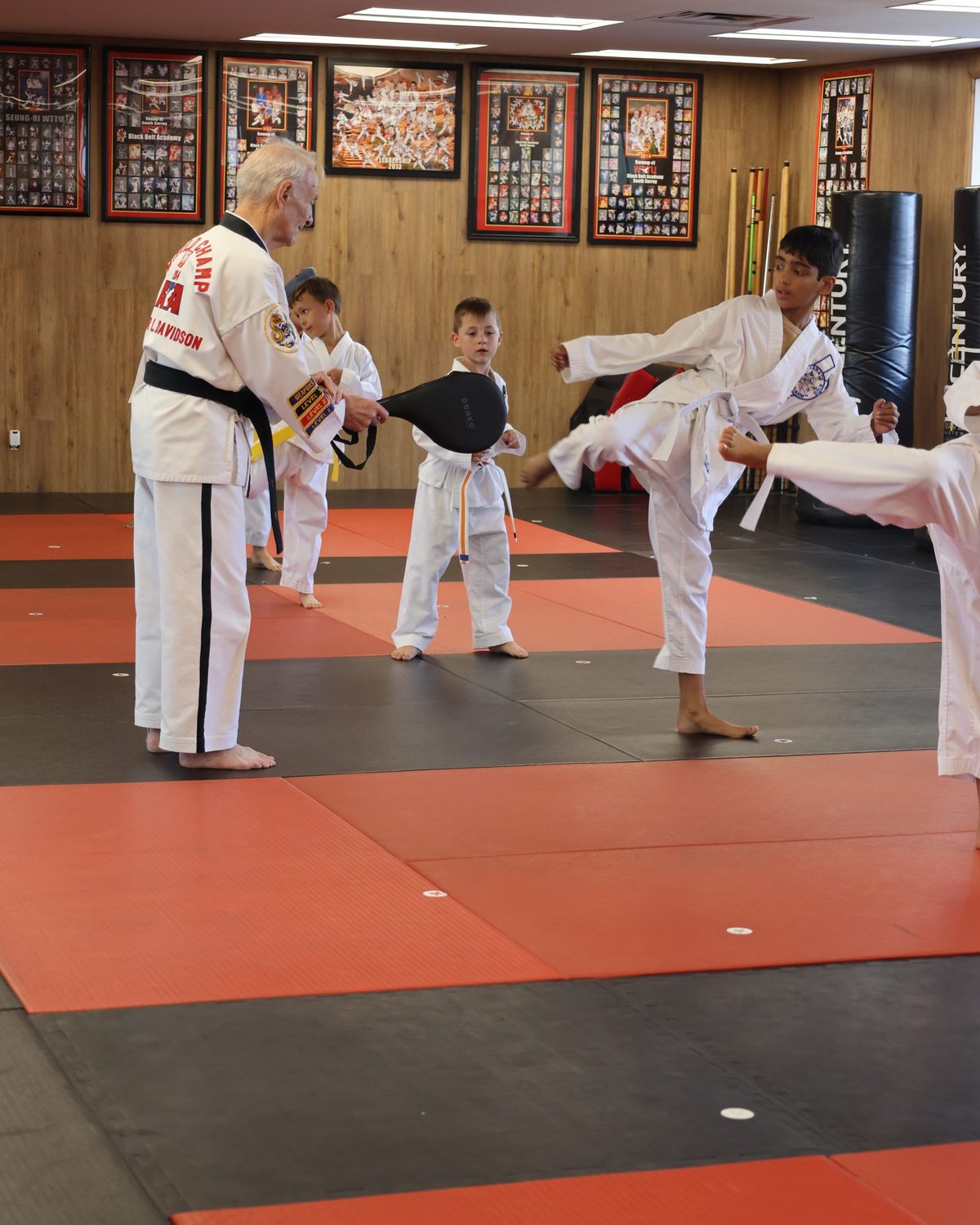
At Seung-ri Academy, the belt classes build traditional foundations, and there is a separate Competition Class on the timetable for students interested in that side of the art. Ask Lorne Davidson, our taekwondo coach, how students are selected for it and what it involves.
The rules of the sport are not static, either. A study of more than 2,600 athletes across three World Taekwondo Championships found that injury patterns shifted as competition rules changed, with fewer head and neck injuries and a decline in severe injuries. A highlight reel from ten years ago may not match how the sport is scored now.
The Taekwondo White Rock Belt Path at Seung-ri Academy
Seung-ri Academy runs its belt-level classes Monday to Friday in the afternoons and evenings at the same Johnston Road address as our boxing program. Each class is built for a stage of the journey rather than a birthday. Here is how the taekwondo White Rock belt path reads from start to finish.
- Tigers (ages 4 to 6). The entry point for young children. The focus at this age is balance, listening, coordination and confidence, delivered through playful drills.
- K4K Basic (ages 7 to 9). The foundation class for school-age kids, where stances, blocks and kicks start to join up into combinations and early forms.
- Camo-Purple BBT. A belt-group class for students who have moved past the beginner ranks and are sharpening technique and fitness.
- Junior Leadership. For young students ready to model good habits and help younger classmates, while their own training keeps advancing.
- Blue-Red BBT. A class for higher coloured belts, where precision, defence and more complex combinations take centre stage.
- Adult/Teen (ages 13 and up). The weekday evening class at 6:30 for teenagers and adults at any rank. This is where most grown-ups start.
- Black Belt. For students who have earned their black belt and continue refining forms, sparring and teaching skills.
- Leadership. Senior students learning to assist and lead classes.
- Masters Club. A class for dedicated senior students committed to the long game.
- Competition Class. For students training toward tournament performance.
- Legacy. The far end of the path, for students whose training has become a lasting part of the academy itself.
That structure means a child who begins in Tigers can, with years of consistent training, still be on the same mats as a Black Belt and then as a Leadership student helping the class behind them. It also means an adult who starts at 40 in the Adult/Teen class has a real path to follow, not a single class repeated forever. Our article on teen martial arts in White Rock covers the 13 to 17 stage in detail.
How long does each belt take? It depends on attendance, age and how quickly technique meets the next grading standard. Belts are earned, not scheduled, so ask Lorne for an honest estimate once he has seen you move.
For parents, the piece on how martial arts builds confidence in kids explains why the step-by-step belt path works so well for younger students, and our after school programs guide for South Surrey covers how afternoon classes fit into a family week.
What Your First Class Looks Like, Step by Step
Nerves before a first class are normal, and most of them come from not knowing what will happen. Here is the typical shape of a taekwondo White Rock class for a new student. Drills vary by level and instructor, so treat this as a map, not a script.
- Arriving. Come a little early. Shoes come off before the mat. If you do not have a dobok yet, wear comfortable athletic clothes that let you lift your knee to your chest without pulling.
- Bowing in. Students line up by rank, and the class opens with attention and a bow. As a new student you will stand at the end of the line. Watch the person next to you and copy them.
- Warm-up. Expect light cardio, joint circles and dynamic stretching for the hips, hamstrings and groin. This part matters more in taekwondo than in most sports because kicks load the hips through a large range of motion.
- Basics. The whole class moves through stances, blocks and punches together, often counting in Korean. Your job here is to copy the shape, not the speed.
- Kicking drills. Front kick, roundhouse kick and side kick are the usual first three. You may kick in the air, then at a hand-held pad.
- Forms or partner work. Depending on the day, the class may practise poomsae, step sparring, or target drills with a partner. New students are usually given the first movements of a beginner form.
- Cool-down and bow out. A short stretch, a closing bow and often a word from the instructor about focus for the week.
A few practical tips: bring water, trim your toenails (partners will thank you), tie long hair back, and tell the instructor about any injury before class starts. If you are an adult who has not trained in years, our list of beginner martial arts mistakes to avoid is worth five minutes of your time.
What to expect in your body afterwards
Expect sore hip flexors, inner thighs and calves for a day or two; a walk along the White Rock promenade the next morning helps. Sharp knee pain is not normal, so mention it at your next taekwondo White Rock class and have your kicking mechanics checked.
What Adults Get From Taekwondo Specifically
We have covered the general case for adult martial arts in our article on martial arts for adults in White Rock. Here we want to focus on what taekwondo in particular offers the adult body and mind, because it is quite different from boxing or grappling.
Hip mobility and flexibility you use every day
Most desk-bound adults lose hip range slowly and silently. Taekwondo trains it deliberately, several times a week, under load. Harvard Health notes that stretching keeps muscles flexible and helps maintain range of motion in the joints, and that sitting all day tightens the hamstrings. A kicking art is essentially a structured, progressive mobility program with a purpose attached, which makes it much easier to stick with than stretching alone.
Balance that is trained, not assumed
Every kick is a single-leg balance exercise. So is every turn in a form. Canada’s 24-Hour Movement Guidelines for adults 65 and older specifically recommend physical activities that challenge balance, alongside aerobic and strengthening work. Taekwondo delivers that in every class without needing a separate routine.
The research on older adults is encouraging but still early. A 2025 systematic review and meta-analysis found that adapted taekwondo and Muay Thai improved functional mobility in older people, while stressing that the level of evidence is low and more studies are needed. A 2026 study of 21 novice seniors aged 63 to 83 who trained twice a week for eight months reported improvements in aerobic endurance and coordination, though it had no control group.
Our honest reading: taekwondo is a reasonable, enjoyable way for older adults to train balance and coordination, not a guaranteed treatment. Taekwondo White Rock students over 55 may also like our guide to boxing for seniors in White Rock.
Memory and focus
Learning a form is a genuine memory task. You hold a sequence of movements, each with a specific stance, direction and technique, and perform it under an instructor’s eye. There is no room to think about work while you are counting turns. We wrote more about this in our look at the mental health benefits of martial arts.
A realistic dose of exercise
The Canadian 24-Hour Movement Guidelines for adults 18 to 64 recommend at least 150 minutes of moderate to vigorous activity a week plus muscle strengthening at least twice a week. Regular taekwondo White Rock classes with some home practice go a long way toward that target. The World Health Organization estimates that 31 percent of adults worldwide do not meet recommended activity levels, so a class you look forward to is a real advantage. For the calorie side of the story, see our article on martial arts and calorie burn.
Sparring Safety and How Kyorugi Is Introduced
Sparring is where taekwondo becomes a conversation, and it is also where most of the sport’s injuries happen, so it deserves a clear-eyed look from anyone weighing taekwondo White Rock classes.
A 2025 systematic review of injuries in high-performance taekwondo found that lower limb injuries, particularly to the foot and knee, were the most common, that contusions from direct contact were the leading type, and that most injuries were of low severity. Importantly, injury rates were generally higher in competition than in training. That study looked at elite athletes, not recreational taekwondo White Rock students, but the lesson carries: shins and feet take the knocks, so gear and preparation matter.
Here is what good sparring practice looks like in any school:
- Sparring is introduced by rank, starting with pre-arranged step sparring before any free exchange.
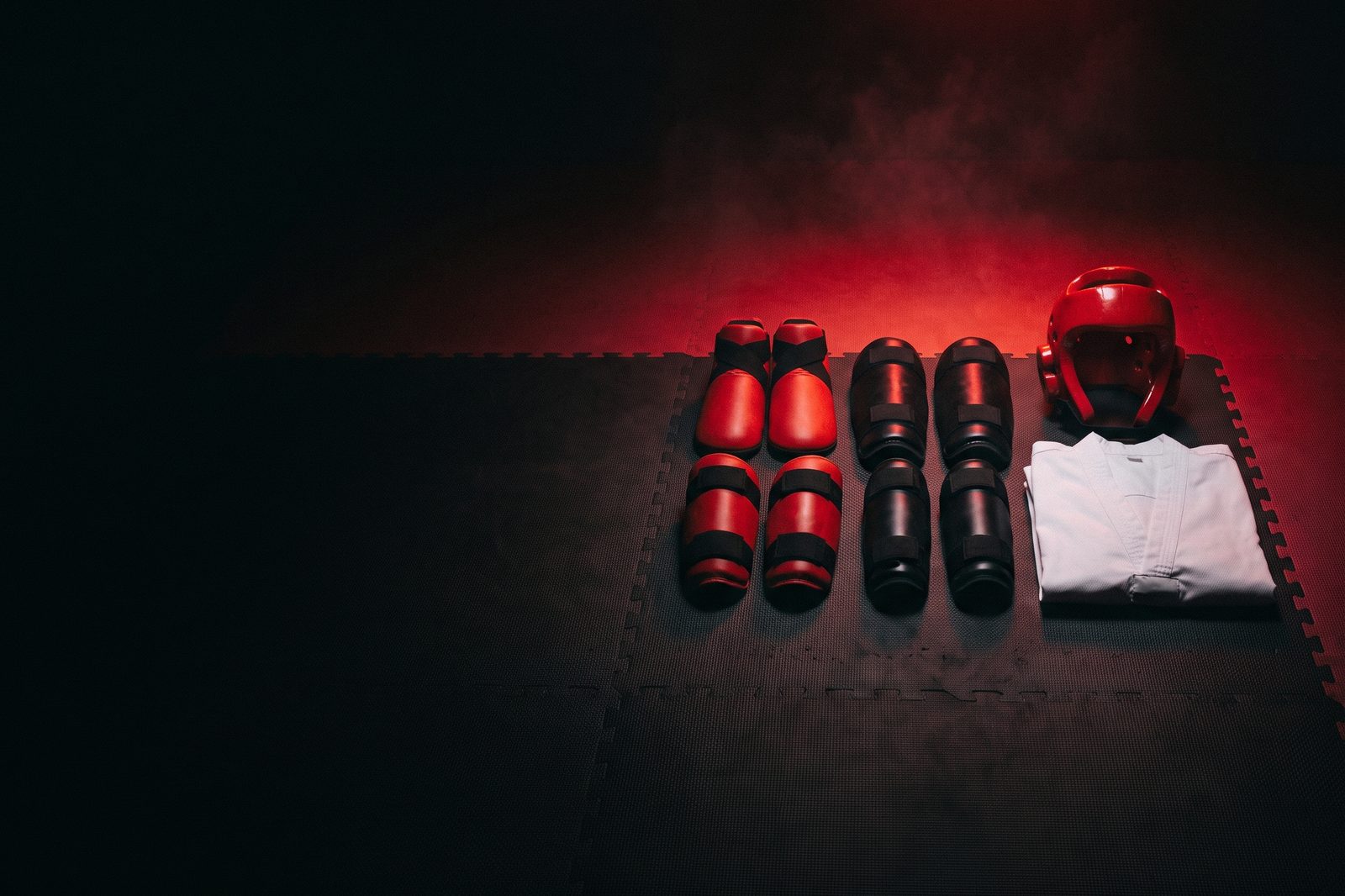
- Protective gear fits properly: foot and shin guards, forearm guards, a mouthguard, a groin guard and headgear where required.
- Partners are matched by size, rank and experience, and the instructor sets the contact level out loud.
- Any knock to the head stops the round and is taken seriously.
Taekwondo Canada maintains a dedicated concussion resource page for clubs, including a return to sport strategy. The national Canadian Guideline on Concussion in Sport, funded by the Public Health Agency of Canada, sets out how suspected concussions should be recognised and managed. Parents in particular should read it once. As for exactly when and how sparring happens in each Seung-ri Academy class, ask our coaches; the answer depends on the student’s rank and readiness.
A 12-Week Home Practice Plan for New Students
Class is where you learn. Home is where it sticks. This plan supports your taekwondo White Rock classes without overloading a beginner. Keep each session to 15 to 20 minutes, and rest if anything aches beyond normal soreness.
| Weeks | Focus | Home routine (3 times a week) |
|---|---|---|
| 1 to 2 | Stances and balance | Hold front stance and back stance 30 seconds each side; single-leg stand 3 rounds of 30 seconds per leg |
| 3 to 4 | Kick chamber | 20 slow knee chambers per leg for front, roundhouse and side kick; no extension yet |
| 5 to 6 | Full kicks, slow | 10 slow full kicks per leg per kick, holding the extension for 2 seconds |
| 7 to 8 | First form | Walk through your beginner form 3 times slowly, then once at class speed |
| 9 to 10 | Combinations | Jab, cross, roundhouse; front kick into punch; 3 rounds of 1 minute |
| 11 to 12 | Grading readiness | Full form twice, all kicks both sides, Korean terms for your level spoken aloud |
If you are coming back to exercise after a long break, HealthLink BC’s advice on getting started with more physical activity is sensible: set realistic goals, build gradually, and check with your health care provider first if you are an older adult, have a health condition, or have been inactive. You can also call 8-1-1 to speak with a qualified exercise professional.
Five Kicking Drills to Practise Between Classes
These drills need no equipment beyond a wall or a sturdy chair and a little floor space. They reinforce what your instructor teaches rather than replacing it, so always defer to the cues you get in class.
- Wall-supported chambers. Stand side-on to a wall with one hand on it. Lift the kicking knee to hip height, pivot the supporting foot, and return. Ten per side, slowly. This builds the pivot that protects your knee on roundhouse kicks.
- Slow-motion side kick. Chamber, extend over three seconds, hold for two, retract over three. Five per side. It exposes every balance leak in the movement.
- Front kick ladder. Kick to knee height, then hip, then chest, ten of each, keeping the upper body upright. The goal is control at each height, not maximum height.
- Stance transitions. Move from front stance to back stance and back again, ten times each side, keeping your head at one level. This is the backbone of every form.
- Counted combinations. Count aloud in Korean (hana, dul, set, net) while throwing a four-part combination your instructor has taught you. It trains rhythm and the vocabulary at once.
Stretch after these drills, when the muscles are warm: seated straddle, butterfly and lying hamstring stretches, 30 seconds each. It is the simplest taekwondo White Rock homework there is.
How to Evaluate a Taekwondo School
Whether you train with us or somewhere else, ask any school these questions before you commit. Our general checklist of questions to ask before signing a gym membership covers the business side; this list covers the taekwondo side.
- Which tradition do you follow? A clear answer (Kukkiwon, ITF, ATA or another) tells you which forms and ranking system you will learn.
- Who teaches, and what is their background? Taekwondo Canada supports National Coaching Certification Program training for taekwondo coaches, with levels from Assistant Instructor upward. It is reasonable to ask about coaching and first aid training.
- How are classes grouped? Classes grouped by age and rank, like the belt classes described above, keep drills appropriate and safe.
- How does sparring work? A school should be able to explain when it starts, what gear is required and how contact is controlled.
- How are gradings decided? Look for belts tied to demonstrated skill rather than time served.
- Can I watch or try a class? Five minutes of watching tells you more about the culture of a room than any website.
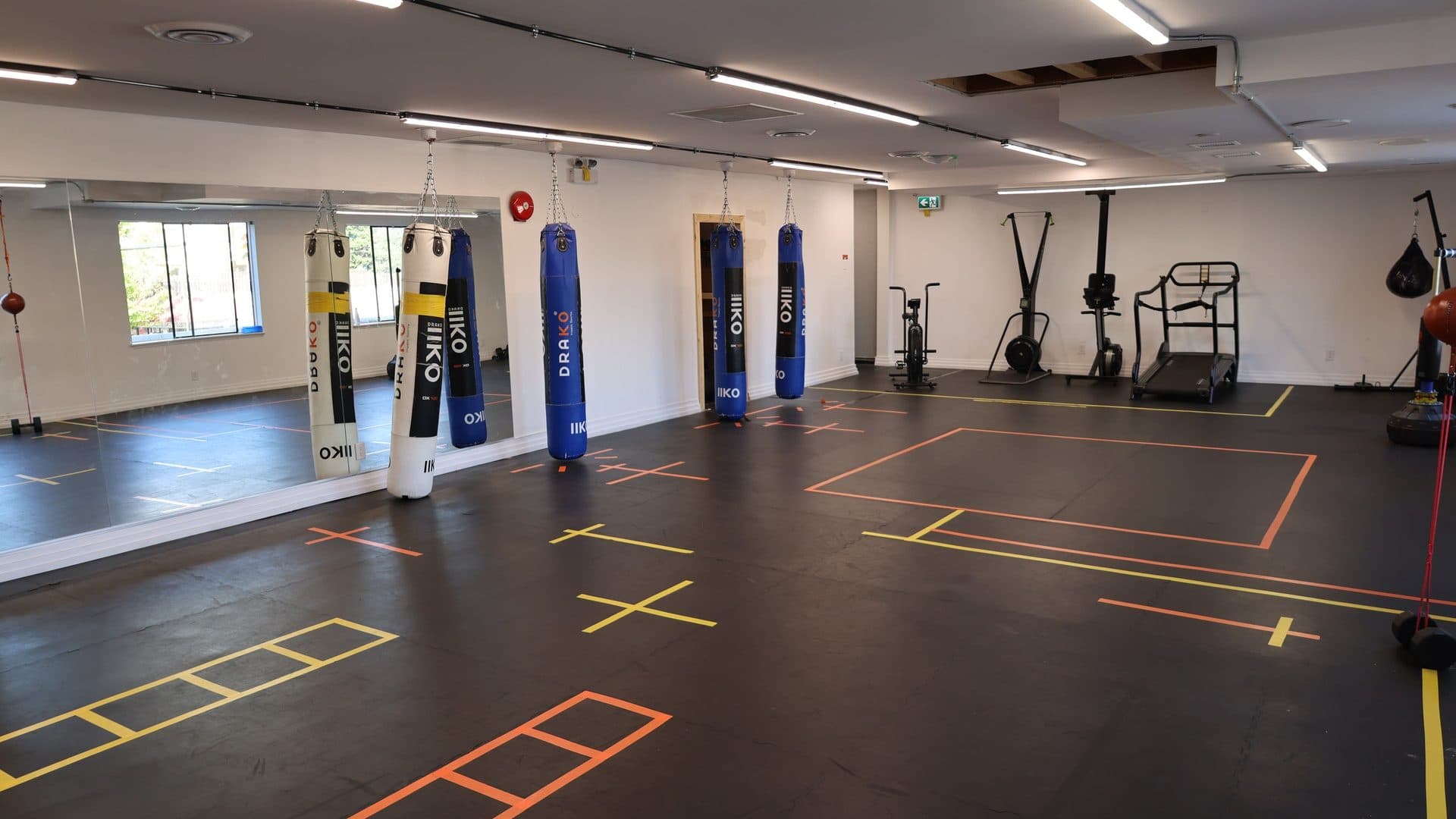
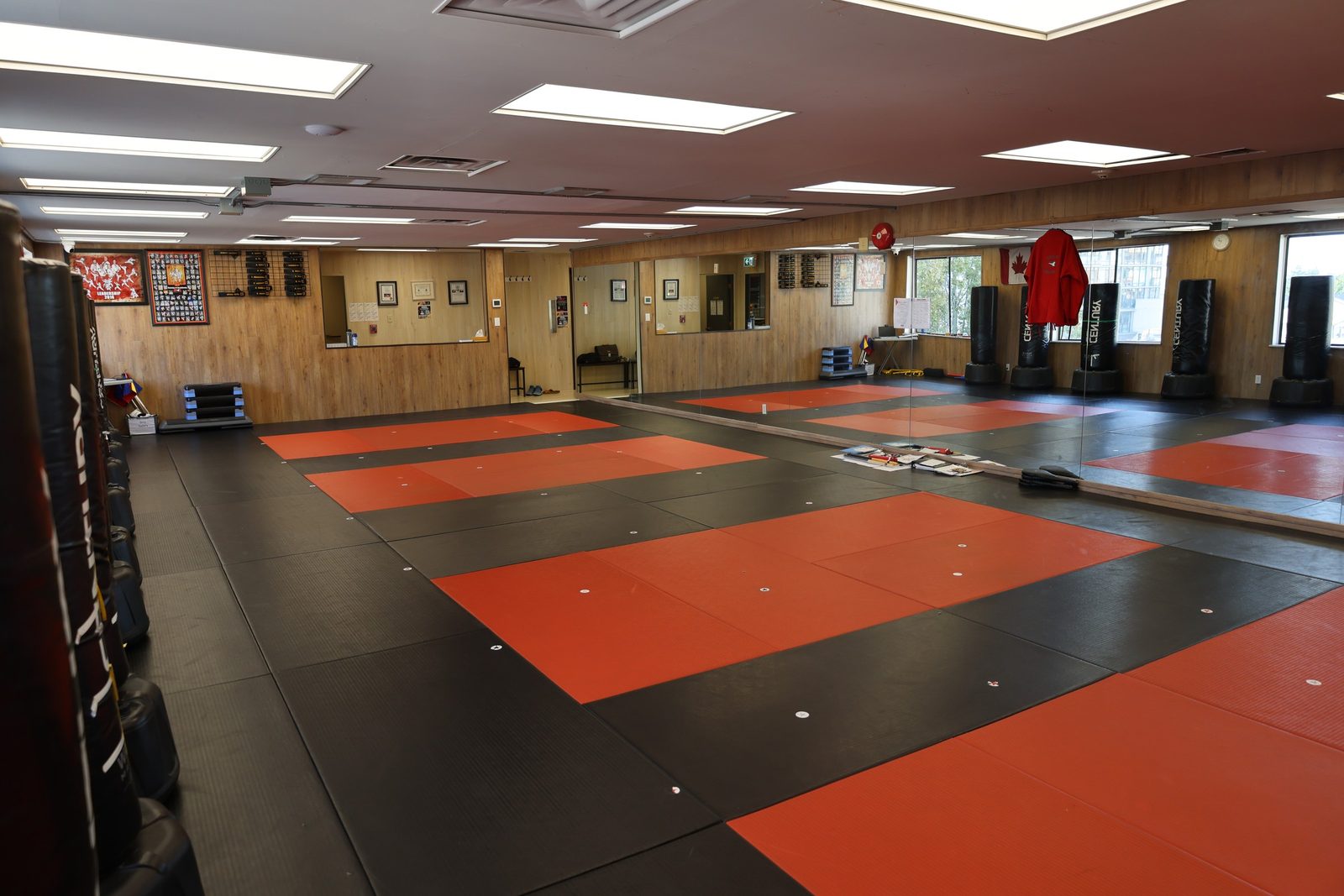
Finally, check that the room suits the art. Taekwondo White Rock students at Kingdom train on open mat space alongside heavy bags, a boxing ring and mirrors for checking technique.
Getting to Class From Around the Peninsula
Kingdom Athletics is at 1493 Johnston Road, Unit 101, in uptown White Rock. Johnston Road runs up from the waterfront to North Bluff Road, where it continues north as 152 Street past Semiahmoo Town Centre, so taekwondo White Rock and South Surrey families can reach it easily from across the Semiahmoo Peninsula.
- From Ocean Park and Crescent Beach: a short drive east to uptown for taekwondo White Rock classes.
- From Morgan Creek, Rosemary Heights and Grandview Heights: come south on 152 Street, which becomes Johnston Road once you cross North Bluff Road.
- From Sunnyside, Elgin Chantrell and Semiahmoo: a quick run along 16 Avenue or down 152 Street.
- From Highway 99 and King George Boulevard: take the White Rock exits and head toward uptown.
Evening taekwondo White Rock students in autumn and winter will be arriving and leaving in the dark and often the rain. Plan a few minutes extra on wet nights, and bring a dry layer for the trip home after a sweaty class.
For a post-class wind-down, the waterfront is close. The White Rock Pier, built in 1914, is lit up at night for community causes throughout the year, and a slow walk along the promenade is one of the nicest cool-downs on the coast.
Taekwondo and the Rest of Kingdom Athletics
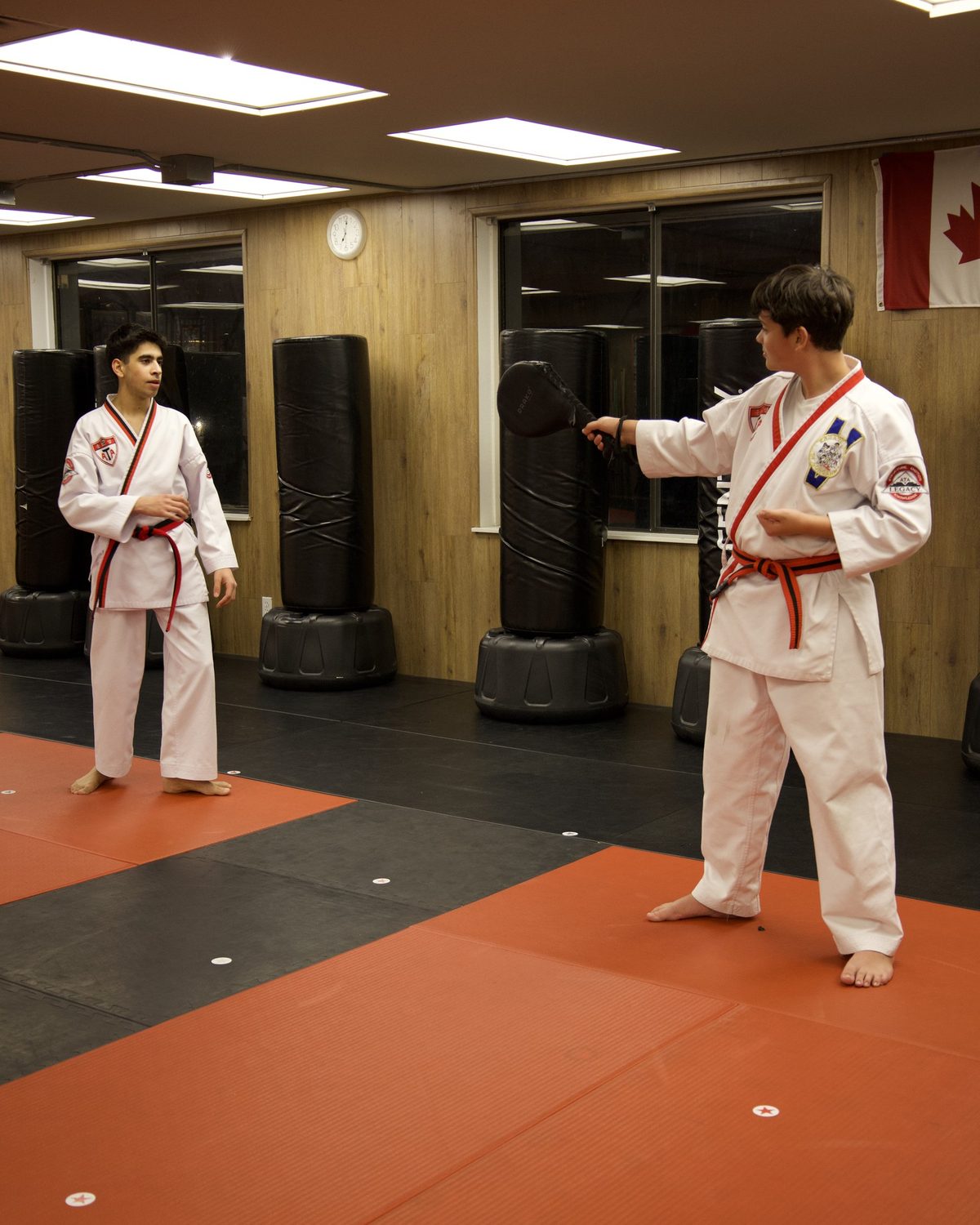
One flat monthly membership covers unlimited classes across all of our boxing and martial arts programs. For taekwondo White Rock students, that means adding a boxing or kickboxing class to your week without joining a second gym. The full list lives on our all classes page.
Cross-training works both ways. Taekwondo gives boxers hip mobility and balance; boxing gives taekwondo White Rock students sharper hands and a stronger engine. Some ways they fit together:
- The kickboxing program at 7:00 on weekday evenings blends punches, kicks, knees and combinations, a natural bridge for taekwondo students curious about striking from a different angle. Our post on starting kickboxing classes in White Rock explains the format.
- Boxing conditioning at 5:00 builds the fitness base that makes long taekwondo classes feel easier.
- Our strength training guide covers the muscle strengthening work that protects knees and hips for kicking.
- If personal safety is part of your motivation, our self defense classes guide for White Rock covers the practical skills that matter most.
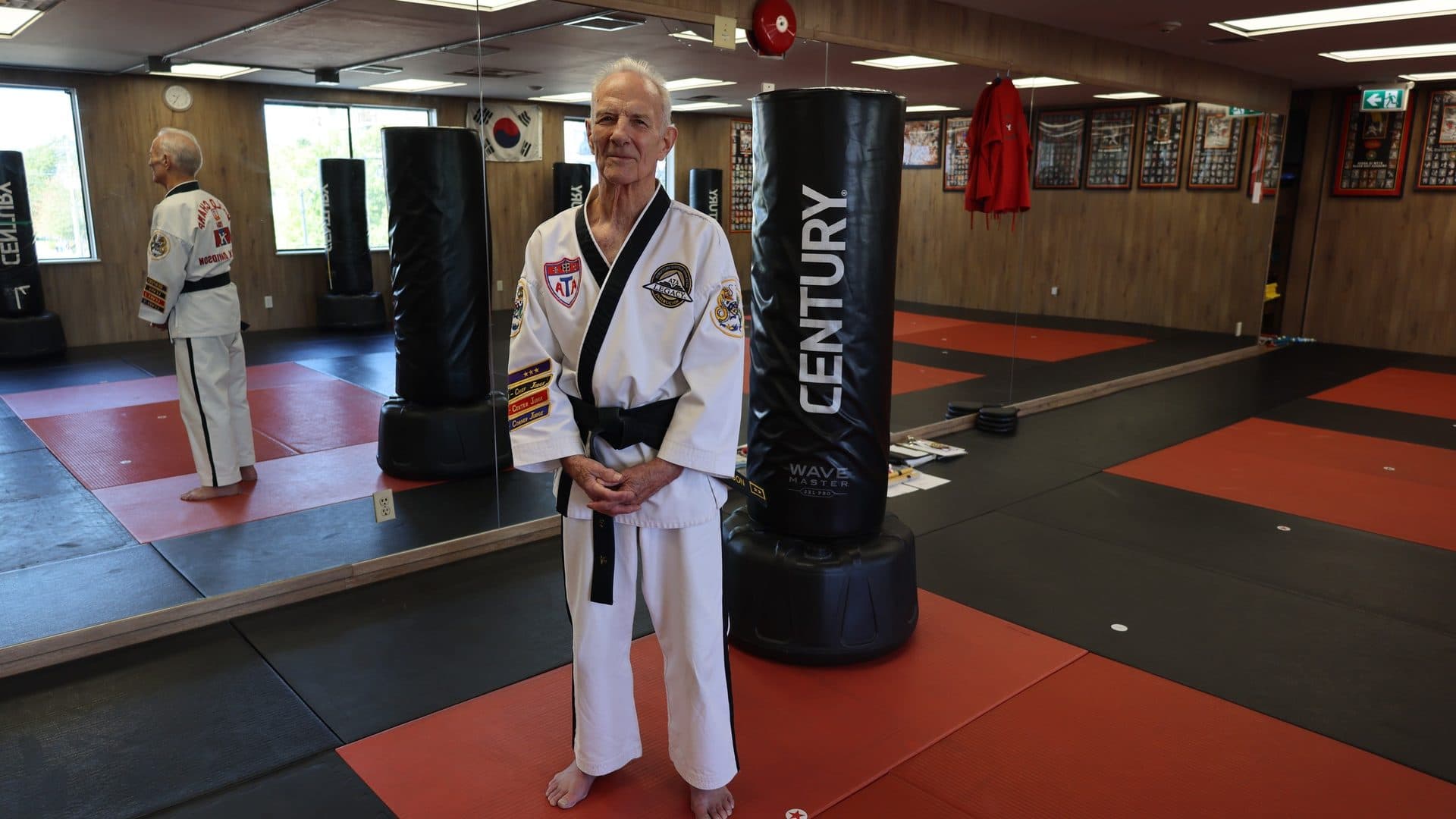
Lorne Davidson coaches taekwondo. Elsewhere in the building you will meet Matt, the owner, plus boxing and strength coaches Kenny, Spencer, Fabian, Arion and Khaila. Nick handles rehab, fascial release and stretching therapy; ask at the front desk how his work might support your kicking flexibility. Read why we built the gym this way on our mission page.
Across more than 20 years of experience and over 10,000 students trained, one pattern holds: people who find a class they enjoy keep coming back. ParticipACTION’s summary of the guidelines for adults 18 to 64 makes the same point in public health language, and the Heart and Stroke Foundation’s stay active advice lists better sleep and lower stress among the benefits of regular activity.
Taekwondo Questions We Hear Most
Am I too old to start taekwondo?
Almost certainly not. The Adult/Teen class welcomes taekwondo White Rock students aged 13 and up, and adults start at every age. HealthLink BC’s page on physical activity as you get older notes that activity can be safe for almost everyone, and suggests speaking with your health care provider if you have concerns. Tell the instructor about any old injuries before your first class.
Do I need to be flexible before I start?
No. Flexibility is something taekwondo builds, not something it requires. Kick at the height your body allows today. Height comes with months of consistent practice, and a controlled low kick is worth more than a wild high one.
What should I wear to my first class?
Comfortable athletic clothes that let you move your legs freely, and bare feet on the mat. Skip zips and jewellery. Ask at the front desk about getting a dobok once you decide to continue.
Is taekwondo good for self-defence?
It builds useful tools: distance management, powerful kicks, awareness and confidence. Like any art, it works best when practice includes realistic partner drills.
How long does it take to get a black belt?
It depends on the student, how often they train and how quickly they meet each grading standard. Belts at Seung-ri Academy are earned rather than scheduled, so ask Lorne for an honest estimate once he has seen you train.
Can my child and I both train?
Yes. Taekwondo White Rock kids classes run from 3:15 on weekday afternoons and the Adult/Teen class runs at 6:30 on weekday evenings, so many families use the same building on the same days.
Does the membership include boxing too?
Yes. One flat monthly membership covers unlimited classes across boxing and martial arts. For details, get in touch through the contact page or call (778) 237-5905.
Start Taekwondo White Rock Training This Week
Taekwondo rewards the people who show up. You do not need to be flexible, fit or fearless to begin taekwondo White Rock training; you need a willingness to be a beginner and a class on your calendar. Everything else is built one kick, one form and one belt at a time.
If you are ready to try taekwondo White Rock style, check the current class schedule to find the right belt class, then book your first class with our team or call us at (778) 237-5905. Come to 1493 Johnston Road, meet Lorne and the Seung-ri Academy students, and take your first bow on the mat. For more reading in the meantime, browse the Kingdom Athletics blog.