
Teen Martial Arts White Rock: 8 Proven Benefits for Ages 13 to 17
September 14, 2026•14 min read•Boxing & Martial Arts, Youth Sports
Thirteen to seventeen is the age range most sports programmes handle worst. Children’s classes feel babyish, adult classes feel intimidating, and a lot of teenagers quietly drop out of physical activity altogether somewhere in the middle. Teen martial arts white rock classes exist to catch exactly that gap. This guide covers what changes at this age, what teenagers actually get from martial arts beyond fitness, and how parents can support it without turning it into another source of pressure.
Why Teen Martial Arts White Rock Families Choose Works at This Age
Teen martial arts white rock programmes exist because adolescence is the point where most young people’s relationship with physical activity is decided for the next decade. Drop out rates climb sharply through the teenage years, particularly among those who were never the most naturally athletic.
Martial arts holds this group better than most sports for a few structural reasons. There is no bench. Nobody is cut from the team. Progress is measured against your own previous self rather than against the fastest kid in the room, and that changes everything for a teenager who has already decided they are not sporty.
It is also individual within a group. Teenagers get the social environment they need without the exposure of team selection, and for many that combination is the only thing that works.
Sport for Life has extensive Canadian material on long term athlete development and the adolescent drop off, and viaSport BC publishes provincial guidance on keeping young people engaged in sport that is worth any parent’s time.
What Actually Changes Between Thirteen and Seventeen
Coaching teen martial arts white rock classes well means understanding that teenagers are not scaled up children or scaled down adults.
Growth spurts wreck coordination. A teenager who was smooth at twelve can be visibly clumsy at fourteen. Limbs grow before the nervous system recalibrates. This is temporary, universal, and enormously demoralising if nobody explains it.
Strength arrives at different times. The spread within a single class can be extreme, and comparing yourself to a peer who happens to be eighteen months further through puberty is a recipe for quitting.
Injury risk shifts. Growth plates are vulnerable during rapid growth. Sensible programming avoids heavy loading and excessive repetition at exactly the point when teenagers most want to push.
Motivation becomes internal. Younger children train because parents arrange it. Teenagers train because they choose to, and the moment it becomes a parental project it usually ends.
The Coaching Association of Canada has good material on age appropriate coaching, and any programme working with this age group should be able to explain how it accounts for these realities.
Eight Things Teenagers Get Out of It
1. Confidence that is actually earned
Teenagers can spot hollow praise instantly. What they cannot dismiss is the evidence of having done something difficult they previously could not do. That is a very different foundation from being told they are great.
2. A physical outlet for a stressful age
School pressure, social pressure, and a nervous system that has not finished developing. An hour of hard physical work is a legitimate release valve. The Canadian Mental Health Association and the American Psychological Association both connect regular activity to reduced anxiety in adolescents.
3. Respect as a practised behaviour
Martial arts embeds courtesy into the structure of training rather than lecturing about it. You bow, you shake hands, you look after your partner. Behaviour practised twice a week becomes habit.
4. A peer group outside school
Perhaps the most undervalued benefit. A second social circle, with different dynamics and no history, is genuinely protective for teenagers having a difficult time at school.
5. Fitness without body image pressure
The goal is what you can do, not how you look. For an age group saturated in appearance messaging, training oriented around capability is a meaningful counterweight.
6. Practical awareness
Teenagers gain independence quickly. Basic awareness and de-escalation skills matter, and our self defense classes cover that ground directly.
7. Discipline that transfers
Showing up when you do not feel like it, drilling something dull because it matters later, accepting correction without collapsing. These are school and workplace skills wearing gym clothes.
8. Coaching from adults who are not parents or teachers
Teenagers often accept guidance from a coach that they would reject from home. That relationship is valuable and it is difficult to replicate elsewhere.
What a Teen Class Actually Looks Like
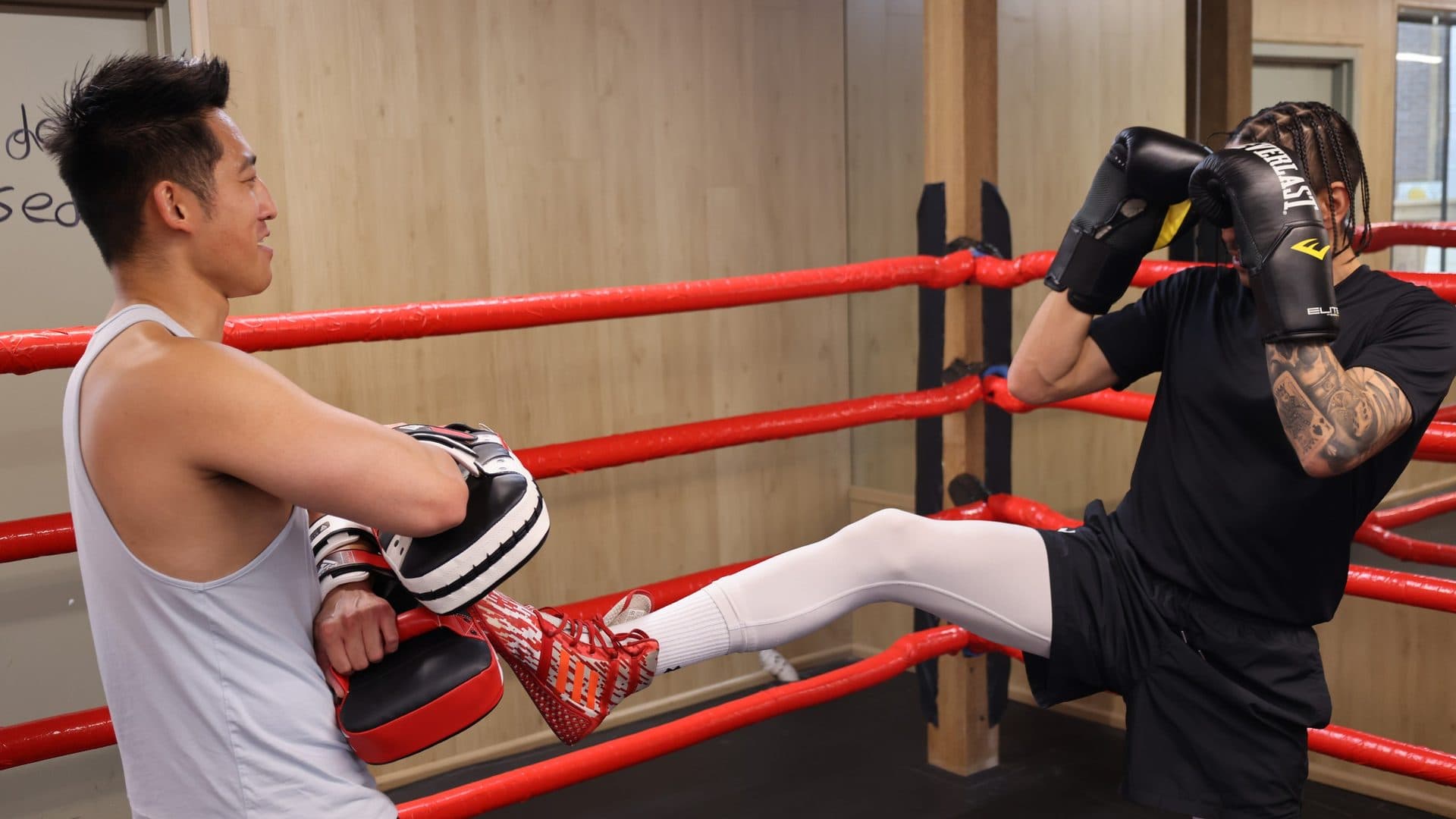
Teen martial arts white rock sessions sit deliberately between the children’s and adult formats.
In teen martial arts white rock sessions the warm up is real rather than a game. Teenagers find games patronising and will disengage immediately if the class feels like it was designed for eight year olds.
Technical work is taught with reasons attached. This age group wants to know why, and a coach who cannot explain the mechanics will lose them quickly.
Drilling is partner based, with rotation so nobody trains exclusively with one person. Managing that social dynamic is a large part of coaching this age well.
Conditioning is included but not used as punishment, which is a common and lazy coaching habit that teaches young people to associate exercise with discipline.
Contact, where it exists at all, is controlled, optional, and progressive. Nobody spars in their first months.
Safety Considerations Parents Should Ask About
Safety in teen martial arts white rock classes deserves direct treatment rather than reassurance, because the questions are reasonable.
Head contact. Ask exactly what the policy is for this age group. A responsible answer involves minimal to no head contact, protective equipment when there is any, and clear escalation criteria. Parachute Canada is the authoritative Canadian source on youth concussion and every parent should read their material regardless of sport.
Supervision ratios. One coach and twenty five teenagers is crowd control, not coaching.
Screening and safeguarding. Ask about background checks and safe sport policy. The Canadian Centre for Ethics in Sport sets out the national framework and any serious programme will know it.
Injury handling. Ask what happens when someone gets hurt. The specificity of the answer tells you how often they have thought about it.
Load management. During growth spurts, volume should be moderated. A coach who has never considered this is a coach to be wary of.
How Much Is Too Much
Teenagers in teen martial arts white rock programmes frequently over train, either through enthusiasm or through parental scheduling, and both cause problems.
Two to three sessions a week is a productive load for most. More than that, particularly alongside school sport, starts eating into recovery and sleep at the exact age when both matter most.
The Canadian Society for Exercise Physiology publishes movement guidelines specifically covering the five to seventeen age range, including the sleep component that is routinely ignored. The World Health Organization sets a comparable international benchmark.
Watch for warning signs. Persistent fatigue, dropping performance, recurring minor injuries, or a sudden reluctance to attend something they previously enjoyed. Any of these mean reduce, not push.
The Parent’s Role
With teen martial arts white rock training, the most useful thing most parents can do is slightly less than they instinctively want to.
Handle logistics, not performance. Get them there. Do not coach from the sideline. The coach is coaching, and a second voice creates confusion and resentment.
Ask about the experience, not the outcome. “Did you enjoy it” produces better conversations and better long term engagement than “did you win”.
Let them own it. The moment training becomes something they do for you, it acquires a completely different meaning and usually a shorter life.
Expect a dip. Almost every teenager wants to quit something at some point. Distinguish between a bad month and a genuine loss of interest, and do not treat every wobble as a decision.
Model it. Households where adults also train produce teenagers who keep training. Our adult martial arts guide covers what that looks like from the other side.
Martial Arts Alongside School Sport
Most teenagers in our teen martial arts white rock classes are also doing something else, and martial arts complements rather than competes with almost all of it.
The balance, coordination, and repeat effort conditioning transfer broadly. We have written about how this shows up in youth basketball, youth football, junior tennis, swim training and junior golf, and the underlying principle is the same across all of them.
The main thing to watch is total load. Two sports in season simultaneously plus martial arts is usually too much, and something has to give. Better that it is planned than that it arrives as an injury.
ParticipACTION makes a consistent case for varied activity over early specialisation, which is well supported and frequently ignored.
The Drop Out Problem Nobody Talks About
Participation in organised physical activity falls off a cliff between thirteen and seventeen, and the reasons are consistent enough to be predictable.
Competition intensifies. Teams get selective. Young people who were happily average at eleven find themselves on a bench at fourteen, and most of them simply leave rather than sit there.
Time pressure arrives. Coursework, exams, part time jobs, and a social life that suddenly matters enormously. Activities compete for a shrinking pool of hours.
Self consciousness peaks. Changing rooms, being watched, being bad at something in front of peers. For a lot of teenagers this alone is decisive.
Adult enthusiasm backfires. The more a parent visibly wants it, the less appealing it becomes. This is developmentally normal and almost impossible for parents to accept in the moment.
Martial arts addresses most of these structurally rather than through motivation. Nobody is cut. Progress is individual. The environment is small enough that being new is not exposing. And because the teenager chooses their own pace, adult enthusiasm has less to push against.
That does not make it immune. Teenagers quit martial arts too. But the failure modes are fewer and the recovery is easier, because there is no team to rejoin and no season to have missed.
Handling the Plateau
Every teenager hits a point, usually somewhere between month four and month ten, where progress slows and enthusiasm dips. Handled badly this is where they quit. Handled well it is where the real learning happens.
The plateau is normal and it is largely an artefact of how skill acquisition works. Early progress is rapid because everything is new. Later progress is slower because the remaining improvements are subtler and harder won.
What helps is reframing the measurement. Instead of asking whether they are getting better, ask what they can do now that they could not do in September. The answer is usually substantial and completely invisible from inside the process.
What does not help is increasing pressure, adding sessions, or making it a conversation about commitment. All three reliably accelerate the exit.
A short break is sometimes the right answer. Two weeks off with a clear return date is very different from drifting away, and most teenagers come back with renewed interest if the door is left obviously open.
Building Independence Through Training
One underrated function of a good teen programme is that it is a place where a young person is responsible for themselves in a low stakes environment.
They pack their own kit. They arrive on time or they do not. They tell the coach about an injury or they train around it badly. They manage a relationship with an adult who is neither a parent nor a teacher.
These are small responsibilities with real and immediate consequences, which makes them excellent practice. A forgotten mouthguard means sitting out a drill. That lesson lands harder and more usefully than any amount of reminding at home.
Parents who resist the urge to manage this find their teenager becomes noticeably more organised, and the effect tends to generalise beyond the gym within a few months.
What Progress Looks Like Over Two Years
Months one to three. Basic coordination and the vocabulary of the sport. Fitness improves quickly at this age. Most of the visible change is confidence rather than skill.
Months four to twelve. Technique becomes reliable. Sparring may be introduced, controlled and optional. Social bonds within the group solidify, and this is usually what converts a hobby into a commitment.
Year two. Genuine competence. Many begin helping newer students, which is where the biggest character development typically happens. Some pursue grading or competition, most do not, and both outcomes are fine.
Two years is also roughly the point at which training stops being something they are taken to and becomes something they arrange. That transition is the actual goal of the whole exercise.
A Word to Teenagers Reading This Themselves
If you found this rather than a parent finding it for you, a few things are worth saying directly.
You will be bad at it for a while. Everybody is. The people in the room who look competent were all uncoordinated at some point and most of them remember it clearly.
Nobody is watching you. This is the single most common fear and the least justified. Everyone is concentrating on their own combination, which they are also getting wrong.
You do not have to be sporty. Martial arts is one of very few physical activities where being unathletic is not a disadvantage in the long run, because the sport rewards patience and attention more than natural ability.
You do not have to fight anybody. Contact is optional in any decent gym, and plenty of people train for years without it.
And you can stop if you hate it. Trying something for a month and deciding it is not for you is not failure. It is information, and it is a great deal more useful than never having tried.
Costs, Commitment and Practicalities
Parents ask about this constantly and it rarely gets addressed straightforwardly, so here it is.
Expect a monthly fee rather than a per class charge. Most gyms work this way, and it usually works out better value if your teenager attends twice a week.
Be cautious about long contracts. Teenagers change their minds. A twelve month commitment signed in a burst of enthusiasm can become a twelve month argument. Look for monthly terms where possible.
Uniform and equipment costs are modest at first. Most programmes need very little in the first months, and anything requiring significant outlay can usually wait until you know they are staying.
Grading fees, where they exist, add up. Ask about the frequency and cost up front so it does not arrive as a surprise.
Factor in the driving. The real cost of a gym twenty five minutes away is not the fee. It is the four hours a week you will spend in a car, and that is what tends to end things by March.
The gym close enough to be easy will almost always beat the better gym that is a chore to reach. That is not a compromise, it is simply how adherence works for busy families.
When It Is Genuinely Not Working
Sometimes the honest answer is that a particular gym or a particular activity is not right, and it is worth being able to tell that apart from a normal dip.
Signs it is a dip: reluctance that lifts once they are there, complaints about tiredness rather than the activity itself, a bad stretch that coincides with exams or a social problem.
Signs it is genuinely wrong: persistent dread beforehand, coming home flat rather than energised, a coach or group they clearly do not connect with, or a pattern of minor injuries that never quite resolve.
The second list is worth acting on rather than pushing through. Trying a different gym, or a different activity entirely, is not giving up. Forcing a teenager to continue something they have genuinely disengaged from is the most reliable way to make sure they associate exercise with obligation for the next decade.
The goal was never martial arts specifically. It was a young person who moves, has a peer group outside school, and believes they are capable. If somewhere else delivers that better, that is a good outcome.
Frequently Asked Questions
My teenager is not sporty at all. Will they cope? Usually better than sporty ones, because there is no comparison to a past self who was good at things.
Is it aggressive? No. Well run martial arts is among the least aggressive environments in youth sport, largely because control is the entire point.
Will it make them violent? The opposite pattern is what we see. Confidence reduces the need to prove anything.
What about anxiety? Many parents come to us for exactly this reason. HealthLink BC has practical resources on youth mental health, and our post on martial arts and mental health goes further.
Do they need to be fit? No. Canada’s activity guidance is clear that starting where you are is correct at any age.
What if they hate it? Then they have tried something. That is not a wasted month.
Which style is best for teenagers? Coaching quality matters far more than style. World Taekwondo and similar bodies publish structured curricula, and our post on ATA taekwondo describes one such approach, but the room matters more than the label.
Getting Started With Teen Martial Arts White Rock Parents Trust
The teenage years are when physical activity habits either take root or quietly disappear, and the difference is usually whether a young person found somewhere they felt they belonged.
Kingdom Athletics runs teen martial arts white rock families can start with no background required and no expectation of competing. Look at the martial arts programme, the full class list and the timetable, read about our confidence focused work with younger children and the wider community here, and when you are ready, get in touch. Teen martial arts white rock wide works best when the young person chooses it, so bring them to watch a class first.
Statistics Canada data on youth activity levels makes uncomfortable reading, and Harvard Health is clear about how much adolescent habits shape adult health. Getting a teenager into something they enjoy is one of the higher leverage things available to any parent.