HIIT Classes White Rock: The Proven Science of 3-Minute Rounds
October 30, 2026•22 min read•Strength & Conditioning, Training Tips
If you have been searching for hiit classes white rock and found nothing but vague promises about “torching calories”, this guide is the antidote. High-intensity interval training is one of the best-studied tools in exercise science, and the research gives surprisingly specific answers about how hard to work, how long to rest, and how often you can safely do it. Boxing, it turns out, has been running that exact formula for a century.
Below we unpack the science in plain language: work to rest ratios, what VO2max is and why intervals move it, the truth about the “afterburn”, and how many sessions a week your body can absorb. Then we get practical, with a sample boxing HIIT session, a four-week on-ramp for beginners, a recovery plan, and exactly how our Conditioning and Kickboxing classes on Johnston Road deliver it.
HIIT Classes White Rock: What the Research Actually Says
High-intensity interval training means repeated bouts of hard work separated by planned recovery. The “high” is relative: it is hard for you, not for the person on the next bag. HealthLink BC describes vigorous-intensity activity as the kind where you breathe faster and your heart beats much faster than at rest, and good intervals push past that line during the work and drop back below it during the rest.
Why should anyone comparing HIIT classes White Rock has on offer care about the research? Because the studies tell you what a well-built class looks like. A session that is simply “hard for 45 minutes” is not interval training. It is a long, grinding effort that never lets you reach true high intensity, because you never recover enough to get there.
The core finding across decades of trials is consistent: short, structured, hard efforts produce fitness gains that match or beat much longer steady workouts, in far less time. That does not make steady cardio useless. A walk along the promenade still counts. It means intervals are an efficient tool, and like any tool they work best when you understand the settings.
If you are new to the gym and want the big picture of every class type first, our comparison of fitness classes South Surrey residents can choose from lays out the options side by side. This article goes deep on one of them.

The Physiology of Intervals in Plain Language
Your body has three overlapping ways to make energy. The phosphocreatine system powers the first few seconds of an all-out effort, like a hard burst of punches. The glycolytic system takes over for efforts lasting roughly 10 seconds to two minutes, producing energy fast but generating the burning sensation you know from the last 30 seconds of a round. The aerobic system uses oxygen, runs almost indefinitely, and quietly refuels the other two during every rest period.
Interval training works because it stresses all three. The hard efforts demand fast energy, and the recovery periods force the aerobic system to clear the mess and restock the tank as quickly as possible. Repeat that enough times and the heart pumps more blood per beat, the muscles build more mitochondria, and you recover faster between efforts.
A 2006 McMaster University study led by Martin Gibala made this concrete. Young men who did four to six 30-second all-out sprints with four minutes of recovery for six sessions over two weeks improved muscle oxidative capacity and time-trial performance as much as a group cycling 90 to 120 minutes per session. The sprint group trained for about 2.5 hours in total against roughly 10.5 hours for the endurance group.
That is the promise of interval training in one line: similar early adaptations for a fraction of the time. For anyone in Morgan Creek or Grandview Heights weighing up HIIT classes White Rock has nearby while juggling a commute and a family, time efficiency is not a gimmick, it is the reason they can train at all.
Work to Rest Ratios: The Numbers That Define an Interval
Every interval protocol is described by two numbers: how long you work, and how long you rest. The ratio between them changes which energy system takes the biggest hit and how hard each effort can be. Short rests keep your heart rate high but cap how hard you can go. Long rests let you hit near-maximal efforts again and again.
Here are the landmark protocols from the research, set next to the format boxing has used for generations:
| Protocol | Work | Rest | Ratio | What it mainly trains |
|---|---|---|---|---|
| Tabata (lab version) | 20 seconds, about 170% of VO2max | 10 seconds | 2:1 | Anaerobic capacity and VO2max |
| Sprint interval (Gibala 2006) | 30 seconds all-out | 4 minutes | 1:8 | Muscle oxidative capacity, power |
| Norwegian 4×4 | 4 minutes at 90 to 95% max heart rate | 3 minutes active | about 1.3:1 | VO2max and heart stroke volume |
| 15/15 | 15 seconds at 90 to 95% max heart rate | 15 seconds active | 1:1 | VO2max |
| Reduced-exertion sprints | 3 x 20 seconds all-out | 2 minutes easy | 1:6 | Cardiometabolic health in sedentary adults |
| Boxing round | 3 minutes | 1 minute | 3:1 | Aerobic power plus repeated bursts inside each round |
The original Tabata study from 1996 used seven to eight exhausting 20-second efforts at roughly 170% of VO2max, five days a week for six weeks. VO2max rose by 7 ml/kg/min and anaerobic capacity by 28%. Worth knowing: most gym “Tabata” circuits are nowhere near that intensity, so they are really a different workout wearing the same name. Keep that in mind when you read descriptions of HIIT classes White Rock studios post online.
The Norwegian 4×4 comes from a 2007 trial that compared four training methods matched for total work. In that study, high-intensity intervals improved VO2max more than moderate training: 7.2% for the 4×4 group and 5.5% for the 15/15 group, alongside a roughly 10% increase in the heart’s stroke volume. Long, slow training and threshold training did not keep pace.
Notice where boxing sits. A three-minute round with one minute of rest is a long interval with a short recovery. It lives closest to the 4×4, the protocol with the strongest evidence for building the heart’s pumping capacity, but with bursts of near-maximal punching layered inside each round. That is why boxing makes such a coherent choice among the HIIT classes White Rock residents can try.
VO2max: Why the Evidence Favours Intervals
VO2max is the maximum amount of oxygen your body can take in and use during hard exercise, expressed in millilitres per kilogram of body weight per minute. Cleveland Clinic notes that VO2max tends to decline after age 30, dropping about 5% to 10% per decade. Regular training, such as HIIT classes White Rock adults attend two or three times a week, is the most reliable way to slow that slide.
Why care about a lab number? Because cardiorespiratory fitness is one of the strongest predictors of how long and how well you live. A study of more than 122,000 adults who took treadmill tests found that low fitness carried a mortality risk comparable to or greater than smoking and diabetes, with no observed upper limit to the benefit of being fitter.
So which training raises VO2max best? A 2015 meta-analysis of 28 controlled studies and 723 healthy adults aged 18 to 45 found that both endurance training and interval training produced large VO2max gains, with a small additional advantage for intervals. Interestingly, longer interval repetitions and greater work to rest ratios nudged results further, which is exactly the shape of a boxing round.
The advantage grows in people who need it most. A meta-analysis of 10 studies and 273 patients with coronary artery disease, heart failure, hypertension, metabolic syndrome or obesity found that HIIT increased cardiorespiratory fitness by almost double that of moderate continuous training. Those were supervised clinical programs, so anyone with a heart condition should get medical clearance first, but the direction of the evidence is clear.
Even very small doses work for beginners. McMaster researchers had sedentary men do three 20-second all-out sprints inside a 10-minute session, three times a week for 12 weeks. Peak oxygen uptake rose 19%, the same as a group doing 45 minutes of steady cycling, with a five-fold smaller time commitment. When people ask whether HIIT classes White Rock locals can fit around work actually make a difference, this is the study we point to.
EPOC: The Afterburn, Honestly Measured
EPOC stands for excess post-exercise oxygen consumption: the extra oxygen your body uses after a workout to restore itself. It is real. The marketing around it is mostly not. Many studios selling HIIT classes White Rock and beyond imply you will burn calories for a day after every session. The research is far more modest.
A thorough review in the Journal of Sports Sciences found that EPOC comprises only 6 to 15% of the net oxygen cost of the exercise itself, even after workouts hard enough to extend it for hours. The authors concluded that the early optimism about EPOC driving weight loss is generally unfounded, and that the calories burned during the session matter far more.
What does that mean when you compare HIIT classes White Rock gyms advertise? Judge a session by the work you do inside it, not the story about what happens afterwards. A class where you actually hit ten hard rounds beats a class that feels brutal but where you spend half the time recovering from a poorly planned circuit.
On body composition, the honest picture is also encouraging. A meta-analysis of 13 trials in overweight and obese adults found that HIIT and moderate continuous training reduced whole-body fat mass and waist circumference similarly, with HIIT needing about 40% less training time. Fat loss still comes mainly from consistent training plus how you eat. Our guide to what a weight loss gym in White Rock can realistically deliver covers the food side, and our look at the truth about calorie burn in martial arts workouts puts the numbers in context.
How Often Is Safe? Dosing HIIT Classes White Rock Adults Can Recover From
Here is where many newcomers to HIIT classes White Rock gyms run go wrong. Interval training is potent, which means the dose matters. Harvard Health notes that HIIT is only recommended two to three times a week, and advises checking with your doctor first if you have any health conditions.
That fits Canada’s national guidance. The Canadian 24-Hour Movement Guidelines for adults aged 18 to 64 call for at least 150 minutes a week of moderate to vigorous aerobic activity, muscle strengthening at least twice a week, and 7 to 9 hours of good-quality sleep. Two or three interval sessions plus some easier movement covers the aerobic target comfortably.
The World Health Organization states that both moderate and vigorous activity improve health, and that people who are insufficiently active have a 20% to 30% higher risk of death than those who are active enough. ParticipACTION describes moderate to vigorous activity as movement intense enough to raise your heart rate and body temperature. You do not need to go all-out every day to get there. You need to show up regularly.
How risky is hard exercise for the heart? A study across three Norwegian cardiac rehabilitation centres logged 175,820 training hours among 4,846 patients with coronary heart disease. Cardiac events were rare with both high and moderate intensity: one per 23,182 hours of intervals and one per 129,456 hours of moderate work. Risk was low but not zero, which is why clearance and a sensible build-up matter.
The other real risk for keen beginners is doing too much, too soon. Cleveland Clinic warns that rhabdomyolysis, a serious breakdown of muscle tissue, can follow jumping into an exercise program too fast, and lists high-intensity interval exercisers among those at higher risk. Warning signs include severe muscle pain, swelling and dark urine. Start slowly and call a doctor if those appear.
A simple way to gauge effort is heart rate. Cleveland Clinic’s heart rate zones guide places high intensity at 80 to 90% of maximum and very high at 90 to 100%, with 220 minus your age as a rough estimate of max. No monitor? Use talk: during work you should manage only a few words, and by the end of the rest you should be able to speak a sentence again.
Why Boxing Rounds Are a Natural Interval Format
Boxing did not borrow interval training from sports science. Sports science could have borrowed it from boxing. The three-minute round with a one-minute rest is a 3:1 work to rest ratio built into the sport’s DNA, and a bell or round timer enforces it without anyone needing to watch a clock.
That structure has four advantages over a generic circuit. First, the ratio sits in the long-interval zone where the VO2max evidence is strongest. Second, each round contains its own micro-intervals: a burst of hard combinations, a few seconds of footwork, another burst. Third, the minute of rest is long enough to partly recover but short enough that your heart rate never fully settles. Fourth, skill keeps you honest, because sloppy punches are obvious and a coach will correct them.
That last point is what separates boxing from many of the HIIT classes White Rock locals try first, the burpee-and-mountain-climber kind. When you are learning to turn the hip on a hook, your attention is on the movement, not the suffering. Rounds pass faster. People who dread treadmills often enjoy ten rounds on a bag.
Our existing guide to boxing conditioning in White Rock covers the broader case for rounds versus steady cardio and what the programme trains over six months. And if you have tried a boxercise class at a mainstream gym, our piece on what boxercise classes are and who they suit explains the lighter, choreographed end of the spectrum. This article sits in between: how to use real boxing structure as a proper interval programme.
One honest note: the pace inside a round is not constant. A three-minute round of pad work might include 20 seconds near maximal, 30 seconds of controlled technique and a flurry at the end. That variability is a feature. It trains you to surge, recover and surge again, the repeated effort capacity that helps on a steep walk up from Crescent Beach.
A Sample Boxing HIIT Session, Minute by Minute
Below is an illustrative 45-minute boxing interval session showing how the science translates to the gym floor. It is a model for understanding the structure, not a script for any particular class: on the night, our coaches set the plan, the rounds and the drills. Check the current class timetable for start times.
- Minutes 0 to 8, warm-up. Skipping or light shadowboxing, then dynamic mobility for hips, shoulders and thoracic spine. Two short build-ups where you raise the pace for 15 seconds.
- Minutes 8 to 14, technique primer. Two rounds of slow shadowboxing on the jab, cross and hook, with a coach calling cues. This is recovery disguised as learning, and it sets the pattern you will repeat under fatigue.
- Minutes 14 to 30, main interval block. Four rounds of three minutes on the heavy bag, one minute rest between. Each round has a theme: straight punches, then hooks and body shots, then combinations with footwork, then a round of 20-second all-out flurries alternating with 10 seconds of movement.
- Minutes 30 to 38, conditioning finisher. Three short rounds of 60 seconds work, 30 seconds rest: squat to punch-out, plank shoulder taps, and fast feet. The ratio shifts to 2:1 to hit the glycolytic system hard.
- Minutes 38 to 45, cool-down. Slow walking, breathing drills, and stretching for chest, hip flexors and calves. Heart rate comes down before you leave.
Count the actual high-intensity work: roughly 12 minutes of rounds plus three minutes of finishers, inside a 45-minute session. That is right in line with the research protocols, where the hard minutes are a minority of the total and the recovery is deliberate. Use it as a yardstick for any HIIT classes White Rock gyms offer.
The equipment matters too. A decent pair of gloves and hand wraps protect your wrists and knuckles when you are hitting hard and tired. If you are buying your first pair, our beginner’s guide to boxing gloves covers weights, closures and fit. And for what to expect when you walk in the door, read the things nobody tells you before your first boxing class.
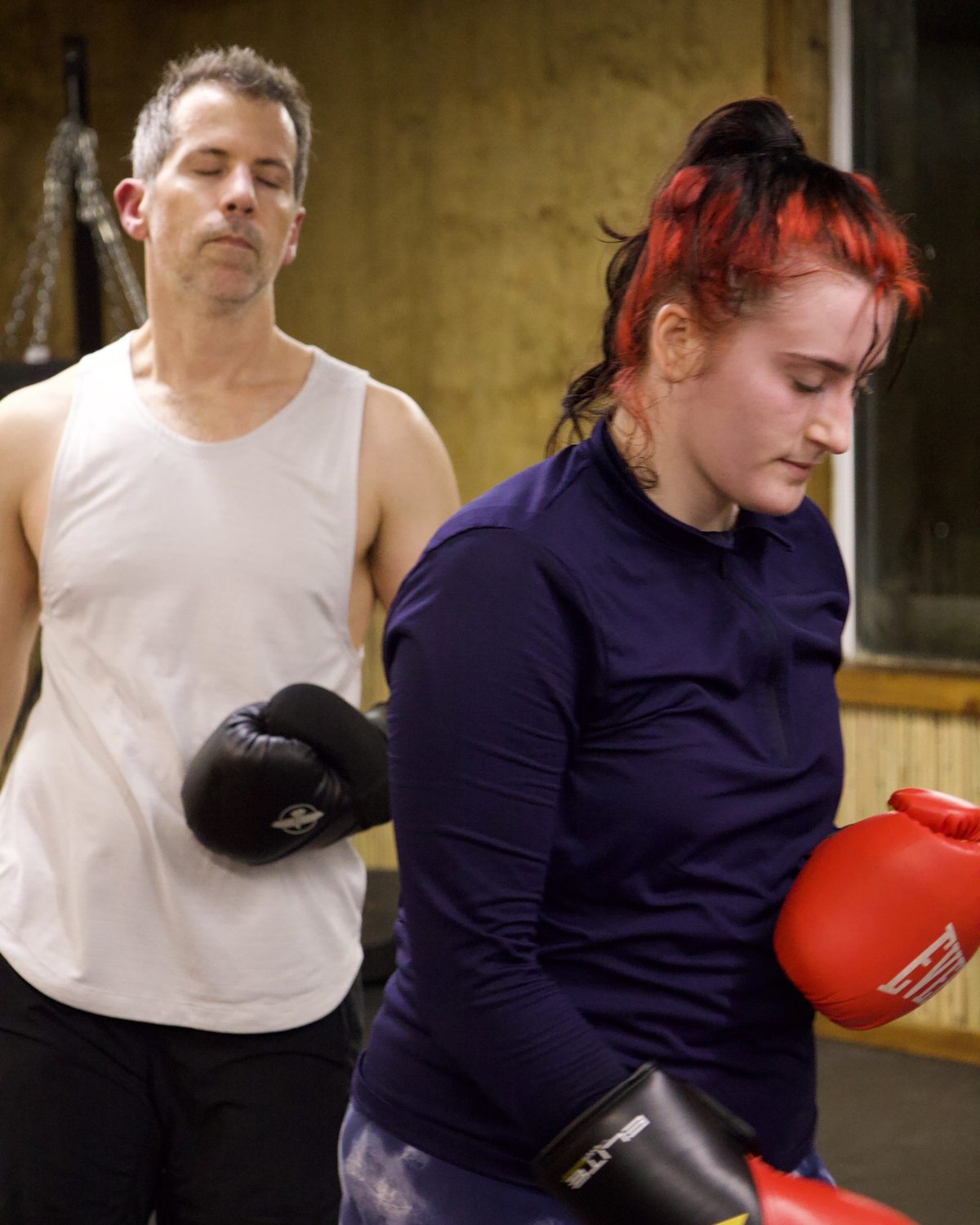
Scaling for Beginners: A Four-Week On-Ramp
The single biggest mistake people make with HIIT classes White Rock gyms run is treating week one like week ten. Your heart adapts fast. Tendons, joints and the muscles around the shoulder adapt slowly. A graded build-up lets the slow tissues catch up with your motivation.
Here is a sensible four-week on-ramp for someone starting from little or no regular exercise. The effort scale is 1 to 10, where 10 is the hardest you can possibly go.
| Week | Sessions | Effort during work | How to scale inside class |
|---|---|---|---|
| 1 | 2 | 6 to 7 out of 10 | Hit at 60% power, focus on form, take extra rest if breathing will not settle |
| 2 | 2 | 7 out of 10 | Keep the pace through each round, add short surges in the last 30 seconds |
| 3 | 2 to 3 | 7 to 8 out of 10 | Work full rounds, one near-maximal flurry per round |
| 4 | 3 | 8 out of 10 on hard rounds | Two hard rounds, one moderate round, repeat. Rest days between sessions |
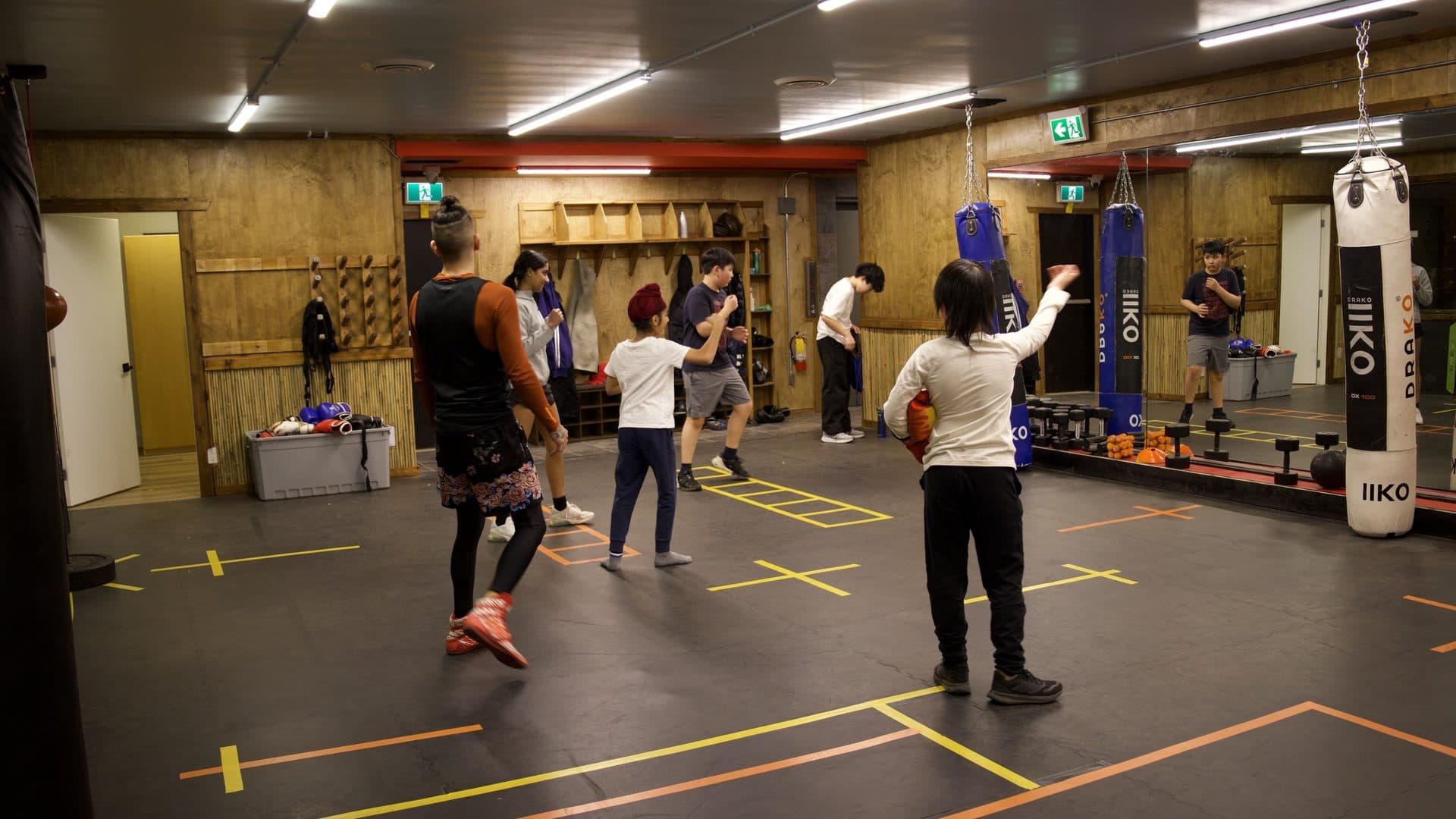
Scaling inside the HIIT classes White Rock members take at our gym is easy once you know the levers. Punch softer while keeping the rhythm. Swap jumping drills for step-outs. Shorten your work by 15 seconds and add it to the rest.
Older beginners should follow the same logic with more patience. Our article on boxing for seniors in White Rock covers the adjustments for people over 55. If you have never thrown a punch, start with our complete intro to beginner boxing so the technique is familiar before you add intensity.
Recovery: The Other Half of Every Interval
Training creates the stimulus. Recovery creates the adaptation. Anyone comparing HIIT classes White Rock studios run should ask how the week is structured, not just how hard a single session feels, because the gains happen between workouts.
- Sleep. The Canadian guidelines set 7 to 9 hours of good-quality sleep for adults, with consistent bed and wake times. Short sleep is the fastest way to turn productive intervals into accumulated fatigue.
- Easy movement on off days. A walk along the waterfront keeps blood flowing without adding stress. The City of White Rock’s promenade runs almost the entire length of the beach, and the pier alone is 470 metres long.
- Space between hard days. Avoid back-to-back maximal sessions in your first months. Alternate with strength work or skill classes.
- Fuel and fluids. Eat a normal meal two to three hours before an evening class and a meal with protein afterwards. Drink water through the day, not just in class.
- Listen for red flags. Persistent soreness, a resting heart rate that stays elevated, poor sleep and dreading every session are signs to back off for a few days.
Mobility work also pays off. Tight hips and a stiff upper back make punching harder and less efficient. A taekwondo class is one way to add flexibility and kicking range to your week; our guide to taekwondo in White Rock explains how those belt classes work at the same address.
Strength training rounds out any plan built around HIIT classes White Rock adults can sustain. The Canadian guidelines ask for muscle strengthening at least twice a week, and stronger legs and trunk make your punches more powerful and your joints more resilient. Our guide to strength training in White Rock shows how to fit it around your conditioning without overloading.
How Kingdom Delivers HIIT Classes White Rock Members Rely On
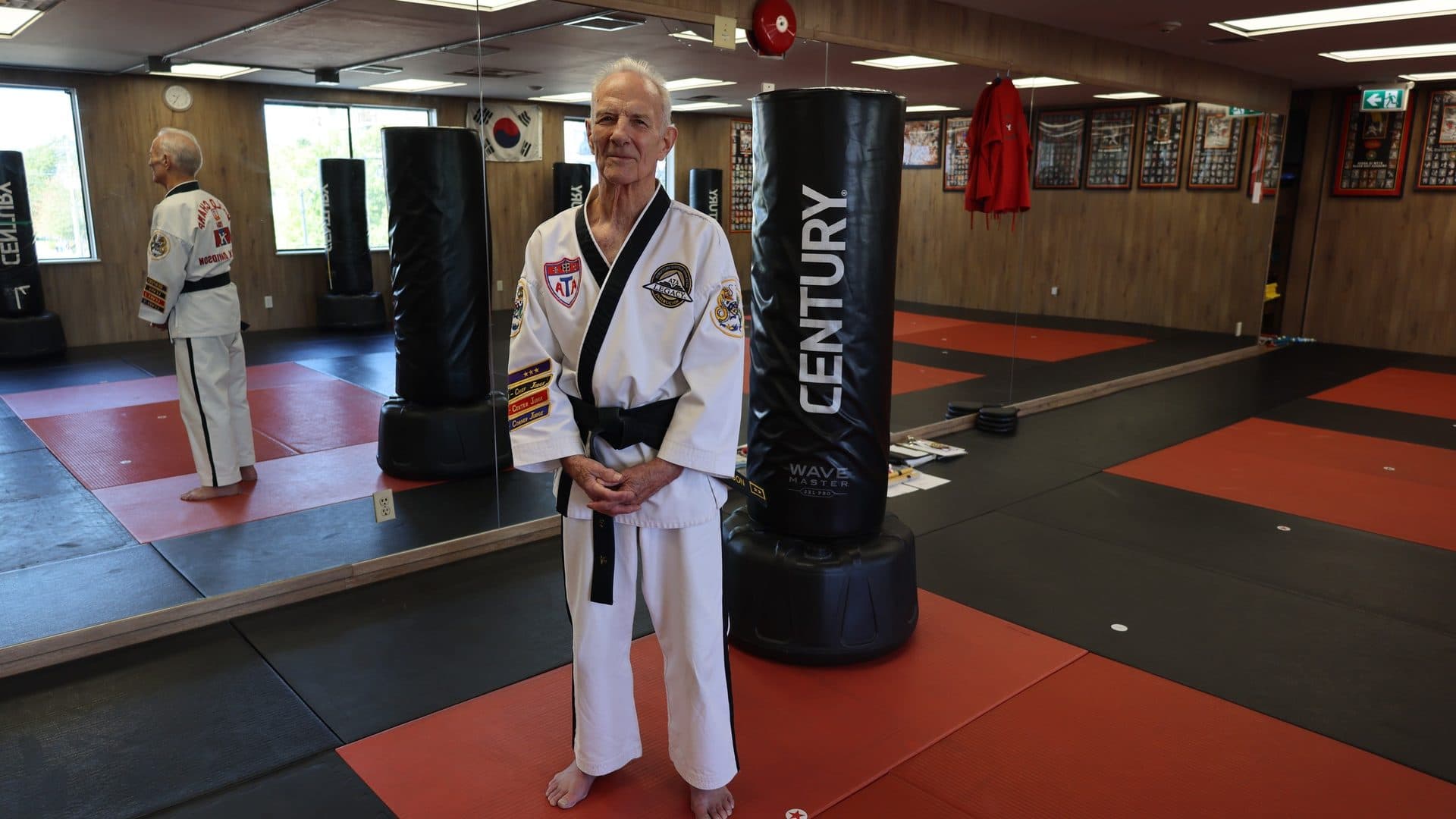
If you are looking for HIIT classes White Rock timetables list by name, you will not find one called “HIIT” at Kingdom Athletics. Instead, the interval work lives inside two boxing programmes on the weekday timetable, both rooted in boxing, where the round is the basic unit of training.
Conditioning at 17:00, Monday to Friday
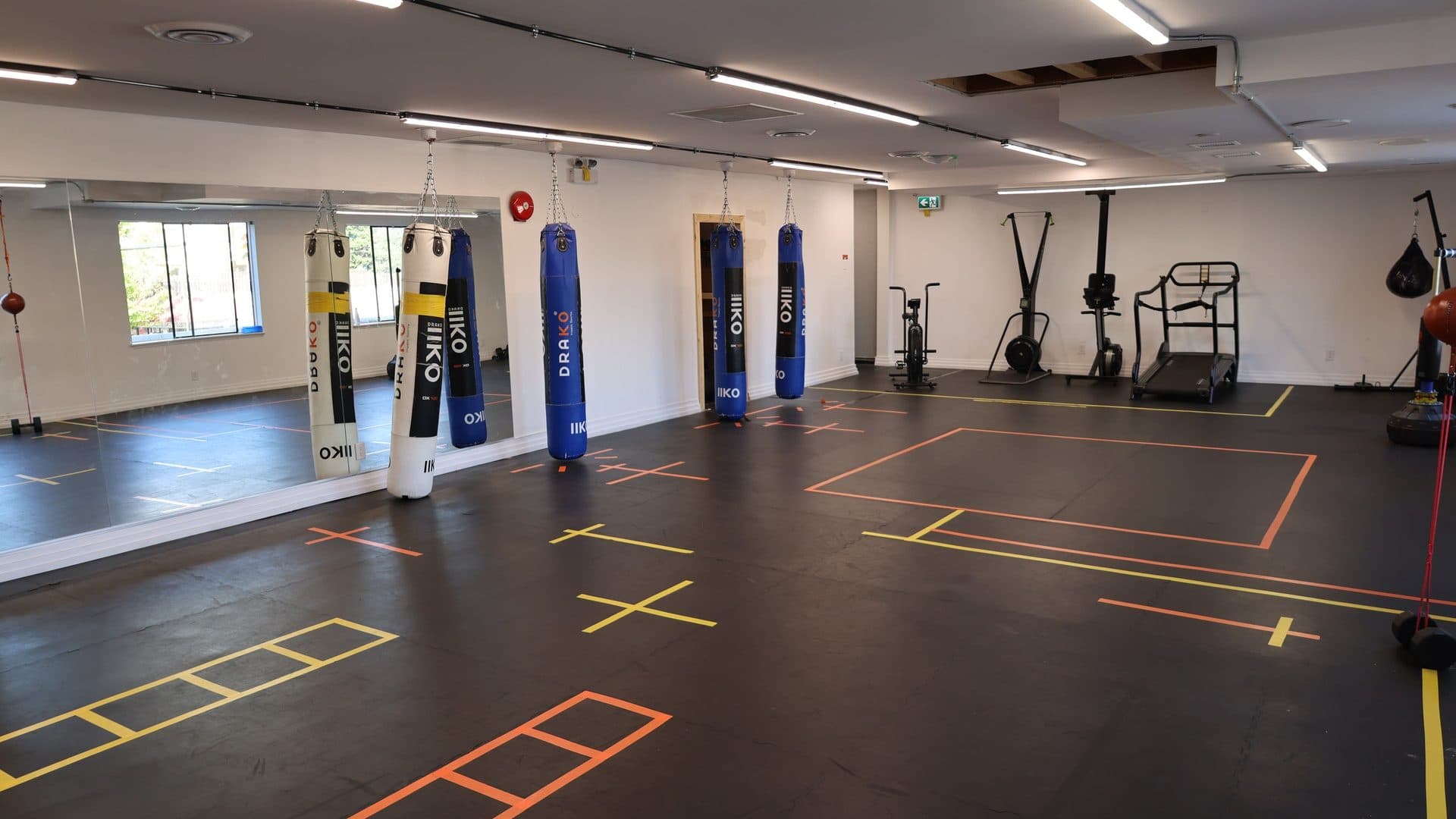
Our Conditioning Boxing programme is where engine-building is the main goal. Expect boxing-based conditioning on the bags and mat space; for how the rounds are set up on a given day, ask our coaches. The 17:00 slot suits people heading home from work along King George Boulevard or 152 Street, which becomes Johnston Road as it crosses into White Rock.
If you want a sense of how coaches approach this style, several of our team come from exactly this background. Khaila is an athletic trainer who specialises in fitness boxing. Kenny is a strength trainer and boxer, and Arion is an athletic trainer and strength coach. Different coaches bring different emphasis, which keeps the weekly rotation from going stale.
Kickboxing at 19:00, Monday to Friday
Kickboxing adds kicks, knees and longer combinations to the punches, and the class is open to all levels. Using your legs as well as your arms raises the demand of each round, because larger muscle groups need more oxygen. Spencer, an athletic trainer, boxer, kickboxing and Muay Thai coach, is one of the coaches who brings that striking background to the floor.
For a deeper look at the class itself, read why kickboxing classes in White Rock are worth starting this month. The short version for interval purposes: kickboxing rounds tend to feel harder at the same pace, so the four-week on-ramp above applies twice over.
How the other classes fit around it
One flat monthly membership covers unlimited classes across all boxing and martial arts programmes, so you can build a balanced week rather than stacking intervals every day. The 18:00 Technical Boxing class is lower in intensity and higher in skill, a perfect partner for a hard conditioning day. The 12:00 Boxing class suits lunch hours, and Saturday mornings have Light Sparring at 10:00 and 11:00 for those who want to progress. Our guide to boxing sparring for beginners covers that step when you are ready, and our coaches will tell you honestly when that is.
Here is one way to lay out a week using the timetable and the research on frequency:
| Day | Class | Intensity | Purpose |
|---|---|---|---|
| Monday | Conditioning, 17:00 | High | Main interval session |
| Tuesday | Technical Boxing, 18:00 | Low to moderate | Skill, active recovery |
| Wednesday | Kickboxing, 19:00 | High | Second interval session, full body |
| Thursday | Rest or promenade walk | Light | Recovery |
| Friday | Conditioning, 17:00 | Moderate to high | Third interval session once you are ready |
| Saturday | Optional | Light | Mobility, family activity, or strength work |
Beginners should use only two of the three high days for the first month. That keeps you inside the two to three sessions a week that Harvard Health recommends while you build the base. You can always add; it is much harder to come back from an overuse injury.
If you are weighing up group sessions against one-on-one work, our article on group fitness classes in White Rock for busy adults explains why the group setting often keeps people consistent. You can read more about who we are and how we coach on our mission page.
How to Evaluate Interval Training in White Rock and South Surrey
Not every class labelled “HIIT” is built on the principles above. Before committing anywhere, including with us, use this checklist when comparing HIIT classes White Rock and South Surrey gyms advertise:
- Is there a real rest period? If the class never lets you recover, it is not interval training. It is a long, moderately hard session with a fancy name.
- Does a coach correct technique? Hard work with bad form is how shoulders and lower backs get hurt, especially when you are tired.
- Can the class scale? Look for obvious options for beginners and for experienced athletes in the same room.
- Is there a warm-up and cool-down? Jumping straight to maximal effort is where the heart and muscles are most vulnerable.
- Does the gym encourage a balanced week? A coach who tells you to come every day at full intensity is ignoring the research on recovery.
- Is the atmosphere welcoming to beginners? Watch a class if you can, and ask what the first session looks like.
For a broader list of questions, our guides to what to look for in a South Surrey boxing gym and the questions to ask before signing a gym membership in White Rock go into contracts, coaching quality and culture.
Location matters more than people expect. The best HIIT classes White Rock can offer are the ones you actually reach three times a week, including on a dark, rainy November evening. Kingdom sits on Johnston Road in uptown White Rock, a short drive from Ocean Park, Crescent Beach, Sunnyside, Elgin Chantrell and Rosemary Heights, and reachable from Campbell Heights and the Highway 99 corridor. Members crossing from the Peace Arch area or Semiahmoo Town Centre are minutes away.
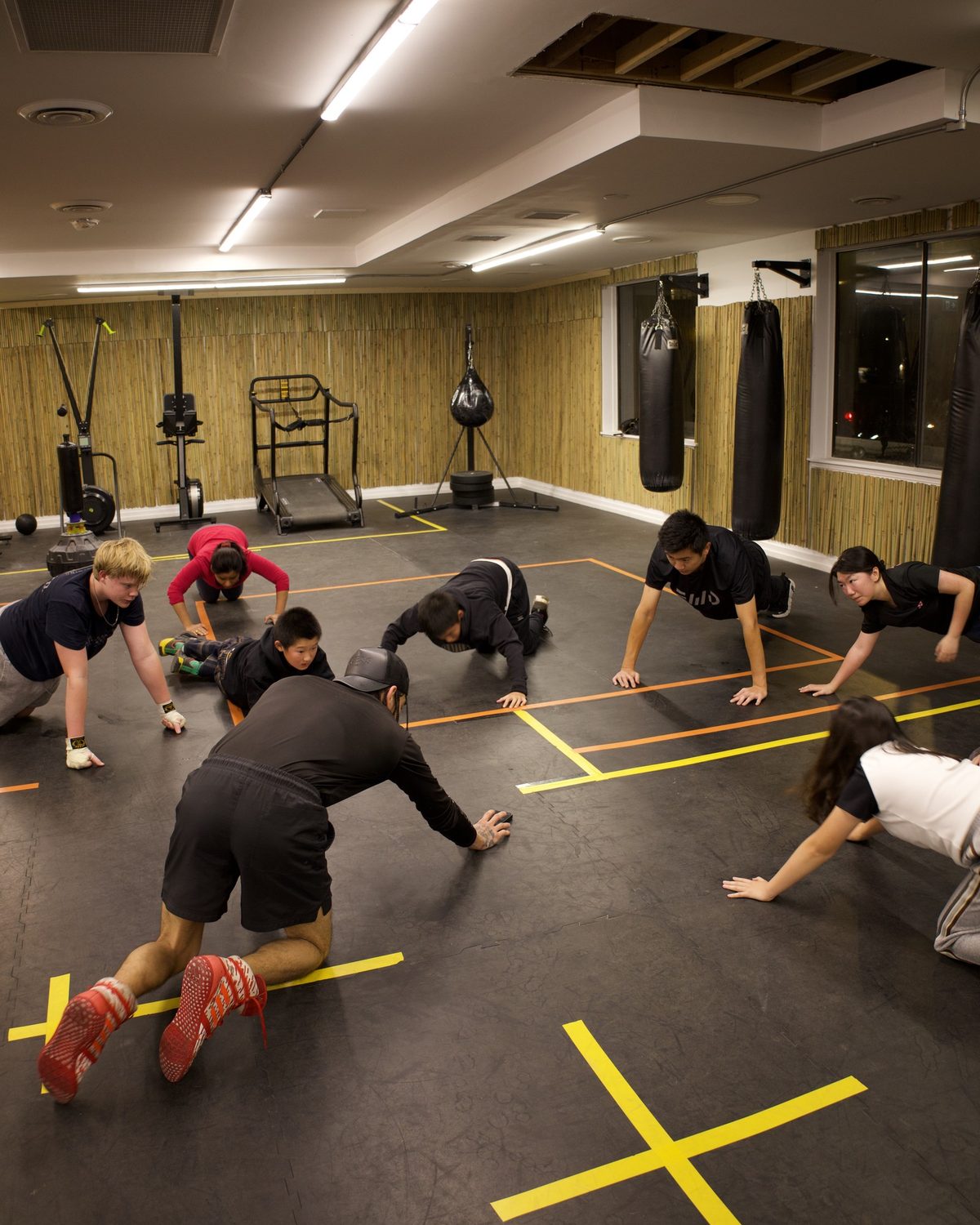
Common Mistakes With High-Intensity Interval Training
After more than 20 years in coaching and over 10,000 students trained, our team has seen the same mistakes come up again and again. Most are easy to fix once you know about them, whichever of the HIIT classes White Rock offers you choose.
- Going too hard in round one. If you empty the tank in the first three minutes, every later round becomes a survival effort. Pace the early rounds so the last ones are your best.
- Skipping rest. Standing still during the one-minute break is not laziness. It is what lets the next round be truly high intensity.
- Chasing soreness. Muscle soreness is not a measure of a good workout. Improved performance and recovery are.
- Too many hard days. More than three maximal sessions a week tends to reduce quality and raise injury risk.
- Ignoring technique. Tired arms drop the guard and flare the elbows. Keep form even when the power fades.
- Never changing the stimulus. Rotate Conditioning, our other classes and technique sessions to keep progress moving.
Frequently Asked Questions About HIIT in White Rock
How many HIIT sessions a week should a beginner do?
Start with two sessions a week for the first month, with at least one day between them. Harvard Health recommends HIIT only two to three times a week, and beginners should build toward the upper end gradually. Fill the other days with walking, strength work or a technique class.
Do I need to be fit before joining HIIT classes White Rock gyms run?
No. Interval training scales well because the “high” intensity is relative to you. A good coach will help you adjust power, pace and rest. If you have a heart condition, high blood pressure or other health concerns, get clearance from your doctor before starting.
Is boxing HIIT better than a regular HIIT class?
Both styles of HIIT classes White Rock offers follow the same principles. Boxing adds a skill element, so attention goes to technique instead of discomfort, and the three-minute round naturally sits in the long-interval range linked to strong VO2max improvements. Many people find they stick with it longer because the learning keeps it interesting.
Will HIIT help me lose weight?
It can help, alongside how you eat. Research shows HIIT and steady cardio reduce body fat by similar amounts, with HIIT taking about 40% less time. The afterburn effect is modest, so the calories you burn during the session matter more than those burned afterwards.
What should I bring to my first class?
Comfortable athletic clothing, indoor training shoes, a water bottle and a towel. If you have your own gloves and hand wraps, bring them. If not, ask our coaches what to do for your first session when you book.
Is there sparring in the Conditioning or Kickboxing classes?
The timetable lists Light Sparring separately on Saturday mornings at 10:00 and 11:00. For the specifics of what happens in any given weekday class, ask our coaches. They will explain the format and what to expect before you start.
How long before I notice a difference?
In the research, measurable improvements in fitness showed up within weeks, and larger gains came over 8 to 12 weeks of consistent training. Most people starting HIIT classes White Rock gyms offer notice easier rounds and faster recovery between them before they notice any change on the scale.
Start Your HIIT Classes White Rock Journey on Johnston Road
The science of intervals is well established: short, hard, well-structured efforts with deliberate recovery improve heart health, VO2max and fitness in less time than most people expect. Boxing and kickboxing deliver that structure in a format that holds your attention and grows your skill along with your engine.
If you are ready to try HIIT classes White Rock locals can reach from anywhere in the Semiahmoo Peninsula, choose Conditioning at 17:00 or Kickboxing at 19:00, Monday to Friday, and let our coaches show you how to scale each round. One membership covers unlimited classes across every programme, so you can build the balanced week the research supports.
Visit us at 1493 Johnston Rd #101, White Rock, call (778) 237-5905, or book your first class through our contact page. Tell us your goals and your experience, and we will point you to the right starting class. When you are ready, get in touch and book your first round.