Kickboxing Langley: 8 Proven Signs of a Real Kickboxing Class
November 2, 2026•22 min read•Boxing & Martial Arts, Training Tips
If you have been searching for kickboxing Langley classes, here is the first thing you should know about us: Kingdom Athletics is not in Langley. We are at 1493 Johnston Road in uptown White Rock, roughly 20 to 30 minutes from most of the Township depending on where you start and what time you leave. We would rather say that in the first sentence than have you find out on the map.
So why write a kickboxing Langley guide at all? Because the questions Langley residents ask before starting are the same wherever the gym is. Should you train for fitness or for fight sport? What will your hips and shins go through? Is it right for you as a woman, or at 45? How do you spot a real class? This guide answers those honestly, then gives you a commute plan and an eight-week progression.
Kickboxing Langley: Why We Lead With the Fact That We Are in White Rock
Most kickboxing Langley search results are gyms trying to look closer than they are. We think that is backwards. If you live in Willoughby or Willowbrook, the honest comparison is between a class you can reach in ten minutes and one you drive to for half an hour. The ten-minute class often wins, and you should take it if it is good.
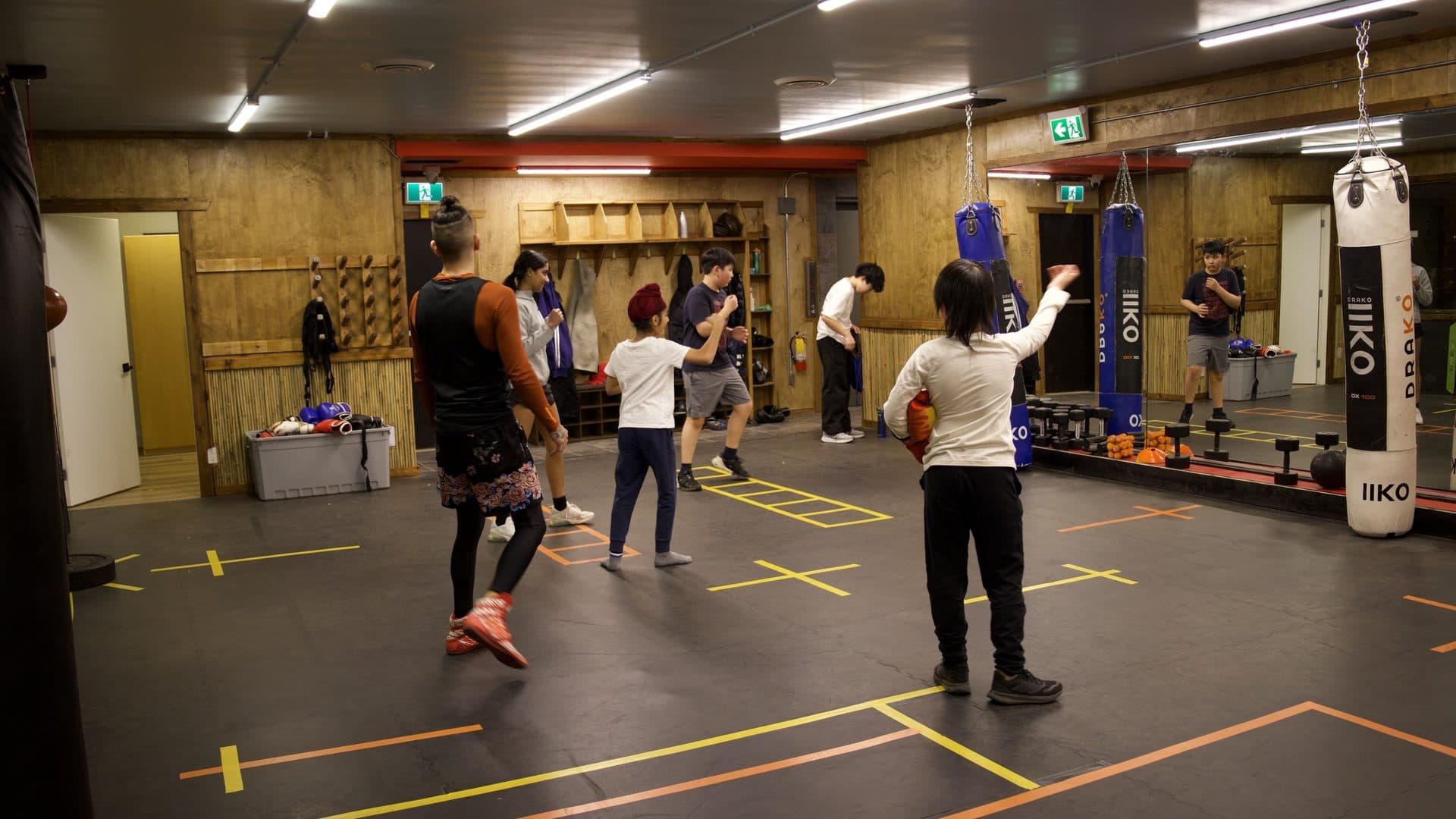
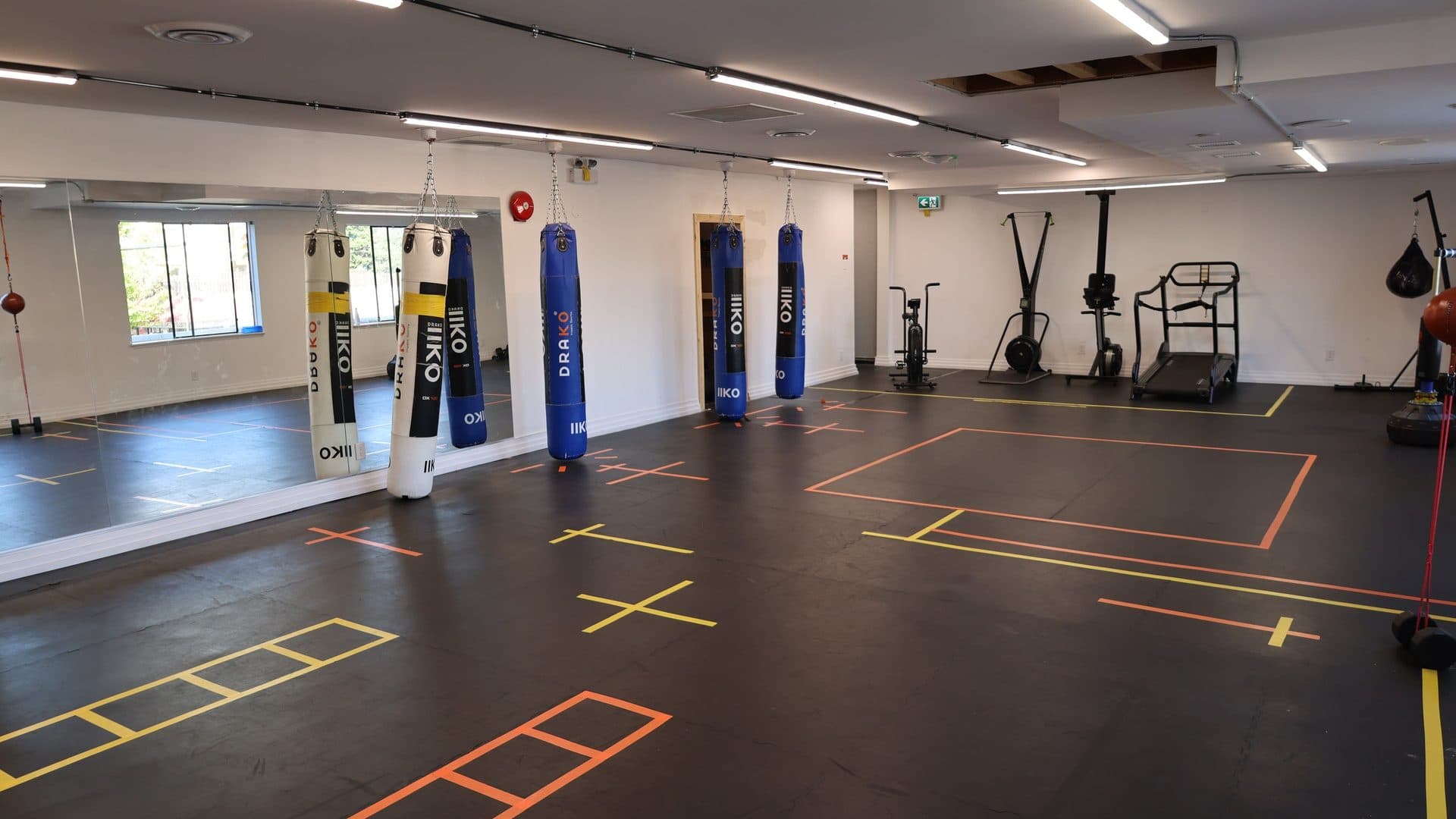
Where the drive starts to make sense is when you want something specific: a class where the coach actually corrects your hip turn, a timetable you can combine with technical boxing and conditioning under one flat monthly membership, and a room with heavy bags, a boxing ring, mat space and mirrors. That is what our Kickboxing program offers at 19:00 every weekday, Monday to Friday.
This post is deliberately different from our other two guides for your part of the Fraser Valley. If you want a technique encyclopedia, jab to teep, read our complete kickboxing technique guide for Surrey. If boxing competition is your goal, our guide to boxing classes for Langley commuters walks through the Boxing BC pathway. What follows is about you: your goals, your body, your schedule and your first two months.
Fitness Kickboxing or Fight Sport: Decide Before You Pick a Gym
The single most useful question to answer before you compare kickboxing Langley options is what you actually want out of it. Both answers are good. They just lead to different gyms, different weekly schedules and different expectations about contact.
Kickboxing for fitness
This is where most adults start, and it is what most kickboxing Langley searches are really about. You learn real punches, kicks and knees, you hit pads and heavy bags, and the conditioning comes as a side effect of doing the skill properly for an hour. There is no requirement to spar, no weight class and no fight date. Progress is measured in cleaner technique, longer rounds and how your body feels on a Wednesday morning.
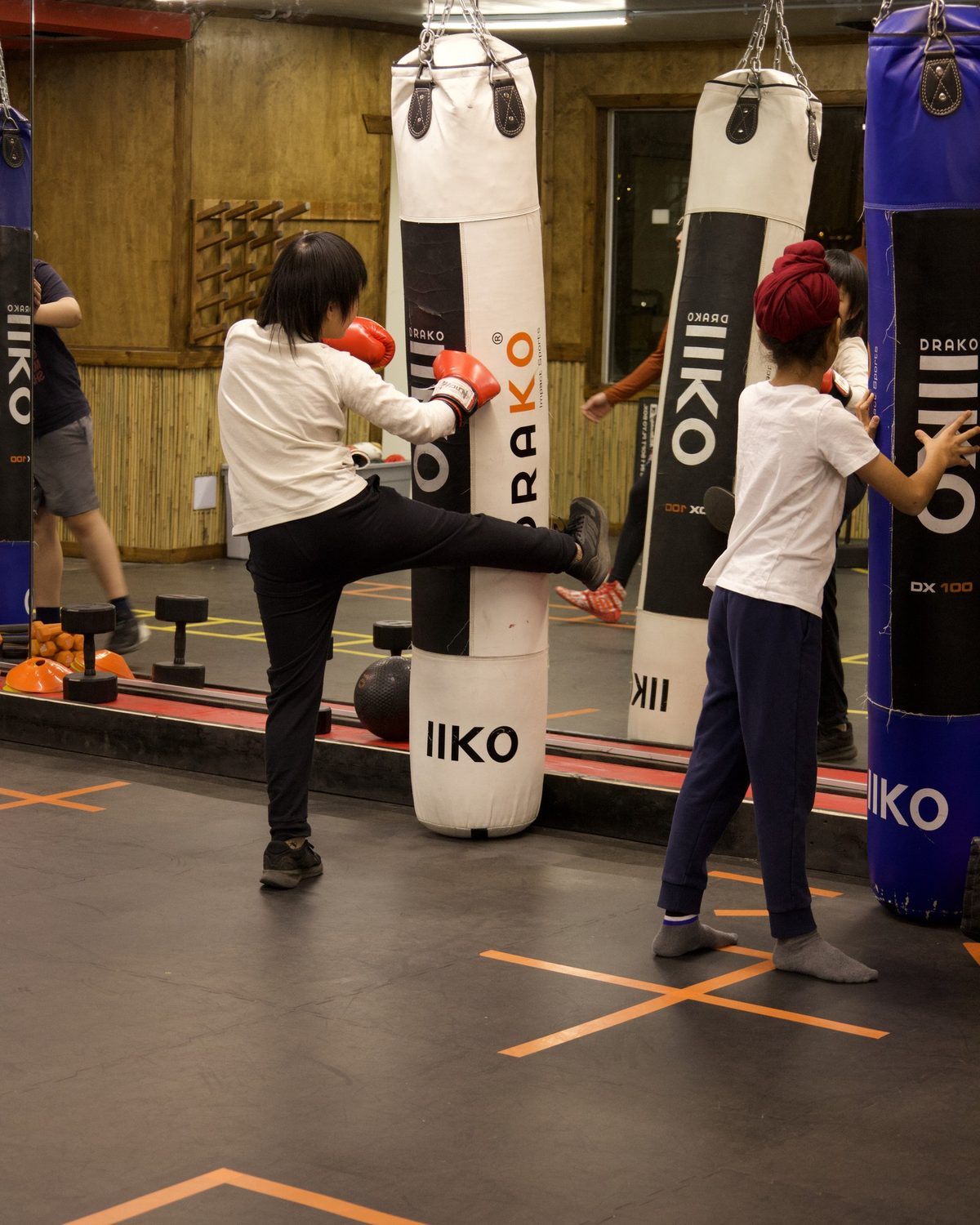
For a fitness goal, the benchmark worth knowing is the Canadian adult guideline. The 24-Hour Movement Guidelines for adults 18 to 64 call for at least 150 minutes a week of moderate to vigorous aerobic activity plus muscle strengthening at least twice a week. Two or three kickboxing classes a week, with the strength and core work built into them, go a long way toward that.
Kickboxing as a fight sport
Competitive kickboxing is a different commitment. It means regular supervised sparring, a coach who is willing to sign off on your readiness, a medical, and an event that is properly sanctioned. In this province, amateur combat sport contests fall under the BC Athletic Commissioner, whose amateur contestant application page states that a completed application must reach its office 14 days before the event you want to compete in.
We are not going to promise you a fight career. What we can say is that the path starts in the same place as the fitness path: months of clean fundamentals. If competing is on your mind, tell the coach in your first class. Spencer, who coaches boxing, kickboxing and Muay Thai, is the right person to ask about what a realistic progression looks like for you, and whether it fits your age, your schedule and your appetite for contact.
The middle ground most people end up in
Many adults train for fitness but want to know their technique would hold up under a little pressure. Our timetable has Saturday 10:00 and 11:00 Light Sparring slots; whether and when kickboxing students take part is a question for our coaches, not an assumption. Our guide to sparring rules for beginners explains what controlled rounds should look like wherever you train.
| Question | Fitness kickboxing | Fight sport kickboxing |
|---|---|---|
| Main goal | Conditioning, skill, stress relief | Competing under sanctioned rules |
| Contact | Pads and bags; sparring optional and coach led | Regular supervised sparring is required |
| Classes per week | 2 to 3 is plenty | 4 or more, plus roadwork and strength |
| What to ask a gym | How are beginners coached in a mixed room? | Who has the coach prepared for events, and how? |
| Time to first milestone | Clean basic combinations in about 8 weeks | Months of fundamentals before any contest |
What Your Body Needs to Know Before You Kick
Kicking balances you on one leg while the other swings through a range most desk workers have not used since school. Knowing where the stress lands lets you prepare instead of getting surprised in week two.
Hips: the joint that decides how well you kick
A roundhouse kick is really a hip movement. The support foot pivots, the hip turns over, and the leg follows. If your hips are stiff from a day at a desk and a drive, as they are for many kickboxing Langley commuters, your body will cheat by leaning back, dropping the hands or twisting the lower back. Harvard Health’s piece on hip flexor stretches for people who sit most of the day describes exactly the stiffness many new kickboxers bring in.
Hip flexors also get strained. Cleveland Clinic lists martial arts among the sports most likely to cause a hip flexor strain, alongside running, hockey and soccer. The fix is not avoiding high kicks forever. It is kicking low and controlled for the first few weeks, warming the hips properly, and letting height arrive on its own.
A simple home routine for Langley commuters who spend their evenings in the car: five slow leg swings forward and back per side, five side to side, ten bodyweight squats to a comfortable depth, and a thirty second half kneeling hip flexor stretch per side. It takes four minutes.
Shins: condition slowly, not heroically
Ignore stories about kickboxers who kick trees. Shin conditioning in a sensible class is gradual: light kicks on pads, then on the heavy bag with controlled power, building over months. Surface soreness from hitting a bag is not the same as the deeper ache of overuse.
That deeper ache matters. Cleveland Clinic’s page on shin splints advises increasing activity gradually and not by more than 10 percent in one week. Kickboxing involves lots of bouncing on the balls of the feet, so if you go from no training to five classes in week one, your lower legs are the first thing to complain. Two or three sessions a week is the right start for kickboxing Langley beginners, wherever they train.
There is also a mechanical reason to care about which part of the leg lands. A 2026 narrative review of leg kick mechanics and injury risk across combat sports found that striking with the shin or the instep changes where stress lands, between the tibia and the foot and ankle, and that pivoting on the support leg adds rotational load on that knee. In practice that means learning to kick with the shin and to pivot the support foot freely.
Balance: the skill nobody mentions
Every kick is a short period of standing on one leg while something heavy moves fast. Kickboxing Langley beginners often discover their balance is worse on one side than they thought. That is normal and improves quickly with practice.
Useful practice at home: stand on one leg while you brush your teeth, two minutes per side. Then progress to slow knee raises holding the top for three seconds. Better single leg balance makes kicks safer and makes you steadier on wet sidewalks along the White Rock pier and promenade in November.
Flexibility: useful, but not a prerequisite
You do not need the splits to kickbox. Most effective kicks in a class land between the thigh and the ribs. What you need is enough hip and hamstring range to kick without rounding your back, and a short daily stretch does more for kickboxing Langley beginners than one long session on Sunday.
If you have a history of back or hip trouble, tell the coach before class. Nick works in rehab, fascial release and stretching therapy at Kingdom; whether that is a separate service or how it is booked is a question to ask our coaches directly. Either way, a coach who knows about your hip will adjust the kick height and the drill without making a fuss.
Kickboxing for Women: What Actually Matters
The questions women ask us about kickboxing tend to be practical rather than about whether they belong. Kingdom does not run a women-only class. What we can do is describe how our regular mixed classes work for women who train in them, and what to look for in any kickboxing Langley class you try.
Partner work and pairing
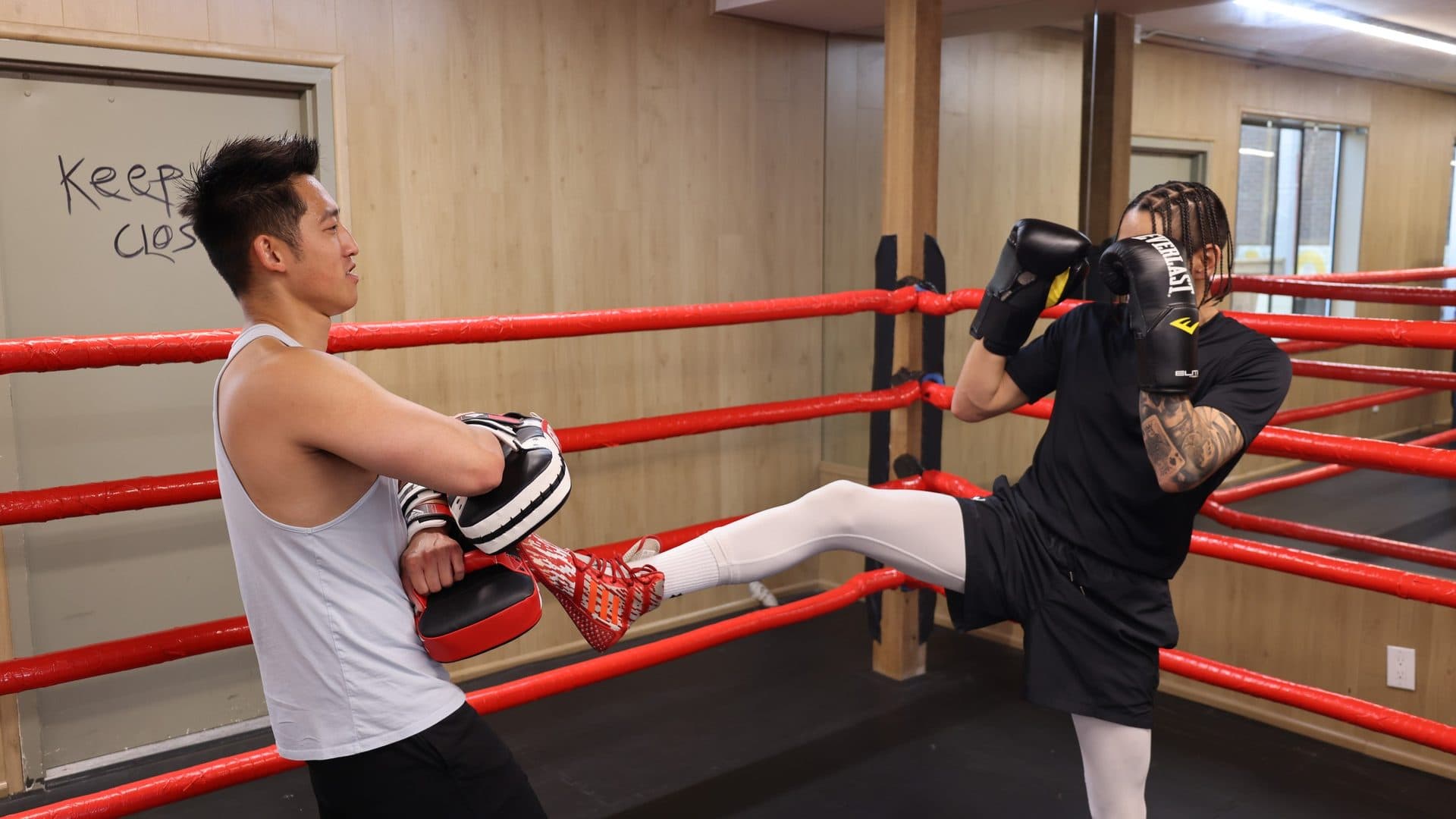
Pad work is done in pairs. A good coach pairs by size, experience and how hard people hit, not by who happens to be standing nearby. If a partner hits harder than the drill calls for, say so. Every well run room works that way.
Kicks often come naturally
Women with a background in dance, yoga or gymnastics often arrive with more hip mobility than they expect to need. That makes early kicking progress feel quick. The common gap is the opposite of what people expect: learning to commit weight into strikes and to keep the guard up while tired. Both are coachable and both improve with rounds on the heavy bag.
Pregnancy and the post partum return
If you are pregnant or planning to be, talk to your doctor or midwife before starting any new program. HealthLink BC’s page on exercise during pregnancy advises avoiding sports that can involve potential contact and not starting a new or more strenuous program without checking first. Returning after birth is also a conversation for your care provider before it is one for your coach.
Bone health through the years
Women in their late 40s and 50s often come to kickboxing looking for something more engaging than a treadmill. There is a good reason to care about bone as well as muscle. Cleveland Clinic’s overview of menopause notes that, on average, a person loses 25 percent of their bone mass from the time of menopause to age 60, largely because of the loss of estrogen.
If you already have an osteoporosis diagnosis, Osteoporosis Canada’s exercise guidance says exercise is for everyone, including people who have had a spine or hip fracture, but that modifications may be needed. Tell the coach and ask your doctor which movements to avoid. For more on this, our post on boxing for women in White Rock covers the confidence side of training in a mixed room.
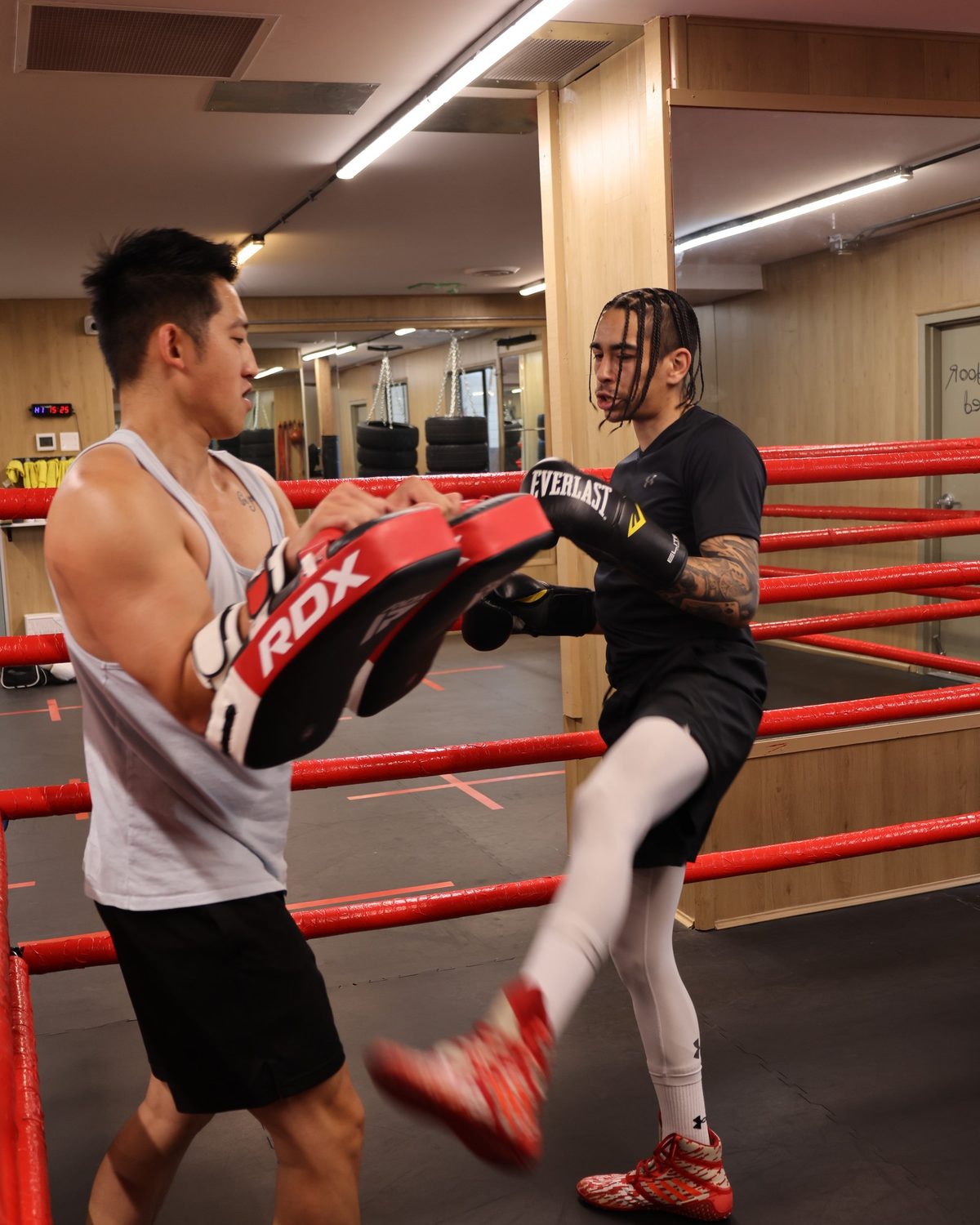
Starting Kickboxing After 40
Plenty of people searching kickboxing Langley options are in their 40s and 50s, used to play hockey, soccer or rugby, and miss training that has a point to it. Kickboxing suits that mindset well. It is measurable and it rewards patience. It does require you to be smarter about recovery than you were at 25.
What the research suggests
One of the more interesting studies for older beginners is a randomized trial of a 12-week group kickboxing program in adults aged 50 to 85. The kickboxing group improved handgrip strength and gait speed and reduced waist circumference and visceral fat, while the control group’s femoral neck bone density declined. It is one study, in one population, but it is encouraging for anyone over 50 wondering whether kickboxing Langley classes are still for them.
The Canadian guidelines for adults 65 and older add something to the 18 to 64 advice: physical activities that challenge balance. Kickboxing does that in almost every round. If you are 58 and planning ahead, that is worth knowing.
How to train after 40 without getting hurt
- Arrive early and warm up longer. The group warm-up is the minimum. Add five minutes of your own hip and ankle work before class starts.
- Kick low for the first month. Thigh height kicks build the pivot and the hip turn without asking your hamstrings for range they have not got yet.
- Two classes a week, then three. Recovery takes longer after 40. Give yourself at least one full day between kickboxing sessions for the first six weeks.
- Sleep counts as training. A late class followed by a 30 minute drive home means planning your evening so bedtime does not slide.
- Tell the coach about old injuries. Knees, shoulders and lower backs from previous sports all change which drills you should do at full effort.
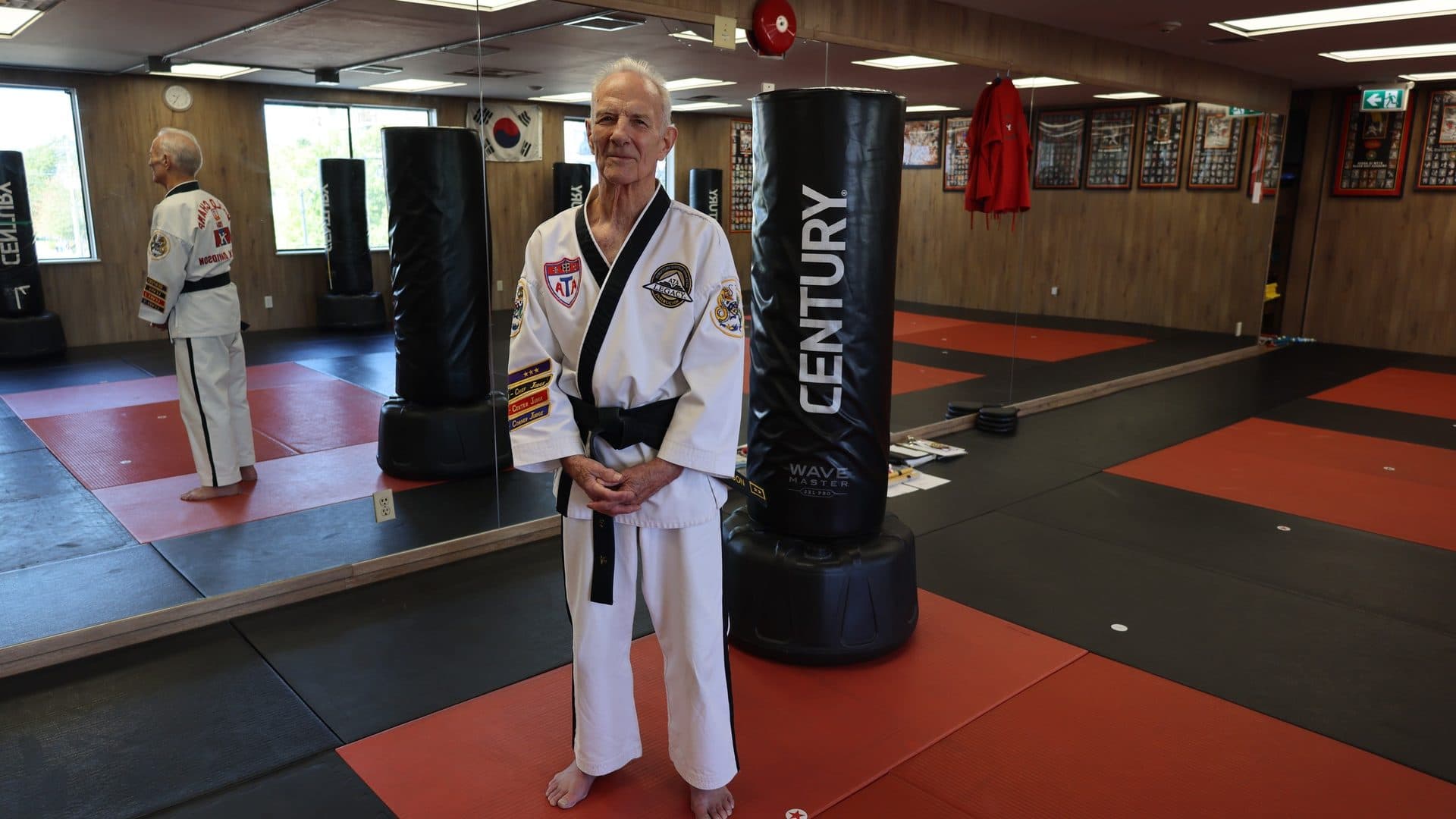
We have a separate guide for people older still: boxing for seniors in White Rock covers starting after 55. And if you are weighing kickboxing against something with belts and a structured grading path, martial arts for adults in White Rock explains our adult taekwondo classes, which run at 18:30 on weekday evenings for ages 13 and up.
Kickboxing Langley Quality Check: 8 Proven Signs of a Real Class
Here is where many searches go wrong. Plenty of classes use the word kickboxing for what is really an aerobics session with kick shapes in it. There is nothing wrong with that if a sweat is all you want. But if you want to learn to kick properly, these eight signs separate a real class from a cardio class with kicks.
- The coach watches feet, not just effort. In a quality class, you will hear corrections about the pivot of the support foot within the first ten minutes. In a cardio class, you will hear “faster” and “keep going”.
- Kicks land on something. Kicking the air teaches a movement, not a skill. A real class has you kicking pads held by a partner or a heavy bag, so you learn distance and what a clean contact feels like.
- The guard is non-negotiable. Hands come back to the face after every strike. If a class lets everyone drop their hands to go faster, it is training a habit you will have to unlearn.
- Combinations have a reason. Good combinations teach you why a kick follows a punch: a jab to draw the guard up, then a body kick. Cardio classes chain moves for rhythm, not logic.
- There is a technique block before the sweat. Most quality sessions teach the skill of the night slowly, then build speed. If the music starts and never stops, you are in a fitness class.
- Beginners get attention by name. In a mixed room, a coach should know you are new and check your stance, wraps and kick within the first class.
- Safety is visible. Wrapped hands, space between bags, partners who control power, and a coach who stops a drill when someone is sloppy.
- It connects to something bigger. A proper kickboxing program sits beside boxing technique, conditioning and, for those who want it, a path toward controlled sparring.
Our guide to boxercise classes explains the fitness side of that spectrum fairly; it is a legitimate workout, just a different product. The eight signs above describe what we aim for at 19:00, and you can judge us by them in your first class, just as you would judge any kickboxing Langley gym closer to home.
Our checklist of things to look for in a boxing gym covers the facility side: bags, floor space, ring and cleanliness. Most of it applies just as well to kickboxing Langley residents are comparing closer to home.
What the 19:00 Class Looks Like for a New Student
The Surrey technique guide has the minute by minute breakdown; here is the beginner’s version. Arrive 15 minutes early, wrap your hands, and tell the coach it is your first class. The warm-up loosens hips and shoulders. The technique block shows a punch and kick combination. Then come partner pad rounds, heavy bag rounds, a short conditioning finisher and a cool-down stretch.
Bring water, a small towel, hand wraps if you have them, and shorts or loose pants that let you lift your knee high. Our beginner glove buying guide helps when you are ready to buy your own gloves. If you are still deciding between striking styles, our White Rock kickboxing introduction compares kickboxing and boxing for first timers.
Your Commute Plan for the 19:00 Weekday Class
A kickboxing Langley plan that ignores the drive fails by week three. The 19:00 slot is the one most Township commuters can hit, because it sits after the worst of the afternoon traffic. Check the current weekly class timetable before your first visit, then pick fixed nights and rehearse the route once at the real time.
The spine of every route: 16 Avenue
From almost anywhere in Langley, the simplest route is south to 16 Avenue, west to 152 Street, then south as 152 Street becomes Johnston Road entering White Rock. Kingdom is on Johnston Road in uptown White Rock, so you are close once you cross North Bluff Road. It is not the only way in, but it is the one that is easiest to remember in the dark and rain.
| Starting point | Simple route | Leave by (for 19:00) | Watch for |
|---|---|---|---|
| Brookswood and Fernridge | 200 Street south, 16 Avenue west, 152 Street south | About 18:25 | Usually the quickest Langley run |
| Murrayville | South to 16 Avenue, then west | About 18:20 | Dark rural stretches, slow farm traffic |
| Langley City | 200 Street south to 16 Avenue, then west | About 18:15 | Busy lights on 200 Street near the city centre |
| Willoughby and Walnut Grove | 200 Street south, 16 Avenue west | About 18:10 | 200 Street congestion until well after 18:00 |
| Aldergrove | 16 Avenue west the whole way | About 18:05 | Longest trip in this guide; fog over the fields |
The departure times are planning estimates that leave room to park, change and wrap before the warm-up, not promises about traffic. Rehearse the route once and adjust. If you would rather not drive, check TransLink’s trip planner for your exact stop; transit is possible from parts of Langley but it is usually slower than driving, so compare before committing.
Neighbourhood notes
Brookswood and Fernridge. The Brookswood-Fernridge area is the closest part of the Township to us. Residents here often find the drive to White Rock takes about as long as crossing Willoughby at rush hour, which is why many of them widen their kickboxing Langley search south to begin with.
Walnut Grove. Families in Walnut Grove are often juggling kids’ activities with their own training. One trick that works: if your children do taekwondo, the martial arts classes at our address start from 15:15 on weekdays, and your own session can follow on the same trip on some nights. Our taekwondo in White Rock guide explains the belt levels.
Willoughby. The newest and busiest part of the Township, with a lot of young professionals and shift workers. For kickboxing Langley commuters with irregular schedules, the weekday 12:00 Boxing class is another option; mixing it with a 19:00 kickboxing night keeps you consistent when evenings fall apart.
Aldergrove. This is the longest drive, and we will not pretend otherwise. If you live in Aldergrove and three trips a week is unrealistic, a hybrid plan works: local conditioning twice a week plus one coached kickboxing night. That keeps technique moving while the rest of your fitness stays close to home.
Langley City. The City of Langley’s parks and recreation programs are a good base for general fitness near home. Use them for your steady cardio and mobility work on off days, and save the drive for the skill session.
Winter driving and the November reality
From late autumn, 16 Avenue is dark well before 19:00, often wet, and sometimes foggy across the farmland. Leave margin; a rushed arrival is how kickboxing Langley commuters end up skipping the warm-up. The province’s winter driving guidance reminds drivers to obey winter tire and chain signs from October 1 to April 30. Most Langley to White Rock routes stay low, but a slower, calmer drive in the rain is part of the commute plan, not an afterthought.
Eating and energy before a 19:00 class
The classic mistake kickboxing Langley commuters make is eating a big dinner at 18:00 and then kicking at 19:15. Try a proper lunch, a light snack around 17:00 such as a banana or yogurt, then dinner after class. If you drive straight from work, keep a water bottle and a snack in the car. Our guide to training for weight loss covers the food side in more depth.
The two class evening
Once you are a few weeks in, the drive becomes easier to justify if you stack classes. The 18:00 Technical Class followed by 19:00 Kickboxing makes a two hour evening that teaches boxing footwork and hands, then puts kicks on top. Our Technical Boxing program is the natural partner; do not try the double until week five or six.
The First 8 Weeks: A Kickboxing Progression That Respects Your Body
This plan assumes two classes a week to start, rising to three. It is built around the body stresses covered above and the commute, so it is realistic for kickboxing Langley commuters driving south after work. Your coach may adjust it; follow the coach.
| Week | Classes | Focus | Home work |
|---|---|---|---|
| 1 | 2 kickboxing | Stance, guard, jab and cross, low kick with a pivot | Daily hip routine, one leg balance |
| 2 | 2 kickboxing | Hands back to face after every strike; teep to the body | Same, add slow knee raises |
| 3 | 2 kickboxing | Combinations: jab, cross, low kick; returning the leg to stance | Shadowbox 3 rounds of 2 minutes |
| 4 | 2 kickboxing, 1 conditioning | Holding pads well; knees from the clinch position | Rest day check: any shin or hip pain? |
| 5 | 2 kickboxing, 1 conditioning or technical | Body kick height; hook and body kick combinations | Hamstring and hip flexor stretches daily |
| 6 | 3 classes, try one double evening | Checking a kick; defensive footwork | Shadowbox with kicks, 4 rounds |
| 7 | 3 classes | Longer bag rounds with a theme; power with control | One easy walk or ride on a rest day |
| 8 | 3 classes | Review: clean five strike combination with a kick | Talk to your coach about next goals |
Weeks 1 and 2: learn to stand
Most kickboxing Langley beginners want to kick hard immediately. Resist it. The first two weeks are about stance width, weight on the balls of the feet, and pivoting the support foot. A slow kick with a proper pivot is worth more than ten fast kicks that twist your knee. Expect sore calves and hips, not shins.
Weeks 3 and 4: connect hands and feet
Now the combinations appear. You will learn to finish a punch combination with a kick and to bring the kicking leg back into stance instead of letting it fall. Add one Conditioning Boxing class in week four if your body feels fine. That is where the engine gets built without the pounding on your shins.
Weeks 5 and 6: a little more height and defence
Body kicks start to feel natural, and you learn to check a kick by lifting the shin. This is also when shin soreness can show up as you hit the bag harder. If the ache is sharp, in one spot, or still there the next morning, back off and tell the coach.
Weeks 7 and 8: consolidate
By week eight, most regular attenders can throw a clean five strike combination ending in a kick, hold pads for a partner without flinching, and finish a class without feeling wrecked the next day. That is the real milestone. From here, you choose: stay on the fitness track, add technical boxing, or talk to the coach about controlled contact work.
If you are building strength alongside kickboxing, pair it with our guide to strength training in White Rock. And for a structured way to build conditioning on other days, our guide to HIIT classes in White Rock explains how interval work fits beside striking.
Safety Notes Every New Kickboxer Should Read
Even without sparring, you strike pads held by a person in a room full of swinging legs. Most problems come from fatigue, poor wraps and ego. Here is what we want every new member to know, whether they train with us or with one of the kickboxing Langley gyms closer to home.
- Head contact is serious. Parachute’s concussion information explains that any blow to the head, face or neck, or a blow to the body that jars the head, can cause a concussion. Report any head knock to the coach, even in pad work.
- Tired technique is where injuries hide. Slow down in the last round rather than getting sloppy.
- Tell the coach about medical conditions. Heart conditions, recent surgery, pregnancy and joint problems all change what you should do. When in doubt, see your doctor before you start.
For practical self protection skills rather than sport, our guide to self defense classes in White Rock explains what kickboxing does and does not teach you for real life situations.
Is the Drive Worth It? An Honest Decision Guide
If you mostly want a good sweat, choose a close class you will attend three times a week. If you want to actually learn to kick, with corrections, pad work and a path into boxing technique, the drive becomes worthwhile, especially if you can stack two classes on some nights.
The deciding factor for most kickboxing Langley commuters is the second week, when the rain arrives and the couch looks warmer. Plan fixed nights, keep your gear bag by the door, and treat the drive like any other appointment.
Also consider your whole week. If you already drive south for work in South Surrey or cross at the Douglas border crossing, Johnston Road may be close to your route anyway. And one flat monthly membership covers every boxing and martial arts class on the timetable, so there is no penalty for mixing kickboxing with technical boxing or conditioning. Browse all our classes to see how they fit together.
If you are still undecided between kickboxing and other group options, our comparison of group fitness classes in White Rock sets kickboxing beside other formats. And if you want to understand what our coaches care about, read about our mission; we have more than 20 years of experience and have trained more than 10,000 students.
Frequently Asked Questions About Kickboxing for Langley Residents
Is Kingdom Athletics in Langley?
No. We are at 1493 Johnston Road #101 in uptown White Rock. From Langley the simplest drive is south to 16 Avenue, west to 152 Street and south into White Rock, roughly 20 to 30 minutes outside rush hour depending on where you start.
Do I need to be fit before I start kickboxing?
No. The class is all levels, and you work at your own pace. The first few weeks are about stance and technique, and the fitness follows. If you have a medical condition or have been inactive for a long time, check with your doctor first.
Will I have to spar?
Not to take part in the 19:00 Kickboxing class. The timetable has Saturday Light Sparring slots, but whether and when a kickboxing student joins any contact work is something to discuss with our coaches. Nobody should be put into sparring before they are ready.
Is kickboxing good for women over 40?
For most, yes. It builds strength, conditioning and balance in one session. If you have osteoporosis, a history of joint problems or are going through menopause with specific health concerns, talk to your doctor and tell the coach so drills can be adjusted.
How often should a beginner train?
For most kickboxing Langley beginners, two classes a week for the first three or four weeks, then three if your shins and hips feel fine. More is not better in the first month. Recovery is where the body adapts.
Does the membership cover kickboxing and boxing?
Yes. One flat monthly membership covers unlimited classes across all our boxing and martial arts programs, including kickboxing. For current details, contact our team or call (778) 237-5905.
Kickboxing Langley Residents Can Start This Week: Book Your First Class
You now know more than most people do before their first kickboxing Langley class: whether you want fitness or fight sport, what your hips and shins are about to learn, how to spot a quality class, and how to plan the drive to our 19:00 session. The next step is simple. Pick two nights, rehearse the route once, and bring water and a towel.
When you are ready, book your first class through our contact page or call us on (778) 237-5905. Tell us you are coming from Langley and what your goal is, and the coach will know where to start with you. We look forward to seeing you on Johnston Road.