Martial Arts for Adults White Rock: 8 Reasons It Is Never Too Late
September 7, 2026•14 min read•Boxing & Martial Arts, Lifestyle & Wellness
The most common sentence we hear from people in their thirties, forties, and fifties is a version of the same regret. I always wanted to do this but I think I have left it too late. Martial arts for adults white rock classes exist precisely for those people, and the premise of the question is wrong. Starting later is normal, it is common, and in several important ways adults learn better than children do. This guide covers what to expect, what actually changes, and how to begin.
Why Martial Arts for Adults White Rock Classes Work So Well
People considering martial arts for adults white rock gyms offer usually arrive with one worry. There is a persistent myth that martial arts is a childhood pursuit and that adults arriving fresh are somehow behind. It survives because most people’s mental image of a martial arts school comes from children’s classes.
Adults have real advantages. You understand instruction, you can self correct, you know why you are there, and you have the patience to drill something dull because you can see where it leads. Children have none of that and compensate with time and fearlessness.
The trade off is genuine but overstated. You will recover more slowly than a nineteen year old and you will have more accumulated stiffness to work through. Neither prevents competence, and both are manageable with sensible scaling.
Harvard Health publishes consistently on the trainability of strength, balance, and coordination well into later decades, and the National Institutes of Health holds a substantial body of research on adult skill acquisition that contradicts almost everything people assume about age and learning.
What Adults Actually Get Out of It
Fitness that does not feel like exercise
The single biggest reason adults quit gyms is boredom. Martial arts sidesteps that by giving you something to think about, which is why retention in skill based classes so consistently outperforms general fitness memberships.
Balance and coordination you will keep
Both decline with age unless trained, and almost nothing in a conventional gym trains them. Stance work, footwork, and controlled movement under mild pressure are exactly the stimulus required.
Genuine stress relief
An hour where you cannot think about anything else is rarer and more valuable than most people realise. The Canadian Mental Health Association and the American Psychological Association both treat regular structured physical activity as a first line tool for everyday stress and low mood. Our post on the mental health side of martial arts covers this properly.
Practical confidence
Not the ability to win a fight, which almost nobody needs. The quieter sort that comes from having done something difficult repeatedly. Many members progress into our self defense classes for exactly this reason.
A social circle that is not work
Adults are famously bad at making friends. Training beside the same people twice a week for a year fixes that without anyone having to be deliberate about it.
Which Style Should an Adult Start With
When comparing martial arts for adults white rock has available, the honest answer is that the coaching matters far more than the style. A well run class in a mediocre style beats a badly run class in a prestigious one every time.
That said, broad differences are worth knowing.
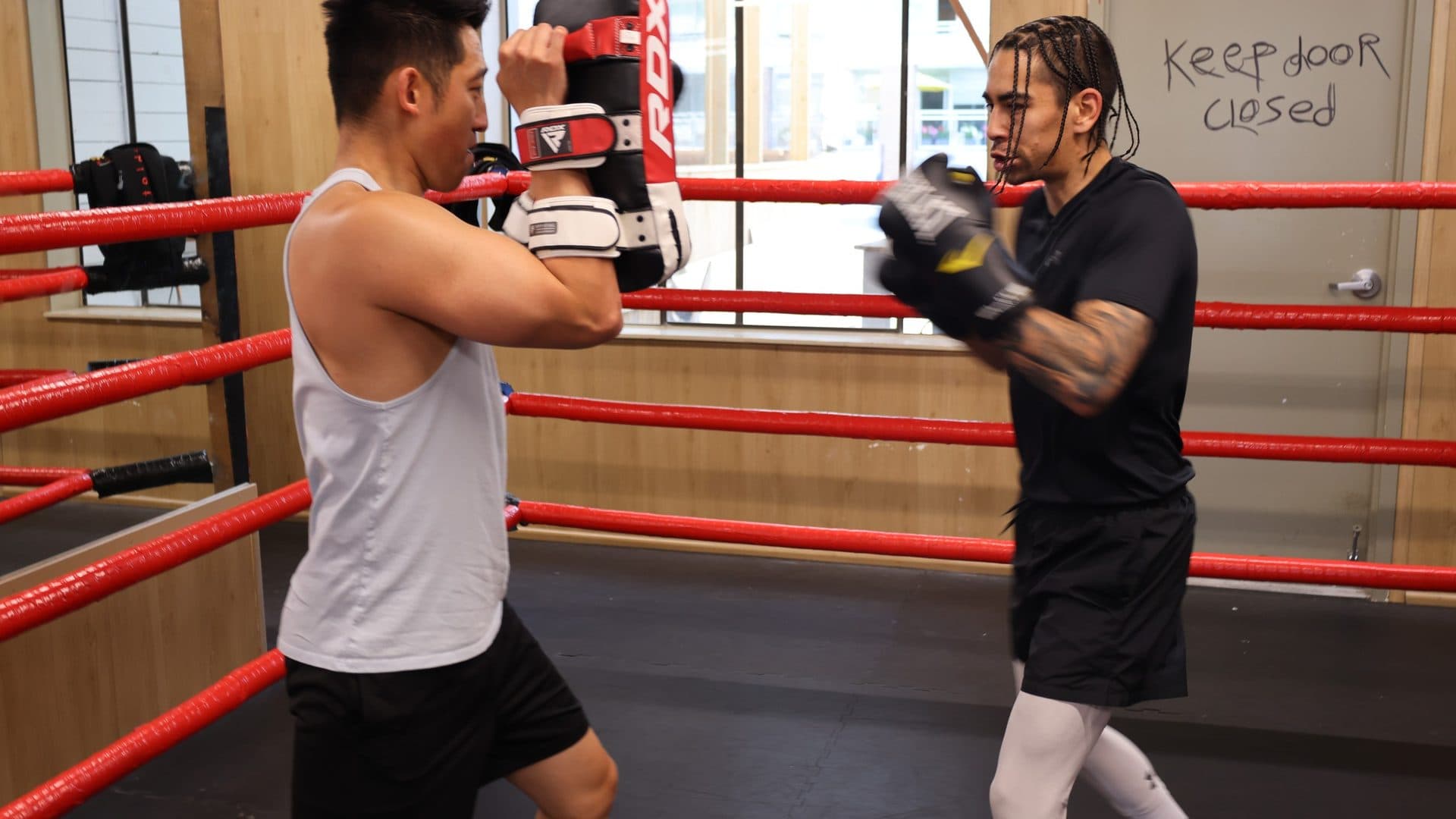
Striking arts. Boxing, kickboxing, Muay Thai. Fastest route to fitness, simplest to start, and the most immediately applicable. Our kickboxing classes are the most common adult entry point.
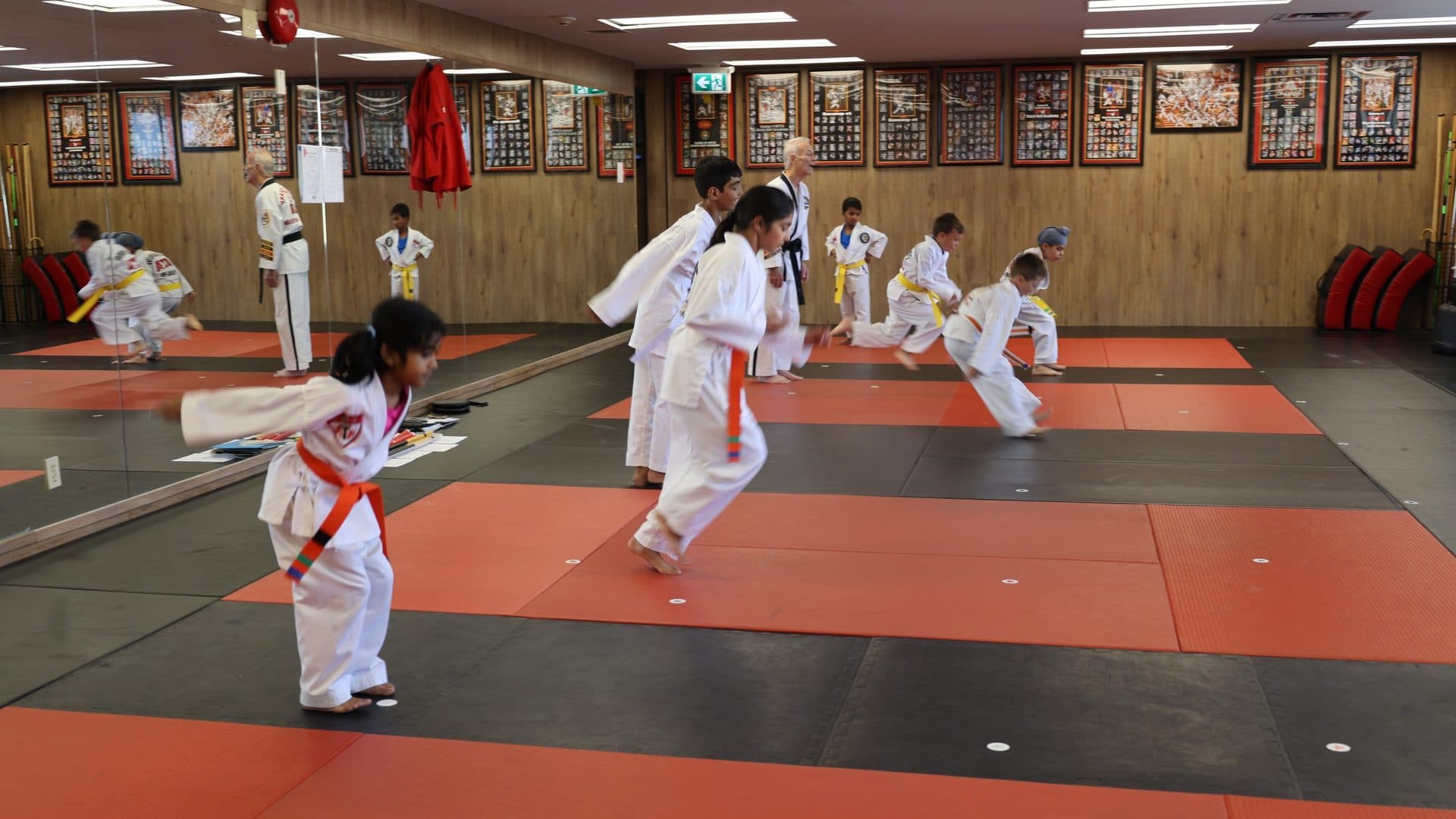
Traditional arts. Karate, taekwondo, and similar. More structure, formal progression, and often a stronger emphasis on discipline and form. World Taekwondo publishes the international framework, and our post on ATA taekwondo covers what that structure looks like in practice.
Grappling arts. Wrestling, judo, Brazilian jiu jitsu. Excellent for people who want minimal head contact, though physically demanding in a different way.
Mixed programmes. What most modern gyms including ours actually teach. Fundamentals drawn from several sources rather than loyalty to one lineage.
The First Three Months, Realistically
Weeks one and two. Everything about martial arts for adults white rock beginners try is awkward at first. You will be slower than you expect and stiffer than you remember. Two sessions a week is plenty and more is counterproductive.
Weeks three to six. Soreness settles into something manageable. You start recognising instruction rather than translating it. Conditioning improves faster than technique.
Weeks seven to twelve. Technique starts to feel automatic in small pieces. You have a stance, a guard, and one or two things you can do reliably. Most people decide here that they are staying.
Our post on the mistakes beginners make is worth reading in week one rather than month six, because most of them are avoidable with a little warning.
Training Around an Adult Body
Martial arts for adults white rock coaches teach has to account for real bodies. You will bring something with you. A dodgy knee, an old shoulder, a back that objects to certain movements. This is normal and it is not disqualifying.
Tell your coach before class rather than during it. Almost every technique has a scaled version, and a competent coach will offer it without making it a production.
Warm up properly and take it seriously. The tolerance for skipping a warm up drops sharply after thirty and vanishes after forty.
Recovery is not optional. Two hard sessions with a rest day between them beats three sessions in a row, every time. The Canadian Society for Exercise Physiology guidelines are a sensible weekly frame to work within.
If you have a heart condition, are pregnant, or have been sedentary for years, speak to your doctor first. HealthLink BC has clear guidance on starting new activity and it takes five minutes to read.
The Fitness Side
Martial arts for adults white rock classes are genuinely demanding, and the fitness is a by-product rather than the point. That turns out to be the most effective way to get fit, because the training does not depend on motivation to endure something unpleasant.
A typical adult class covers cardiovascular work, muscular endurance, mobility, and coordination in one hour. Very little else in fitness does all four.
Mayo Clinic and Cleveland Clinic both publish accessible material on what balanced fitness actually requires, and a well run martial arts session ticks most of the boxes without anybody counting sets.
For anyone who wants to understand the energy cost, our post on martial arts and calorie burn goes into the detail, and our piece on functional fitness explains why the strength built here transfers to ordinary life better than machine work does.
Training With Your Kids
A large share of our adult members arrived because their children started first. Watching from the side for six months is a reliable route to deciding you would rather be on the mat.
Families who train together tend to stick with it, partly for logistical reasons and partly because the shared vocabulary makes it a genuine common interest rather than another thing on the calendar.
We run confidence focused classes for children and dedicated teen martial arts alongside adult sessions, and the class schedule is built so families can often train in adjacent slots.
Sport for Life has excellent Canadian material on long term athlete development if you want to understand how children’s training should differ from adults’.
What About Belts and Gradings
Some adults love a formal progression system and some find it faintly ridiculous. Both reactions are reasonable.
Gradings provide structure, measurable milestones, and a reason to work on the parts you would otherwise avoid. They can also become the point in themselves, which is when they stop being useful.
What matters more is whether you are actually improving, which is measured by what you can do under pressure rather than what colour is around your waist. The Coaching Association of Canada frames athlete development around competence rather than credential, and that is the right instinct.
Common Fears, Addressed
“I will be the oldest person there.” Almost certainly not. Adult classes skew considerably older than people expect, with a wide spread from twenties to sixties.
“I am too unfit to start.” The most self defeating belief in fitness. Beginner classes assume no fitness. ParticipACTION has spent years making the point that starting where you are is the only approach that works.
“I will get hurt.” Bruises and stiffness, yes. Serious injury is rare in well coached adult classes where contact is progressive and optional.
“Everyone will be watching me.” Nobody is watching you. Everyone is concentrating on not getting their own combination wrong.
“I have no coordination.” Then you have the most to gain. Coordination is trained, not inherited.
Building a Sustainable Week
The most common failure mode in martial arts for adults white rock newcomers is doing too much in month one and nothing in month three.
Two classes a week, indefinitely, beats five classes a week for six weeks by an enormous margin. Nothing in martial arts rewards short bursts.
Add strength work if you can, keep one genuine rest day, and treat sleep as part of the training rather than as what happens when training stops. World Health Organization activity targets are a reasonable weekly floor and easily met with two or three sessions.
Many adults also add a group fitness class for conditioning, and our wider programme is designed so those pieces fit together rather than compete.
What Nobody Tells Adults Before Their First Class
There is a set of small, practical things that would spare most people a lot of unnecessary anxiety, and almost nobody mentions them.
You will be tired in an unfamiliar way. Martial arts fatigue is not treadmill fatigue. It is concentration plus exertion, and the mental component surprises people more than the physical one. Expect to be mentally flat afterwards for the first fortnight.
Your forearms will ache. Holding a guard is an isometric hold that nothing in ordinary life prepares you for. It passes within about three weeks.
You will forget everything between classes. This is normal and it is not a sign you are bad at it. Motor memory consolidates over many exposures, and the second time you are taught something it lands far better than the first.
You will be partnered with someone better than you. This is deliberate and it is a gift. Experienced partners make you better and are almost universally generous about it.
Nobody expects you to be good. The only genuinely irritating beginner is the one who will not listen. Being uncoordinated is expected and nobody thinks about it for a second longer than it takes to help.
Johns Hopkins Medicine publishes useful general material on how the body adapts to new physical demands, and understanding that the first month is largely neurological rather than muscular makes the awkwardness far easier to sit with.
Training Through Your Forties and Beyond
Adults over forty can train hard. What changes is not capacity but margin, and the adjustments are mostly about managing that.
Warm up longer. What took five minutes at twenty five takes twelve at forty five. This is not negotiable and it is the cheapest injury insurance available.
Prioritise sleep over extra sessions. A fourth weekly class taken on six hours of sleep is worse than three classes on eight. Recovery is where adaptation happens.
Add strength work. Muscle mass and bone density both decline without resistance training, and both underpin everything you do on the mat. Two short sessions a week is enough to change the trajectory.
Respect niggles early. A twinge addressed in week one is a week off. The same twinge ignored for a month is a season.
Compete against yourself only. The twenty two year old across the mat has a different recovery system. Measuring yourself against them is the fastest route to injury and disappointment.
Canada’s physical activity guidance is explicit that adults of every age benefit from both aerobic and strength work, and martial arts sits neatly across both when paired sensibly.
The Social Side Is Not a Bonus
Adults consistently underestimate how much of the value here is social, and it is worth naming directly because it is often what keeps people training when motivation dips.
Partner based training creates a particular kind of relationship. You cannot drill without somebody choosing to help you, and over months that produces a reciprocity that is genuinely unusual in adult life. People notice when you miss a week. Somebody asks where you were.
That accountability is the mechanism, not the sentiment. Nobody notices when you skip a treadmill session. Plenty of people notice when you skip class, and for most adults that is worth more than any amount of self discipline.
It also outlasts fitness goals. People arrive wanting to lose weight and stay because of the room. Every long standing member we have follows roughly that arc, and it is the single most reliable predictor of whether somebody is still training in three years.
How to Choose a Gym as an Adult
Adults have different needs from children and should assess a school differently.
- Watch an adult class, not a kids class. They are entirely different environments with different coaching.
- Ask how beginners are integrated. Thrown in with everyone, or given a foundation before joining the main floor? Both work, but you should know which you are getting.
- Ask about injuries and modification. The answer tells you whether they have coached adults with real bodies or only young athletes.
- Check whether contact is optional. It should be, and any pressure otherwise is a warning sign.
- Notice how the coach speaks to the least capable person present. That is your future if you have a bad week.
- Ask what happens if you miss three weeks. Life happens. A school that handles that gracefully is one you can train at for a decade.
Price matters least of these. A cheap class you dread is expensive, and a good room is worth paying for.
Fitting Training Around Real Adult Life
The obstacle for adults is almost never willingness. It is that a week already full has to absorb something new, and most people plan for the week they wish they had.
Book it like a meeting. A fixed slot in a calendar survives a busy week. A vague intention to train twice does not.
Choose the session you can make on a bad week. Not the best class. The most reliable one. Consistency beats quality by a distance.
Bag packed the night before. Trivial and remarkably effective. Most missed sessions die at the point of gathering kit.
Accept two sessions as a full programme. It is. Martial arts for adults white rock members who train twice weekly for years vastly outperform those who train four times weekly for two months.
Plan for interruption. Illness, work, holidays, children. You will miss weeks. The people who continue are simply the ones who return without treating a gap as a failure.
The goal is not an optimal schedule. It is a schedule that survives an ordinary bad month, which is a much lower bar and a much more useful one.
What Happens If You Stop and Come Back
Almost everybody has a break at some point, and the fear of having lost everything keeps a surprising number of people from returning at all.
Technique persists far better than fitness. Motor patterns learned properly are remarkably durable, and people returning after a year are usually astonished at how quickly the movements come back.
Conditioning goes quickly and returns quickly. Expect two or three uncomfortable weeks and then a rapid return to roughly where you were, considerably faster than building it the first time.
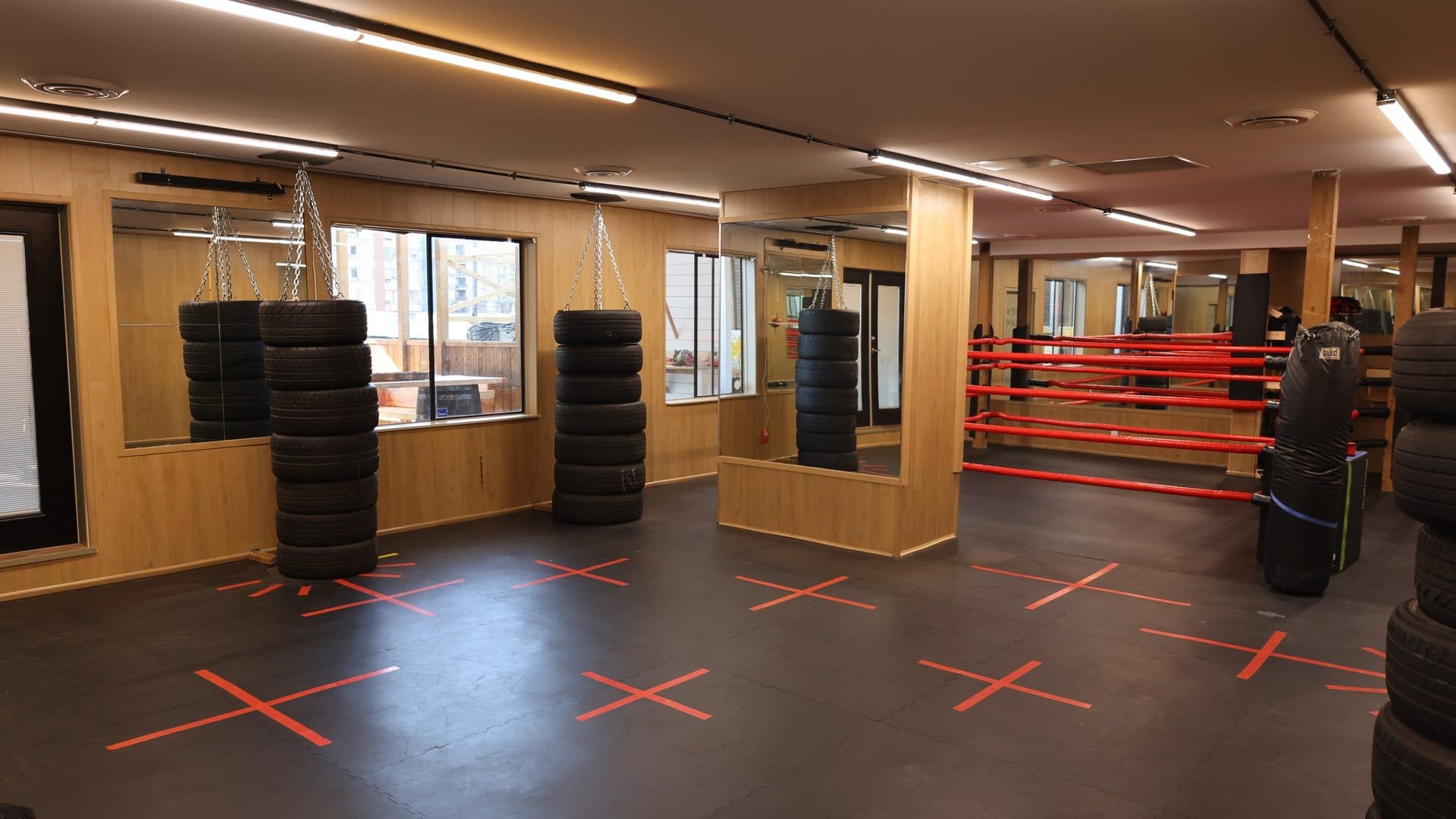
The social side is the part people worry about most and it is the least warranted. Nobody in a martial arts gym thinks badly of somebody who took time off. Most have done it themselves.
The one thing worth doing is telling the coach you have been away, so that the first session is scaled sensibly rather than pitched at where you left off. Returning at your old intensity is the most reliable way to get injured in week one and disappear again.
One Last Thing Worth Knowing
The adults who last are almost never the most athletic ones who walk through the door. They are the ones who found the training interesting enough to keep thinking about between sessions.
That is worth knowing because it changes what you should look for in a first month. Not whether you were good at it, which you will not be, and not whether you were fit enough, which is irrelevant. Whether you found yourself replaying a combination in your head on the drive home.
If you did, you will probably still be training in five years. If you did not, try a different class or a different gym before concluding that martial arts is not for you.
Frequently Asked Questions
Am I too old at forty five for martial arts for adults white rock classes? No. Nor at fifty five. Scaling matters, age does not disqualify.
Do I need to be flexible? No. Flexibility is an outcome of training, not a prerequisite for it.
Will I have to fight? No. Contact is optional in every adult class we run.
How long until I feel competent? Around three months for basic competence, a year for genuine comfort.
Can I train with an old injury? Usually yes, with modification, and after speaking to your doctor if it is significant.
What should I wear to the first class? Athletic clothing you can move fully in. Nothing specialised is needed at the start.
Is there a community outside class? Very much so. Our post on the White Rock fitness community describes it better than we can here.
Starting Martial Arts for Adults White Rock Residents Recommend
The barrier is almost never physical. It is the story people tell themselves about being too old, too unfit, or too late, and that story rarely survives one honest hour in a good room.
Kingdom Athletics runs martial arts for adults white rock locals can start with no background at all, at whatever pace your body and your schedule allow. Take a look at the martial arts programme, see when things run, and when you are ready, get in touch. Martial arts for adults white rock wide has more people in exactly your position than you would ever guess from the outside.