Boxing for Seniors White Rock: 9 Proven Reasons to Start After 55
October 9, 2026•22 min read•Boxing & Martial Arts, Lifestyle & Wellness
If you are over 55 and wondering whether boxing for seniors White Rock style is a real option or a gimmick, here is the short answer: non-contact boxing is one of the most complete workouts an older adult can do, and you do not need to get hit, spar, or be fit already to start. You hit pads and heavy bags, you move your feet, you learn combinations, and a coach adjusts every piece of it to the body you actually have today.
This guide to boxing for seniors White Rock and South Surrey residents is for adults 55 and up on the Semiahmoo Peninsula, and for the sons and daughters who keep suggesting Mom or Dad “try something.” It covers what the research says and does not say, how to get cleared by your doctor, how coaches scale intensity, and what a class at Kingdom Athletics on Johnston Road looks like.
One thing to be clear about up front: Kingdom does not run a separate seniors class. Older members train in the regular boxing classes, and the coaches scale the work to each person.
Why Boxing for Seniors White Rock Residents Makes So Much Sense
White Rock skews much older than the rest of the province. According to the Statistics Canada 2021 Census Profile for White Rock, the city’s median age was 58.0, compared with 42.8 for British Columbia as a whole, and 37.3 percent of residents were 65 or older, against 20.3 percent provincially. In plain terms, more than one in three people you pass on the promenade is a senior. That is why the question of boxing for seniors White Rock locals ask about is not a niche one here. It is a mainstream health question.
The guidelines are also clear about what older bodies need. The Canadian 24-Hour Movement Guidelines for Adults 65+ recommend at least 150 minutes a week of moderate to vigorous aerobic activity, muscle-strengthening work for the major muscle groups at least twice a week, and physical activities that challenge balance. Most people who walk the pier every morning are covering part of the first item. Very few are covering the second and third, and that gap is the whole case for boxing for seniors White Rock residents can fit into a normal week.
That is where boxing earns its place. A single session combines all three: sustained rhythmic effort for the heart, loaded pushing and bracing for the muscles, and constant weight shifting for balance. It is also genuinely interesting, and people keep doing things they enjoy. If you are exploring boxing for seniors White Rock has within walking distance of uptown, the mix of structure, variety and coaching is the real draw.
What Non-Contact Boxing Actually Is (and What It Is Not)
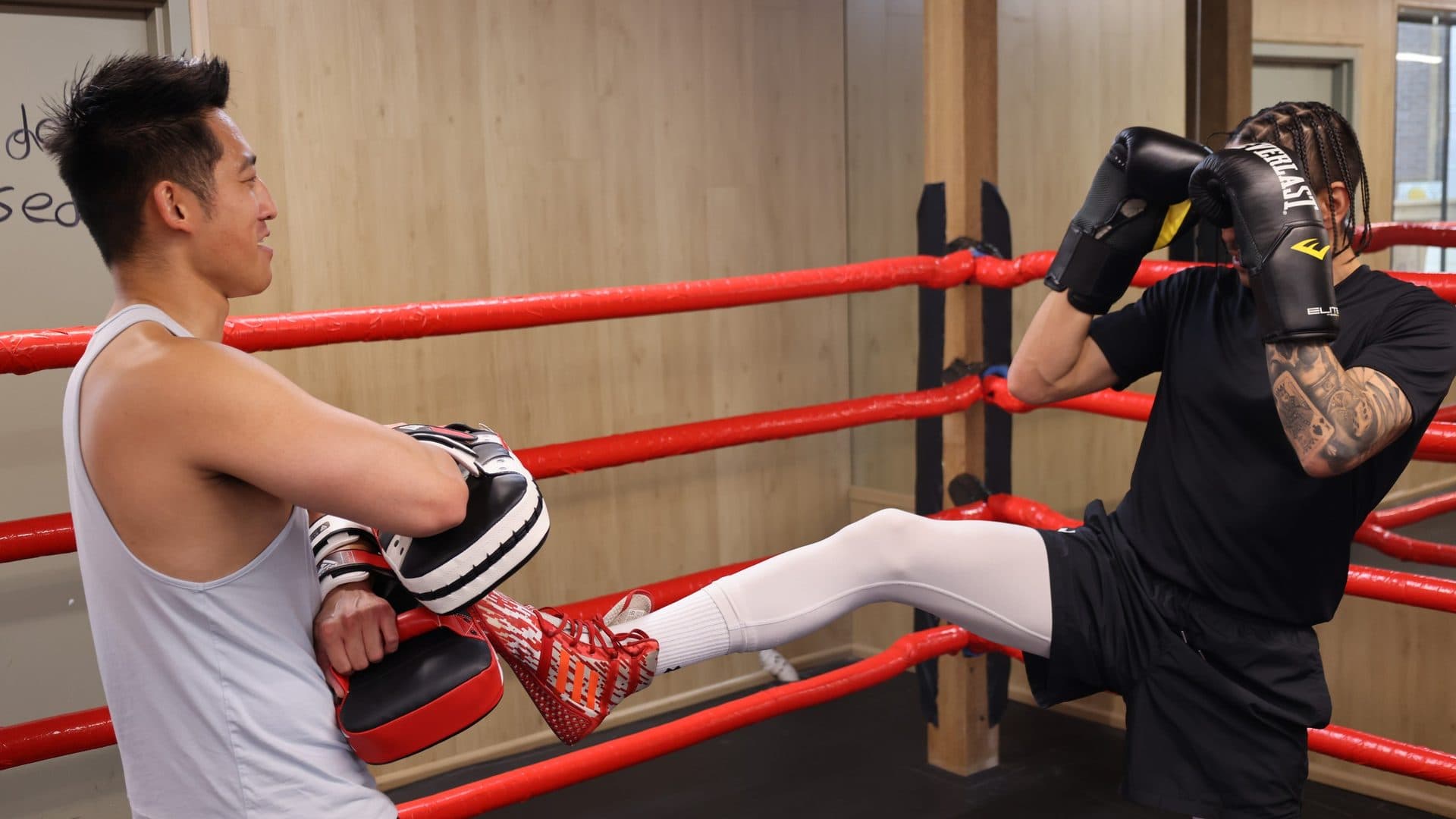
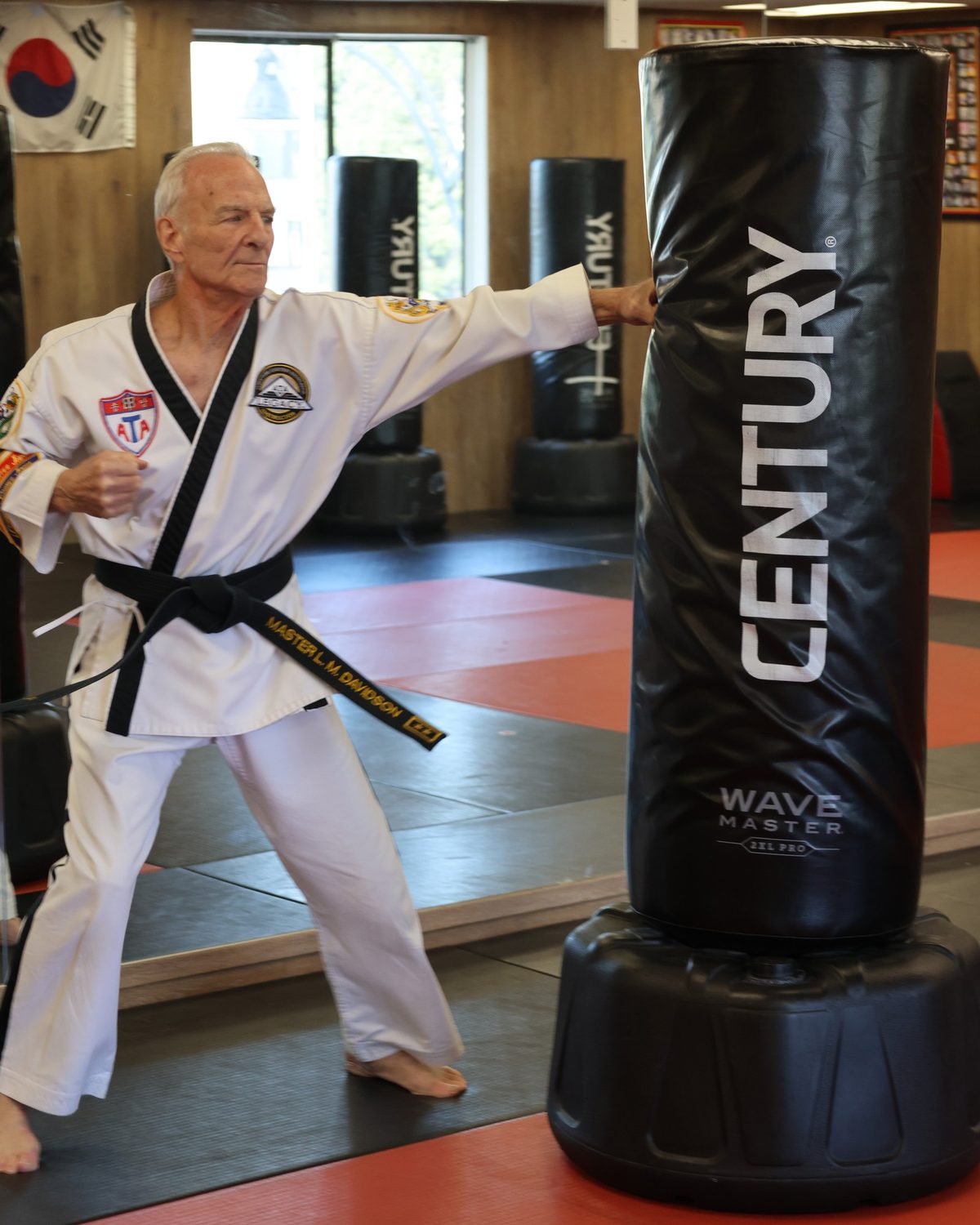
When people hear “boxing,” they picture two fighters in a ring. Non-contact boxing is something else entirely. Nobody hits you. You strike focus mitts held by a coach, heavy bags, or the air in front of a mirror, and your partner, if you have one, is holding pads rather than throwing punches back.
The skills are the same ones a competitive boxer learns (stance, guard, footwork, the jab, the cross, hooks and uppercuts, slipping and rolling), but the goal is fitness, coordination and confidence rather than competition. Every form of boxing for seniors White Rock members do at Kingdom is this non-contact kind.
Kingdom’s timetable does include Saturday Light Sparring at 10:00 and 11:00. That is a separate, optional session, and nobody who comes in for boxing for seniors White Rock style training is expected to go near it. If you are curious what sparring involves and why beginners work up to it slowly, our post on sparring rules for beginners explains it, but you can train for years without ever stepping into the ring for contact.
Here is what a non-contact boxing session typically includes:
- Footwork: stepping forward, back and side to side while keeping a stable, staggered stance.
- Shadowboxing: throwing punches at the air, often in front of a mirror, to groove technique without impact.
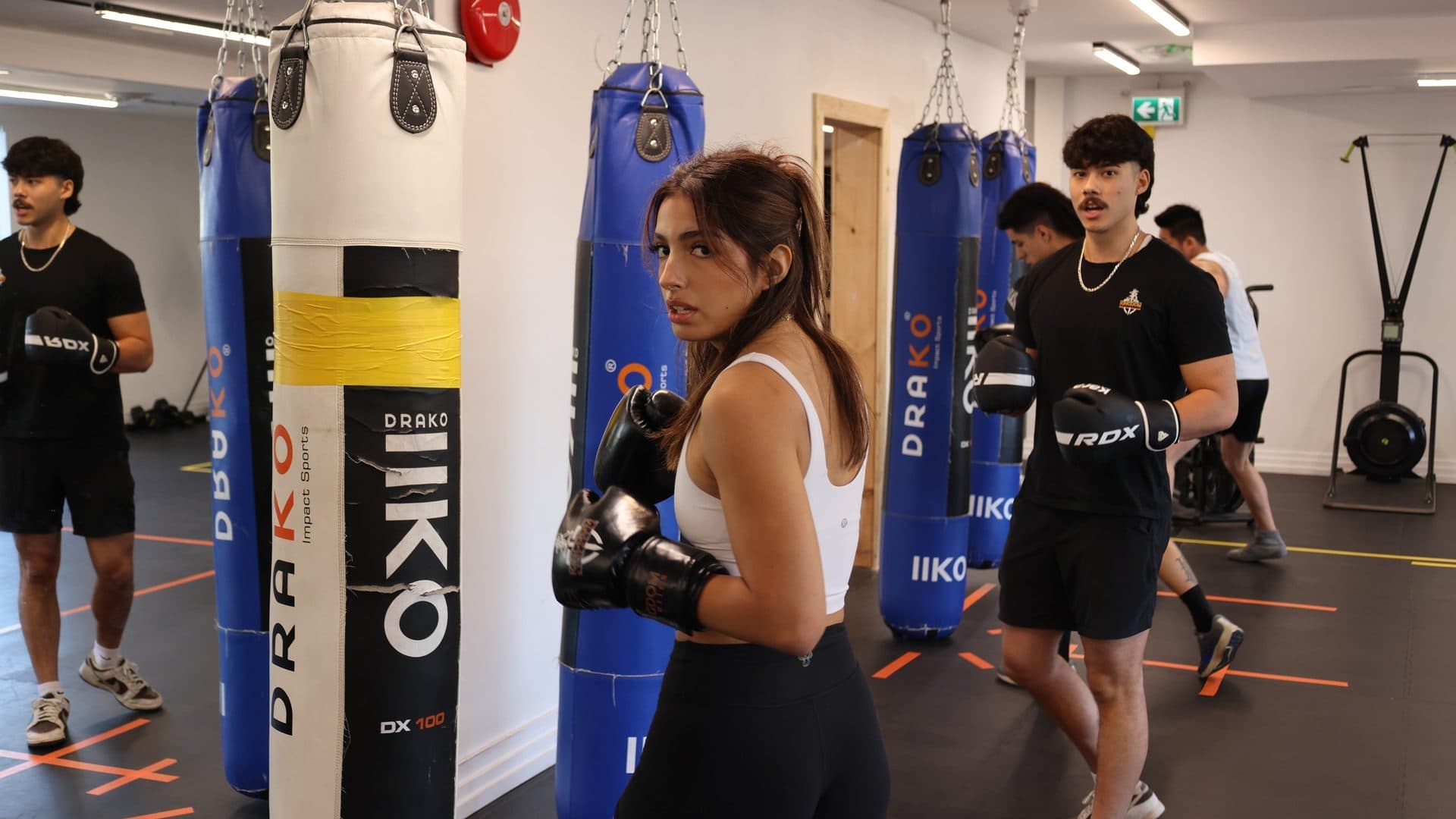
- Bag work: rounds on a heavy bag, where you control the force of every punch.
- Pad work: a coach calls combinations and moves the mitts, which trains reaction, rhythm and accuracy.
- Conditioning and core: bodyweight strength work and mat exercises between rounds.
If you want a deeper technical picture of the basics, the complete intro to beginner boxing walks through stance and the six core punches in detail.
9 Research-Backed Benefits of Non-Contact Boxing After 55
A careful note before the list. Boxing specifically has been studied far less than exercise in general, so we say what kind of study each citation is. Nothing here is a promise that boxing will prevent, treat or cure anything. What the evidence supports for boxing for seniors White Rock readers is narrower and more useful: the ingredients of a good boxing class (balance, strength, aerobic work and complex coordination) are the same ingredients that consistently help older adults stay capable.
1. Balance and fall prevention
Falls are the single biggest reason balance matters. The World Health Organization’s fact sheet on falls notes that falls are the second leading cause of unintentional injury deaths worldwide and that adults older than 60 suffer the greatest number of fatal falls. Closer to home, the HealthLink BC file Seniors’ falls can be prevented states that one-third of people aged 65 and over who live in the community fall each year, and that falls are the leading cause of injury-related deaths and hospitalizations for adults 65 and older in B.C.
The good news is that exercise works. A Cochrane review of exercise for preventing falls in community-dwelling older people, covering 108 randomized trials, found high-certainty evidence that exercise reduces the rate of falls by 23 percent, and balance and functional exercises by 24 percent. Boxing is loaded with that kind of training: shifting weight, stepping in and out, pivoting and recovering your stance after every punch.
One small randomized trial of a Thai boxing dance program for older adults at risk of falling reported better static and dynamic balance after four weeks compared with a control group. That is one study of a boxing-inspired program, not proof about every class, but it points in a sensible direction.
There is also a trap worth naming. HealthLink BC points out that fear of falling is common, but that restricting activity to avoid falls can cause further frailty and increase the risk. In a town built on a slope, boxing for seniors White Rock residents can do indoors all year is practical balance training for the hills, curbs and stairs of everyday life.
2. Bone density and bone strength
Bones respond to load. Osteoporosis Canada’s exercise guidance says physical activity helps protect your spine, slows the rate of bone loss and builds muscle strength, which can prevent falls. Their Too Fit To Fracture recommendations call for balance exercises and muscle-strengthening exercises at least twice a week, with difficulty increasing over time.
Research on heavier loading is encouraging too. In the LIFTMOR randomized trial, postmenopausal women with low bone mass who did eight months of closely supervised high-intensity resistance and impact training improved lumbar spine bone density compared with a low-intensity home program. A punch is not a heavy deadlift, but a boxing class does give regular loaded work for the legs, hips, back and shoulders, plus footwork that puts gentle impact through the lower body. Think of boxing for seniors White Rock style as one piece alongside dedicated strength training in White Rock.
3. Grip strength and hand function
Grip strength is more than opening jars. In the PURE study published in The Lancet, which followed nearly 140,000 adults, lower grip strength was associated with higher all-cause and cardiovascular mortality, and grip strength was a stronger predictor of both than systolic blood pressure. That is an association, not proof that squeezing harder makes you live longer, but grip is a useful signal of overall strength.
Boxing asks a lot of the hands and forearms. You close a firm fist at the moment of impact, hold your guard up for full rounds, and brace your wrists against the bag. Simple drills such as fist clenches with wraps on and towel wrings build forearm endurance without extra equipment, and they are easy to add to any session of boxing for seniors White Rock members train in.
4. Cognition, coordination and reaction
Pad work is a thinking workout disguised as a physical one. The coach calls “1, 2, slip, 2,” you remember the sequence, then execute it while the mitts move. That mix of memory, attention and movement is what researchers call dual-tasking.
A meta-analysis of exercise and cognitive function in adults over 50, drawing on 39 studies, found that physical exercise improved cognitive function, and that sessions of 45 to 60 minutes at least moderate intensity were associated with benefits. The review covered aerobic, resistance, multicomponent and tai chi training rather than boxing, but boxing for seniors White Rock members do touches several of those categories in one session.
5. Heart and lung fitness
Boxing rounds are interval training: a few minutes of steady work, a short rest, repeat. That lets you raise your heart rate in manageable bursts rather than grinding through a long, flat effort. The WHO physical activity fact sheet lists reduced risk of cardiovascular disease mortality, hypertension and type 2 diabetes among the benefits of regular activity for adults and older adults. Rounds are also easy to scale: a newer member might work at 60 percent effort for the full round while a fitter one pushes the last 30 seconds.
6. Muscle strength you use every day
Getting up off the floor, carrying groceries up the slope from Marine Drive, lifting a grandchild. These are strength tasks. Boxing classes commonly pair punching rounds with bodyweight squats, lunges, push-ups (to a wall, a bench or the floor) and planks. Those overlap with the squat, push and plank patterns Osteoporosis Canada recommends for leg strength and posture.
7. Posture and upper back strength
Holding a guard with your elbows in and chin tucked trains the muscles between the shoulder blades and the back of the neck, which tend to weaken with age and years of desk work. A good boxing stance is also a good posture, and the mirrors make it easy to check.
8. Mood, stress and social connection
Hitting a heavy bag is satisfying in a way a treadmill is not. The WHO fact sheet includes improved mental health among the benefits of activity for older adults, and a regular midday class adds familiar faces and a reason to leave the house on a grey February day. Our article on the mental health side of training goes further.
9. Confidence in your own body
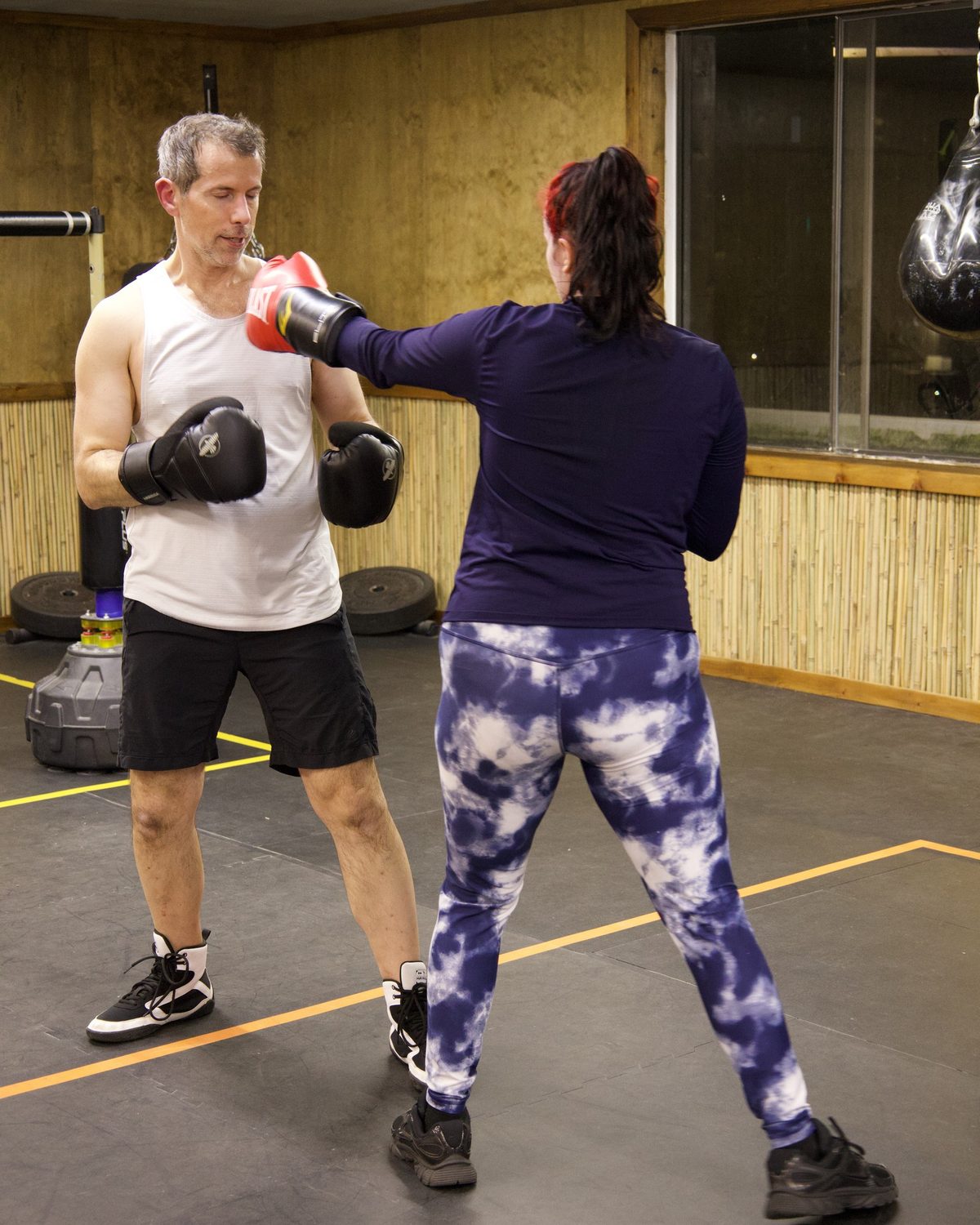
This one is hard to measure. Learning to stand in a stable stance, brace, pivot and recover your balance on purpose tends to make people less hesitant on uneven ground, whether that is the promenade, a wet curb or an airport escalator. Boxing for seniors White Rock style is not a self-defence course, but knowing how to stand and move is a practical kind of readiness.
What the Research on Boxing and Parkinson’s Does and Does Not Show
Many older adults first hear about boxing through Parkinson’s disease, so it deserves its own careful section. Kingdom Athletics does not run a Parkinson’s program, and nothing in this article should be read as treatment advice. If you live with Parkinson’s, your neurologist and physiotherapist come first.
Here is what the research actually says:
- An early case series on boxing training for Parkinson’s followed six people for up to 36 weeks. They improved in balance, gait, daily activities and quality of life, and the program was reported as feasible and safe. Six people is very small, with no comparison group.
- A follow-up randomized trial comparing group boxing with traditional exercise in 31 adults with Parkinson’s found both groups improved in balance, mobility and quality of life. The boxing group improved more in gait endurance; the traditional group gained more balance confidence. Boxing was one good option, not a superior one.
- A 2019 review asked, has boxing for Parkinson’s grown beyond the evidence? It found only two eligible studies with 37 participants, noted positive findings but limited evidence of efficacy, and flagged safety guidance and professional training as key.
- A 2025 systematic review of boxing exercise in Parkinson’s included 13 studies and 402 people aged 53 to 89. It reported moderate-quality evidence that boxing was feasible and helpful for lower body strength, balance, mobility, gait and quality of life, and called for more randomized trials.
The honest summary: the evidence is promising, growing and still modest, and none of it makes boxing for seniors White Rock gyms offer a treatment for anything. Parkinson Canada’s guidance on staying active lists boxing among aerobic options and recommends talking to your health care team first, considering a physiotherapist experienced in Parkinson’s, starting slowly, and timing exercise for “on” periods when medication works best. If you have Parkinson’s and want to train in a regular class, bring that plan with you and tell the coach on day one.
Before Your First Class: Doctor Clearance and a Safety Checklist
For most people, the right first step with boxing for seniors White Rock style is a quick conversation with your family doctor or nurse practitioner, especially if you have been inactive for a while.
HealthLink BC’s page on physical activity as you get older puts it simply: it is never too late to start, start slow, and talk with your doctor if you are worried about how exercise might affect your health. The same page notes that B.C. residents can dial 8-1-1 and ask for Physical Activity Services to speak with a qualified exercise professional, which is a free and underused resource.
Bring up these topics specifically:
- Heart and blood pressure. Any heart condition, chest pain on exertion, or poorly controlled blood pressure.
- Bones. Osteopenia, osteoporosis, or a past fracture from a minor fall.
- Joints. Arthritis in the hands, wrists, shoulders, hips or knees, and any joint replacement.
- Eyes. Recent eye surgery or retinal problems.
- Medications. Blood thinners (bag work can bruise more easily) and anything that causes dizziness.
- Neurological conditions. Parkinson’s, a past stroke, or inner ear balance problems.
If you have been told you are at high risk of fracture, Osteoporosis Canada’s guidance on spine-safe movement is worth reading before class. It advises people at high risk to limit repetitive or end-range bending and twisting, and to bend with the hips and knees rather than the spine. That matters in boxing because hooks and uppercuts involve rotation. A coach can shorten the range, keep the rotation in the hips and feet, and swap movements where needed.
It also helps to know your own fall risk. HealthLink BC’s page on preventing falls as you age links to the Staying Independent Checklist, a short questionnaire you can fill in and bring to your doctor. The U.S. National Institute on Aging’s guide to falls and fractures adds practical steps such as reviewing medications and getting your vision checked.
On the day: a personal safety list
- Eat something light an hour or two before a midday class and bring water.
- Wear flat, supportive athletic shoes. Thick, squishy running soles make pivoting less stable.
- Tell the coach about any condition, surgery or medication before the warm-up.
- Know your stop signals: chest pain or pressure, unusual breathlessness, dizziness, or sharp joint pain. Stop, sit, and tell a coach.
- Take the rest you need. Sitting out a round is part of good training, not a failure.
How Coaches Scale a Regular Class for Boxing for Seniors White Rock Members
Because Kingdom does not run a dedicated seniors session, the most common starting point is the weekday 12:00 Boxing class on the weekly class timetable. Midday tends to suit retirees and semi-retired people well: no rush hour, energy is usually good, and the rest of the afternoon stays free. The same scaling principles apply in the 17:00 Boxing Conditioning class and the 18:00 Technical Boxing class if evenings suit you better.
Scaling is simply the coach’s job of keeping everyone in the same class but at the right dose. Here is how the work is typically adjusted for boxing for seniors White Rock members across the main variables:
| Variable | Starting version | Progressed version |
|---|---|---|
| Punch force | Light, snappy contact on pads or bag, about 40 to 50 percent effort | Firm contact with full hip rotation on the last 30 seconds of a round |
| Rotation | Jab and cross only, short range, hips square | Hooks and uppercuts added with rotation driven from the feet |
| Footwork | Step and drag, wider stance, a hand near the bag for balance | Pivots, angle steps and moving while punching |
| Round length | Work for part of the round, rest the remainder | Full rounds with shorter rests |
| Floor work | Wall or bench push-ups, standing core drills | Floor push-ups, planks and side planks on the mats |
| Complexity | Two-punch combinations called slowly | Four to six punch combinations with slips and rolls |
A useful effort gauge is the talk test. At a moderate pace you can speak in full sentences but could not sing; at a harder pace you manage only a few words. In the first few weeks of boxing for seniors White Rock style, most beginners should live at the moderate end, with brief harder moments. When the guard drops, the feet cross or breathing turns ragged, the round is over for you even if the clock says otherwise.
Kingdom’s coaching team is broad, which helps when boxing for seniors White Rock members bring very different histories to class. Matt owns the gym, and the team includes boxers and athletic trainers such as Kenny, Spencer, Fabian, Arion and Khaila, plus Nick, whose background is rehab, fascial release and stretching therapy. You can read more about the people and the approach on our mission page.
What to Expect in a Boxing Class, Minute by Minute
Every coach runs a class a little differently, and no two days are identical, but a typical boxing session follows a recognizable arc. Here is roughly how it flows, with notes on how an older beginner would usually experience each part.
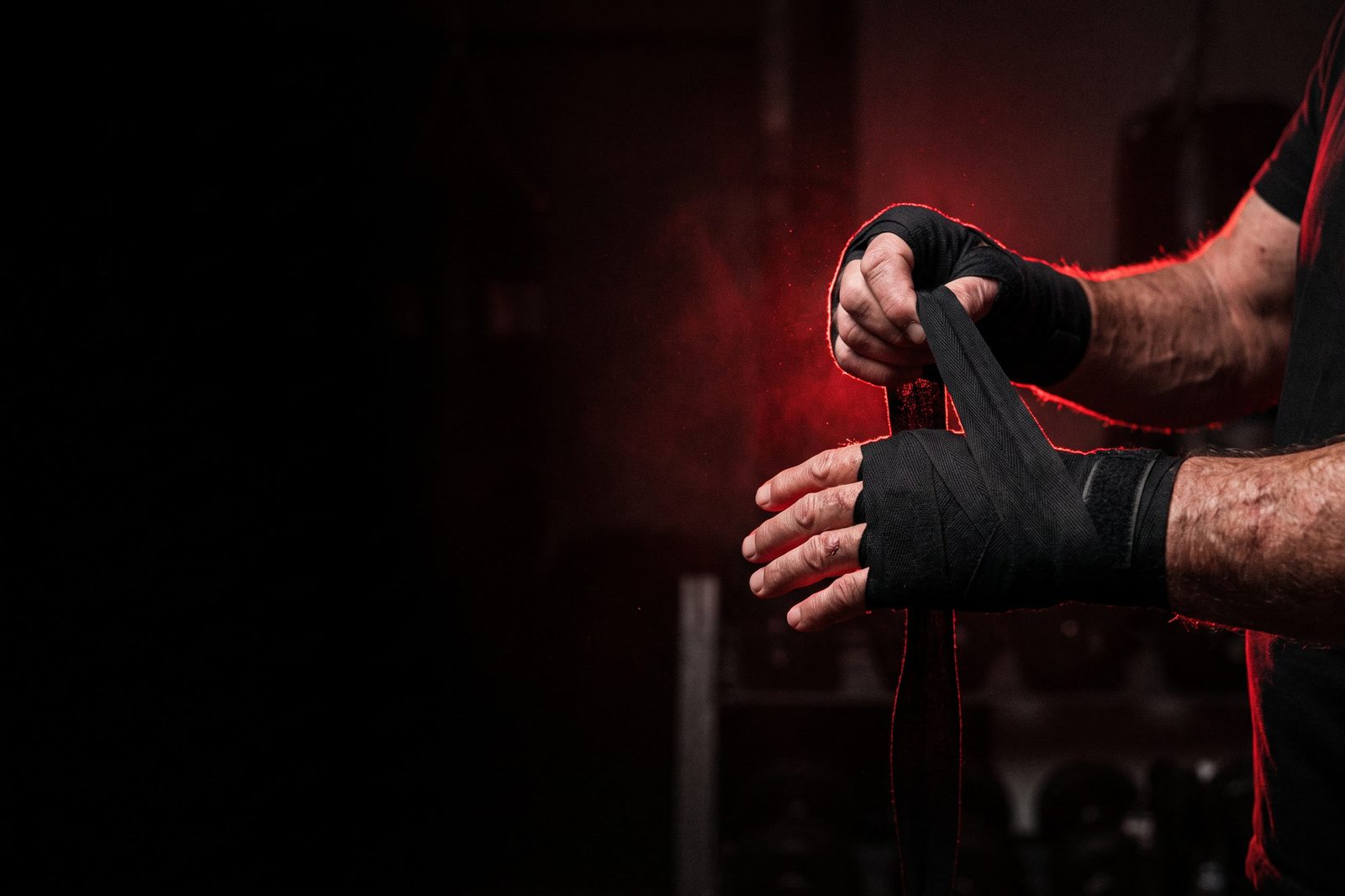
- Arrival and hand wraps. Arrive 10 to 15 minutes early on your first day to tell a coach about injuries, get help with wraps and settle in at a heavy bag.
- Warm-up. Marching, arm circles, light footwork patterns and small torso turns to raise the heart rate. Hip or knee issues get a lower-impact version.
- Stance and footwork. Feet staggered about shoulder width, knees soft, weight centred, hands up. Then forward, back and side steps. This is where much of the balance training quietly happens.
- Technique block. The coach demonstrates a punch or combination and you shadowbox it in the mirror. Newcomers usually stay on the jab and cross.
- Bag or pad rounds. Several rounds with short rests. Coaches correct technique around the room and may take you for a round on the mitts at a pace set for you.
- Strength and core. Bodyweight exercises on the mats or against the wall.
- Cool-down and stretch. Heart rate comes down and you stretch the shoulders, chest, hips and calves.
On a first day, it is normal to take the easy option on almost everything and still feel it the next morning, mainly in the shoulders and calves. That settles within a few sessions. For a newcomer’s-eye view of the whole experience, see things nobody tells you before your first boxing class.
Your First 8 Weeks: A Sensible Progression
The single biggest mistake older beginners make with boxing for seniors White Rock style training is doing too much in week one because it feels good, then missing two weeks with sore shoulders. A slower ramp almost always wins. This is a sample outline, not a prescription, and your coach will adjust it once they have seen you move.
| Weeks | Classes per week | Focus | Effort guide |
|---|---|---|---|
| 1 to 2 | 1 to 2 | Stance, guard, jab and cross, basic step footwork, learning to wrap | Moderate, full sentences possible, rest whenever needed |
| 3 to 4 | 2 | Two and three punch combinations, stepping while punching, light pad rounds | Moderate with 20 to 30 second harder bursts |
| 5 to 6 | 2 to 3 | Hooks with controlled rotation, simple slips, longer work periods | Moderate to vigorous in short spells |
| 7 to 8 | 2 to 3 | Longer combinations, pivots, full rounds, more floor strength work | Full rounds at a pace you can hold with good form |
Between classes, keep walking, because boxing for seniors White Rock style works best alongside daily movement. A flat loop on the promenade or through the quieter streets of Ocean Park counts toward the 150 weekly minutes in the guidelines. Two boxing classes plus three brisk 30-minute walks gets most people most of the way there, and covers strength and balance twice a week as well.
Three drills to practise at home
- Stance holds. Stand in your boxing stance next to a kitchen counter for 30 seconds, then switch feet. Progress by taking one hand off the counter, then both.
- Slow shadowboxing. Throw jab, cross, jab, cross in slow motion for one minute, freezing for a second at full extension. Slow reps expose balance leaks that speed hides.
- Step and return. Step forward in stance, step back to the start, 10 times, then side to side. Keep the feet from crossing.
Gloves, Wraps and Gear for Older Hands and Joints
You do not need to buy much to start. Wear comfortable clothes and supportive shoes, bring water, and a coach can advise on gloves before you spend money. When you do buy, a few details matter for anyone starting boxing for seniors White Rock style with older hands:
- Glove weight. A 12 to 16 ounce padded training glove spreads impact across the knuckles. Heavier gloves protect more but tire the shoulders faster, so ask a coach.
- Hook and loop closures. Easier than laces, especially with arthritic fingers.
- Wraps or quick wraps. Hand wraps support the wrist and knuckles; slip-on gel wraps are easier if long wraps are fiddly.
- Footwear. Flat, grippy, supportive shoes.
Our full buying guide to boxing gloves for beginners covers sizing, materials and what to avoid.
How to Evaluate Any Gym Before You Commit
Whether you end up training with us or somewhere else, these are the questions worth asking any gym when you are researching boxing for seniors White Rock and South Surrey options:
- Will a coach ask about my health history before I start? The answer should be yes, every time.
- How do you modify hooks, uppercuts and floor work? Listen for specific alternatives, not “just go at your own pace.”
- Is contact ever required? In a non-contact class, it should never be.
- Can I watch a class first? Notice how coaches treat the slowest person in the room.
- Is technique actually coached? Technique is what makes boxing good for coordination and balance.
We have written a longer checklist on what to look for in a South Surrey boxing gym, and if you are weighing group classes against one-to-one coaching, our comparison of group fitness versus personal training lays out the trade-offs. Readers comparing wider options can also look at our roundup of fitness classes in South Surrey and our overview of boxing classes across Surrey.
Getting to Johnston Road from Around the Peninsula
Kingdom Athletics is at 1493 Johnston Rd #101, in uptown White Rock, up the hill from Marine Drive and the pier. For people in the Sunnyside and Semiahmoo neighbourhoods, the gym is close to home. From Ocean Park and Crescent Beach, the usual route is east along 16 Avenue into uptown.
From Morgan Creek, Rosemary Heights, Grandview Heights and Elgin Chantrell, most people come south on 152 Street past Semiahmoo Town Centre, since 152 Street becomes Johnston Road as it enters White Rock. Highway 99 and the Peace Arch crossing are a few minutes away if you are coming from further afield.
Travel time is the practical side of boxing for seniors White Rock residents often overlook. A class you can reach in ten minutes on a rainy November day is a class you will actually attend. Coastal winters here are mild but wet and dark, which is exactly when outdoor walking routines tend to fall apart and an indoor, scheduled session keeps things going.
One Membership, Room to Grow
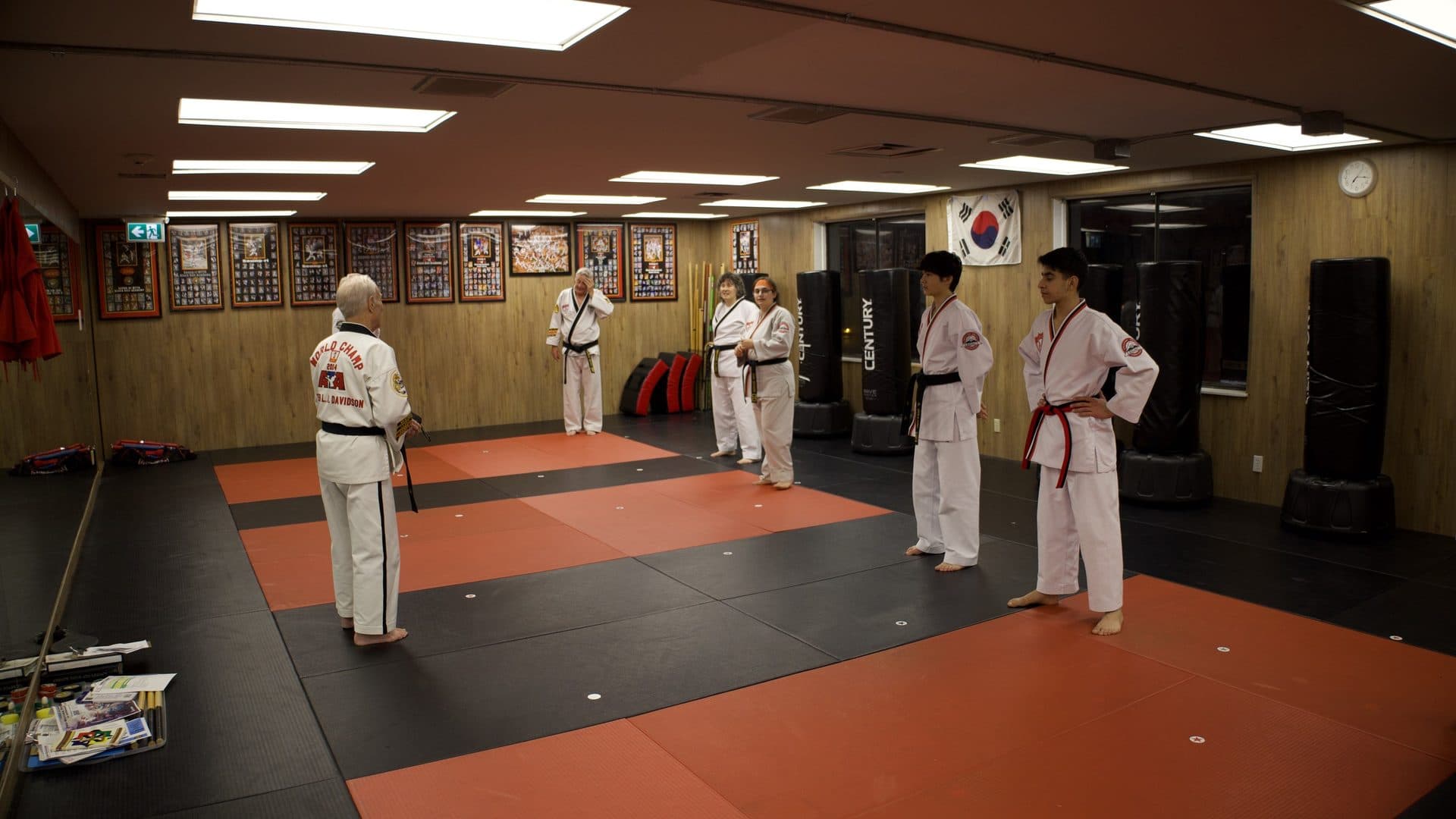
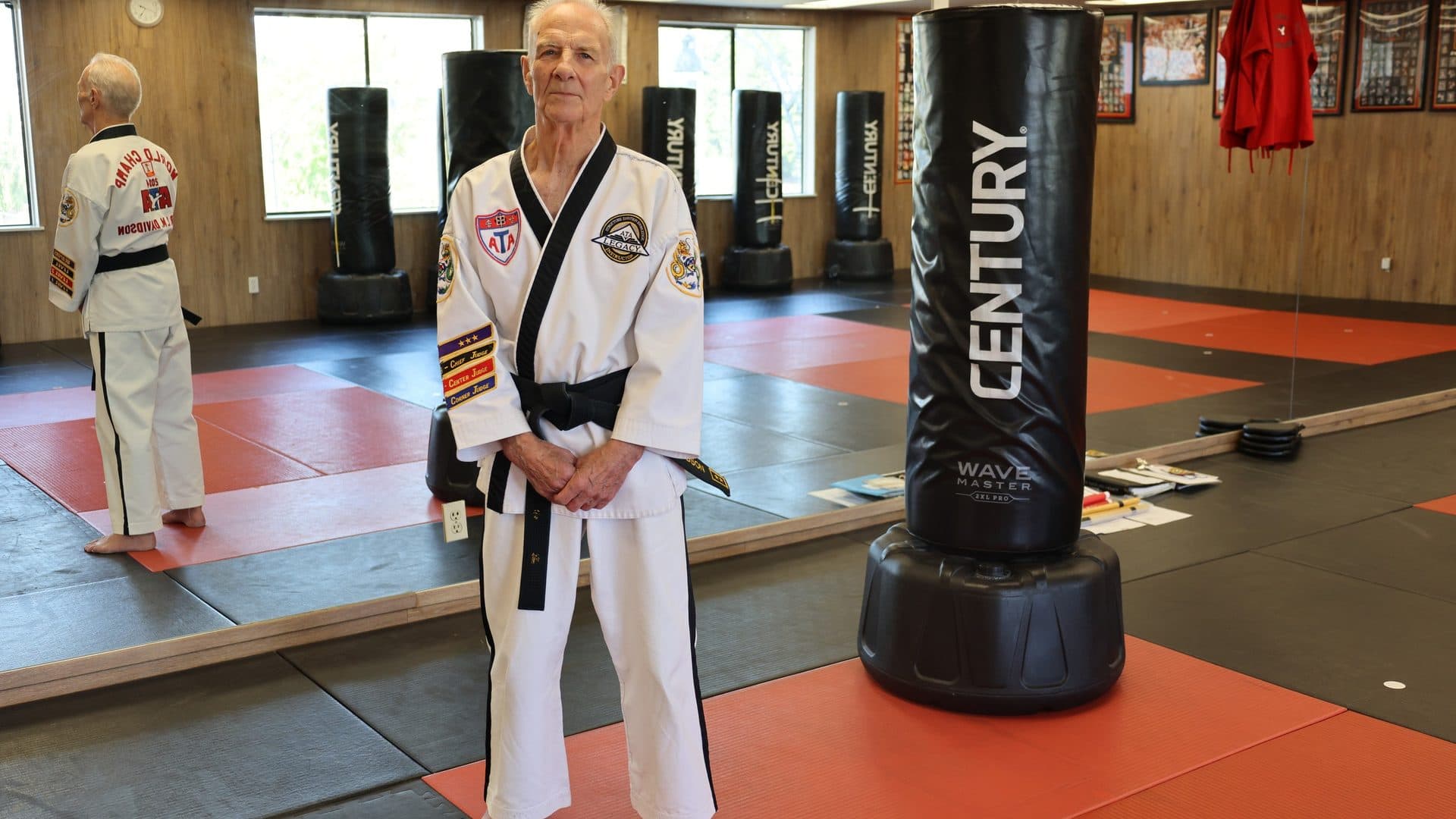
Kingdom’s team brings more than 20 years of experience and more than 10,000 students trained. One flat monthly membership covers unlimited classes across every boxing and martial arts program, so if you enjoy the 12:00 Boxing class and later want to try kickboxing or the adult and teen taekwondo classes in our martial arts programs, there is nothing extra to sort out. Read why it is never too late for martial arts, or our guide to martial arts in South Surrey for how the programs fit together.
If you are a grandparent who does school pickups, the 16:00 Kids class runs on the same weekday timetable, and our guide to kids boxing classes in White Rock covers Junior Gloves for ages 6 to 12. You can browse every option on the full class list, and the training tips blog has more on technique, recovery and conditioning.
Frequently Asked Questions
Is there a seniors-only boxing class at Kingdom Athletics?
No. Kingdom does not run a dedicated seniors class. Older adults train in the regular boxing classes, most often the weekday 12:00 Boxing class, and coaches scale the intensity, range of motion and complexity for each person. Some people prefer that, since nobody is singled out by age.
Am I too old to start boxing?
There is no single cut-off age for non-contact boxing. What matters is your current health, which is why a conversation with your doctor comes first. If you are researching boxing for seniors White Rock options in your 60s, 70s or beyond, know that the fundamentals can be scaled a long way down.
Will I get hit?
No. Non-contact boxing means you hit pads and bags, never another person. Saturday Light Sparring is a separate, optional session and is not part of the regular class.
I have osteoporosis. Can I still do it?
Many people with low bone density exercise safely, but you should get guidance from your doctor or a physiotherapist first, particularly about bending and twisting. Tell your coach, who can keep rotation in the hips and feet, shorten the range on hooks and uppercuts, and swap floor exercises for standing ones.
Is boxing good for Parkinson’s?
Early research on non-contact boxing in people with Parkinson’s is promising, with studies reporting improvements in balance, gait and quality of life, but the evidence base is still small. Kingdom does not run a Parkinson’s program. If you have Parkinson’s, talk with your health care team and a physiotherapist, then discuss your plan with a coach before joining a regular class.
How often should I train?
For boxing for seniors White Rock beginners, one or two classes a week for the first two weeks, building to two or three as your body adapts. Combined with regular walking, that covers the aerobic, strength and balance parts of the national guidelines for older adults.
Is it too hard on the joints?
You control how hard you hit, and the coach controls how much rotation and impact you do, which is what makes boxing for seniors White Rock style so adjustable. Shadowboxing and light pad work are very gentle on the joints. If you have arthritis in the hands or shoulders, mention it and you will be given softer options.
Start Boxing for Seniors White Rock Style: Book Your First Class
The research on exercise and ageing is remarkably consistent: move more, get stronger, train your balance, and challenge your brain. Non-contact boxing does all four in a format that is social, scalable and genuinely fun. The only real requirement is that you start sensibly, with your doctor’s input and a coach who knows your history.
If you are ready to see what boxing for seniors White Rock style feels like in practice, check the class schedule, pick a weekday 12:00 Boxing class, and book your first class through our contact page or call us at (778) 237-5905. Tell us a little about your health and goals when you get in touch, and the coach will be ready for you when you walk through the door on Johnston Road. Still have questions first? Send us a message and we will talk it through.