Strength and Conditioning South Surrey: A Proven 8-Week Plan
November 14, 2026•22 min read•Strength & Conditioning, Training Tips
Most people who search for strength and conditioning South Surrey options already know they want to be stronger and fitter. What they usually have not been told is that strength and conditioning is a specific discipline with its own logic, and that a program built on that logic looks very different from a random mix of weights and sweaty circuits. This guide explains what the term really means, how coaches plan it, and how to run it alongside boxing.
We wrote it for two groups. The first is young athletes from South Surrey school and club sports. The second is adults who want training with a purpose, whether that is a faster pickup game or simply feeling capable at 45. The principles of good strength and conditioning South Surrey coaches use are the same for both. Only the details change.
If you have read our earlier pieces on building muscle and confidence with strength training in White Rock or the ten strength training habits our coaches swear by, this post goes one layer deeper. Those covered why lifting matters. This one covers how an athlete’s whole training year is organised, and why the conditioning half matters as much as the barbell half.
What Strength and Conditioning South Surrey Athletes Actually Need
Strength and conditioning, usually shortened to S&C, is the practice of preparing the body for the physical demands of a sport or a life. The strength part builds the ability to produce and absorb force. The conditioning part builds the ability to keep producing it, round after round, shift after shift, without the quality falling apart. Neither half is useful on its own for very long.
A good S&C plan answers four questions before anyone touches a weight. What does the sport or goal demand? What does this person currently have? What is the gap between the two? How much time is available to close it? Everything else, from exercise choice to rest periods, flows from those answers. That is why honest strength and conditioning South Surrey coaches spend the first session asking questions rather than handing out a workout card.
The public health baseline is a useful floor. The Canadian 24-Hour Movement Guidelines for adults aged 18 to 64 ask for at least 150 minutes of moderate to vigorous aerobic activity each week plus muscle strengthening using the major muscle groups at least twice a week. The guidelines for children and youth aged 5 to 17 ask for 60 minutes a day, with muscle and bone strengthening at least three days a week. Athletes need more than the floor, but plenty of people never reach it.
The S&C Profession: What a Strength Coach Actually Does
In professional and university sport, the strength and conditioning coach is a distinct role from the skill coach. The head coach teaches the game. The S&C coach builds the athlete who plays it, manages training load, tests physical qualities and helps with return from injury. At the high school and club level, most of the strength and conditioning South Surrey teams receive is delivered by one overworked volunteer, which is where gaps appear.
The profession runs on a body of research that has matured a great deal over the last few decades. Position statements now exist for youth training, long-term athletic development and many sport-specific problems. The National Strength and Conditioning Association position statement on long-term athletic development, for example, argues that children and teens should follow structured, evidence-based programs that build athleticism and fitness habits they keep for life.
At Kingdom Athletics, two of our coaches come at this from the strength side. Kenny is a strength trainer and a boxer, so he lives in both worlds. Arion is an athletic trainer and strength coach. If you want to know how a lifting plan should fit around your boxing or your club season, they are the people to ask.
Strength, Power and Endurance Are Three Different Qualities
People use “strong”, “powerful” and “fit” as if they meant the same thing. In S&C they are separate qualities that respond to different training, and confusing them is the root of most bad programs.
Maximal strength
Maximal strength is the most force you can produce, regardless of how long it takes. It is trained with heavy loads, low reps and long rests, and it is the foundation for everything else. A review on the importance of muscular strength in athletic performance found that greater strength is strongly associated with better jumping, sprinting and change of direction, and with lower injury risk.
Power
Power is force produced quickly. A punch, a jump, a first step off the line and a rugby hit all happen in a fraction of a second, too fast to use your full strength. Power training uses lighter loads moved as fast as possible: jumps, throws, explosive pushes and loaded carries done with intent. It only works when every rep is fast, so sets stay short and rest stays long. Any strength and conditioning South Surrey program for field, court or ring athletes should include some power work every week.
Strength endurance and aerobic endurance
Strength endurance is the ability to repeat submaximal efforts, like holding a guard up for three minutes or pushing through the fourth quarter. Aerobic endurance is the engine underneath it, the heart and lungs delivering oxygen so the muscles can recover between efforts. Boxing needs both, which is why our deep dive into boxing conditioning and building a real engine spends so long on the aerobic base.
| Quality | What it looks like | Typical training | Rest between sets |
|---|---|---|---|
| Maximal strength | Moving a heavy load with control | 3 to 6 reps, heavy, crisp technique | 2 to 4 minutes |
| Power | Jumping, throwing, punching fast | 3 to 5 fast reps, light to moderate load | 1.5 to 3 minutes |
| Strength endurance | Repeating efforts under fatigue | 12 to 20 reps or timed sets | 30 to 90 seconds |
| Aerobic endurance | Recovering between rounds or shifts | Steady work, longer intervals, rounds | Short or continuous |
A thoughtful strength and conditioning South Surrey program trains all four across the year, but it rarely trains all four hard in the same week. That is where periodisation comes in.
Energy Systems in Plain Language
Your muscles run on a molecule called ATP, and the body has three ways to make more of it. Coaches call these the energy systems. Understanding them explains why a three-minute boxing round feels so different from a heavy set of five or a 10K run along the Semiahmoo waterfront, and why a strength and conditioning South Surrey plan for a boxer looks different from one for a cross-country runner.
- The phosphagen system uses stored creatine phosphate for very fast, very short efforts: a single punch combination, a jump, a heavy lift. It runs out in seconds and takes minutes to refill.
- The glycolytic system breaks down carbohydrate quickly without needing much oxygen. It powers hard efforts lasting from roughly 10 seconds to a couple of minutes, and it is the system behind the burning feeling late in a round.
- The aerobic system burns carbohydrate and fat with oxygen. It is slower to deliver energy but has an enormous capacity, and it is the system that refills the other two between efforts.
The old textbook picture showed these systems switching on one after another like gears. That picture is wrong. A classic review of energy system interaction during maximal exercise explains that all three contribute during almost every activity, and that the aerobic system responds faster and matters more in short, intense work than coaches once believed. That finding is the single best argument for building an aerobic base, even for explosive athletes.
Boxing sits right in the middle of this. A review of the physical and physiological attributes of amateur boxers concluded that high-level boxers need strong cardiorespiratory fitness to support the demands of a bout and recover between rounds, high anaerobic power, and well-developed muscle power in both the upper and lower body. Boxing trains every system at once, so it needs to be planned around your lifting, not piled on top of it.
Periodisation: Why a Plan Beats a Pile of Workouts
Periodisation is simply the practice of organising training into phases, each with a main goal, so that qualities build on each other instead of competing. It sounds academic. In practice it is the difference between an athlete who peaks for playoffs and one who arrives exhausted and sore.
The evidence is solid. A meta-analysis comparing periodised and non-periodised strength and power programs found periodised training was more effective for men and women, for people of varying training backgrounds, and across age groups. Planned variation beat doing the same thing every week.
Coaches describe the plan at three scales:
- Macrocycle: the whole season or year, for example September to June for a high school rugby player.
- Mesocycle: a block of roughly three to six weeks with one main emphasis, like building general strength or converting strength into power.
- Microcycle: one week, where you decide which day is heavy, which is fast and which is easy.
There are several models. Block periodisation, described in a well-cited review on new horizons in training periodisation, uses short, concentrated blocks aimed at a small number of qualities, because mixing everything at medium intensity tends to create fatigue without enough stimulus for any one quality. For a busy athlete who also boxes, a simple block approach is usually the easiest to run.
The one rule that never changes is progressive overload. The body adapts to what you ask of it, then stops adapting unless you ask a little more. Something has to progress gradually, then back off for a week so you can absorb the work.
How Combat-Sport S&C Differs From Bodybuilding
Bodybuilding is a legitimate sport with a clear goal: muscle size and symmetry. The training reflects that, with lots of sets per muscle, slow controlled reps and body-part splits. It simply trains a different outcome from the one a fighter or a winger needs.
Combat-sport strength and conditioning starts from the opposite end. A boxer has to move their own body quickly, often within a weight class, and repeat explosive efforts under fatigue. Extra muscle that does not help you punch harder or recover faster is extra weight to carry for three rounds. So in the strength and conditioning South Surrey boxers actually benefit from, the priorities shift from how a muscle looks to how the whole body produces, transfers and absorbs force.
| Factor | Bodybuilding focus | Combat-sport S&C focus |
|---|---|---|
| Main goal | Muscle size and shape | Force, speed and repeatability |
| Session structure | Body-part splits | Whole-body movement patterns |
| Rep speed | Slow and controlled | Controlled down, fast up |
| Fatigue | Chased for muscle growth | Managed so boxing quality stays high |
| Rotation and carries | Rarely trained | Trained every week |
| Conditioning | Often minimal, for fat loss | Built around rounds and rest periods |
There is also the question of mixing endurance and lifting, known as concurrent training. A meta-analysis on concurrent training found that combining the two still produced strong gains, though power gains were smaller than with lifting alone. Running alongside lifting reduced strength and size gains more than cycling did, and longer or more frequent endurance sessions were linked to bigger reductions. The practical takeaway: keep conditioning purposeful, avoid endless extra road work, and separate hard lifting from hard conditioning when you can.

The Six Movement Patterns Every Program Should Cover
Rather than training muscles, S&C coaches train movement patterns. Almost everything you do in sport and daily life is some combination of six of them. Cover all six every week in your strength and conditioning South Surrey routine, with sensible progressions, and you have covered the body. It is the same idea behind our case for functional fitness that carries over to real life.
1. Hinge
The hinge is bending at the hips with a neutral spine, the movement behind jumping, sprinting, picking up a hockey bag and loading the back leg for a power punch. Start with a dowel hip hinge against a wall, then a kettlebell deadlift, then a trap bar or Romanian deadlift. The cue we like: push your hips back to close a car door behind you.
2. Squat
The squat builds the legs and teaches the hips, knees and ankles to work together. Progress from a box squat to a goblet squat, then a front squat or split squat. Split squats and step-ups deserve special attention for field and court athletes, because most sport happens on one leg at a time.
3. Push
Pushing covers horizontal work like push-ups and presses and vertical work like overhead presses. For boxers, the push-up is king: it trains the chest, shoulders and triceps while forcing the trunk to stay rigid, which is exactly what a straight punch asks for. Add load with a plate or bands once 20 clean reps are easy.
4. Pull
Pulling balances pushing and protects the shoulders. Rows, inverted rows on a bar and chin-ups all count. Many young athletes can push far more than they can pull, which shows up as rounded shoulders and cranky rotator cuffs. A useful rule: at least as many pulling sets as pushing sets each week, often more.
5. Carry
Carries are the most underrated exercise in the gym. Farmer carries, suitcase carries with one weight, and front-rack carries build grip, trunk stiffness and the ability to stay tall under load. They are simple to coach, hard to cheat, and they transfer to almost every sport. Walk 20 to 40 metres, rest, repeat.
6. Rotate
Rotation is where combat sports, golf and hockey live. Train it two ways: producing rotation with medicine ball throws and cable or band chops, and resisting rotation with Pallof presses and single-arm work. Resisting comes first. A trunk that can stay still under load can then learn to turn fast, which is how a hook or a slapshot gets its snap.
These patterns scale from a 13-year-old learning bodyweight versions to a 50-year-old returning to training. For the punching side, see our guide to the fundamentals of technical boxing.
A Sample 8-Week Strength and Conditioning South Surrey Block
Here is a practical block for someone who wants two strength sessions a week plus boxing classes. It suits an adult who boxes, or an older teen in their off-season who has already learned the basic lifts with a qualified coach. It is an example to learn from, not a prescription. If you have an injury, a medical condition or you are brand new, ask a coach to adjust it before you start.
A note on where the lifting happens. Kingdom has barbells on site, so both strength sessions can be done here, before or after your classes. Club athletes can also use a school weight room on days they cannot get in. Kenny and Arion can help you set up the lifts and fit the two halves together, so ask our coaches when you come in.
| Weeks | Phase | Strength sessions | Boxing focus |
|---|---|---|---|
| 1 to 2 | Foundation | 3 sets of 8 to 10, moderate load, perfect technique | Two technical classes, one conditioning class |
| 3 to 4 | Strength build | 4 sets of 5 to 6, heavier, longer rests | Two technical classes, one or two conditioning classes |
| 5 | Deload | 2 sets of 5 at about 70 percent of recent loads | Technical work only, easy pace |
| 6 to 7 | Strength to power | Heavy set of 3 to 5, then fast jumps and throws | Technical, conditioning and one kickboxing or harder round day |
| 8 | Consolidate and test | Retest key lifts, jumps and a round-based benchmark | Normal classes, freshest effort of the block |
The weekly layout
Kingdom’s weekday boxing timetable runs a 12:00 Boxing class, 17:00 Conditioning, 18:00 Technical Class and 19:00 Kickboxing, with Light Sparring slots on Saturday at 10:00 and 11:00. Check the current class schedule before planning, then build a week like this:
- Monday: Strength session A in the morning or at lunch. 18:00 Technical Class in the evening.
- Tuesday: 17:00 Conditioning class. Easy walk or bike later if you feel good.
- Wednesday: Rest or light mobility. A flat walk along the White Rock promenade counts.
- Thursday: Strength session B. 18:00 Technical Class.
- Friday: Optional 17:00 Conditioning or 19:00 Kickboxing in weeks 3 to 4 and 6 to 8.
- Saturday: Optional, and only if your coach agrees you are ready: one of the Light Sparring slots.
- Sunday: Off.
The logic behind this strength and conditioning South Surrey week is simple. Heavy lifting and technical boxing pair well because technical work is skill-heavy and not especially draining. The hardest conditioning sits away from the heaviest leg work, and there are at least two easy days. If you only manage three sessions in a busy week, keep both strength days and one class.
Strength session A: lower body emphasis
- Warm-up: 8 minutes of skipping, hip hinges, walking lunges, band pull-aparts.
- Power primer: 3 sets of 3 box jumps or broad jumps, full rest.
- Hinge: trap bar or kettlebell deadlift.
- Push: push-up or dumbbell bench press.
- Single leg: rear-foot elevated split squat.
- Pull: chest-supported or inverted row.
- Carry: farmer carry, 3 trips of 30 metres.
Strength session B: upper body and rotation emphasis
- Warm-up: 8 minutes of skipping, shadowboxing at easy pace, thoracic rotations.
- Power primer: 3 sets of 4 rotational medicine ball throws per side.
- Squat: goblet or front squat.
- Pull: chin-up or lat pulldown.
- Push: half-kneeling single-arm overhead press.
- Anti-rotation: Pallof press, 3 sets of 10 per side.
- Carry: suitcase carry, 3 trips per side.
Keep each session under an hour. Stop every set with one or two good reps in the tank during weeks 1 to 4, and let weeks 6 and 7 get genuinely heavy only if technique holds. Write your numbers down.
For the conditioning side of the week, a class does the planning for you. Our Boxing Conditioning program uses rounds and rest periods that match the energy demands we described earlier, and the Technical Boxing program keeps the skill work sharp while your legs recover.
How to test at the end of the block
Testing turns a vague feeling of “fitter” into numbers. Run three or four safe, repeatable tests in week 1 and week 8:
- A standing broad jump, best of three, for lower-body power.
- Maximum clean push-ups, for upper-body strength endurance.
- A five-rep load on your main hinge or squat, with the same technique standard both times.
- Heavy bag output: three 2-minute rounds at a hard, sustainable pace, noting how quickly your breathing settles in the minute between rounds.
A strength and conditioning South Surrey block that ends without a retest leaves you guessing. One that ends with a retest tells you exactly what the next eight weeks should target.
Strength and Conditioning South Surrey School and Club Athletes Can Use
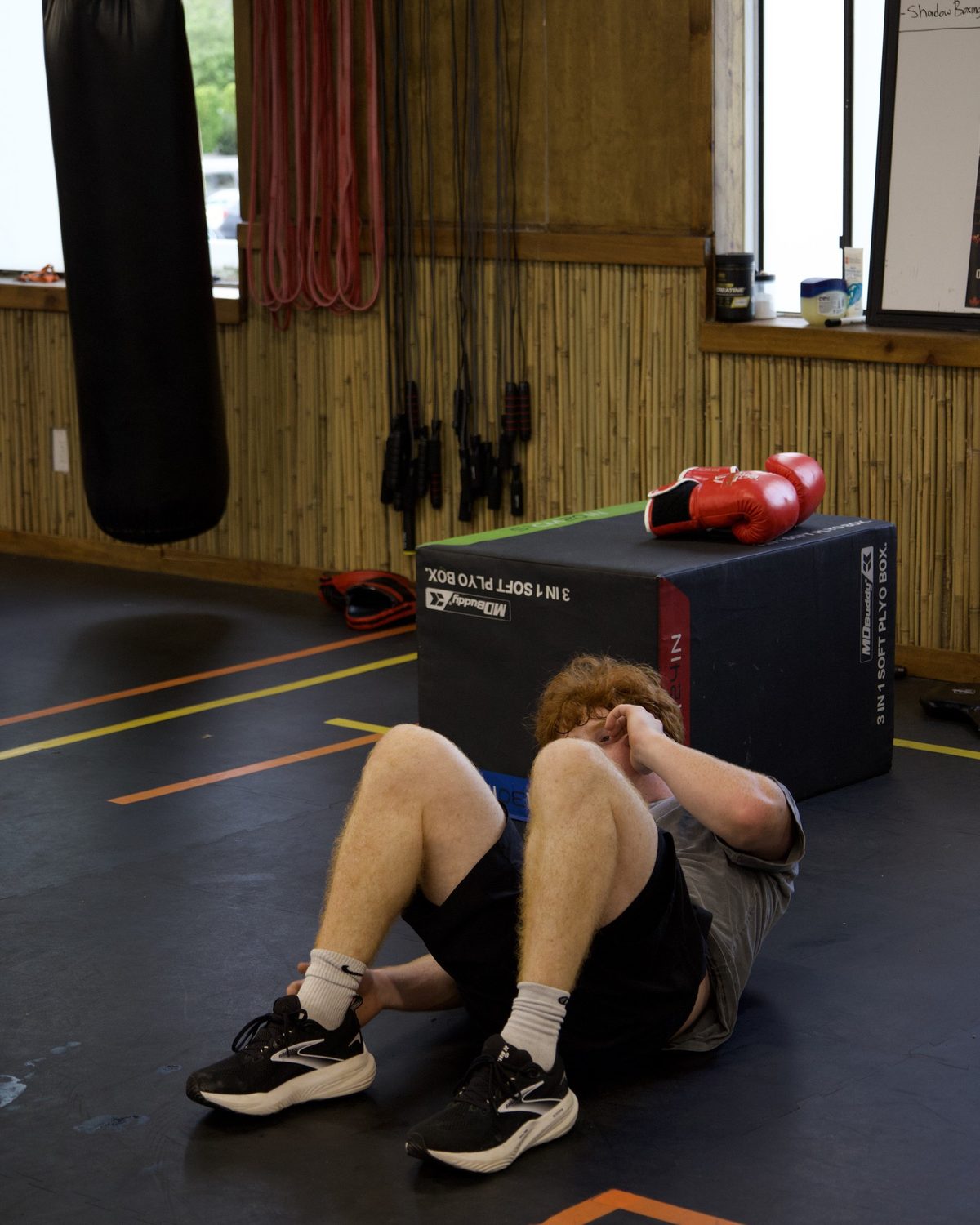
South Surrey has a busy youth sport scene. On any weekend, South Surrey Athletic Park on 20 Avenue hosts soccer, football, rugby, baseball and volleyball, and players from Earl Marriott and Semiahmoo secondary schools fill courts and fields across Grandview Heights, Morgan Creek and Sunnyside. Most of those athletes practise their sport plenty. Far fewer follow a planned strength and conditioning South Surrey program that fits around it.
Is lifting safe for teenagers?
Yes, when it is supervised and progressed sensibly. The 2014 International Consensus position statement on youth resistance training was endorsed by leading sports medicine, exercise science and paediatric organisations. The old myth that lifting stunts growth does not hold up. What does hurt young athletes is poor technique, loads that jump too fast, and no one watching.
Canada’s own framework for this is the Sport for Life long-term development model, which moves from building physical literacy in childhood through stages like Learn to Train and Train to Train. The message for parents is clear: broad athletic development first, heavy specialisation later. Our pieces on youth football training drills for game speed and youth basketball training that builds real skill follow the same thinking.
Plan around the season
A school athlete’s year has natural blocks, and good strength and conditioning South Surrey coaches plan around them. In the off-season, build strength with two or three sessions a week. In the pre-season, shift towards power and sport-specific conditioning. In season, drop to one or two short, heavy-ish sessions a week to hold strength without adding soreness before games. After the season, take a week or two genuinely easy, then start again.
An honest word about boxing for youth
Boxing training is a powerful conditioning tool, but head contact is a different matter. The Canadian Paediatric Society advises that children and teens should not participate in boxing, because of the risk of face and brain injuries, including concussion. We take that seriously. Kingdom’s youth boxing work is skill and fitness training on bags, pads and footwork, not competitive boxing.
Bag rounds, footwork, skipping and pad work with a coach deliver much of the conditioning value we have described. Parents can read more in our guide to boxing for teens in White Rock and our answers on kids boxing classes for younger children. For anything involving contact, ask our coaches directly.
Strength and Conditioning for Adults After School Sport Ends
Plenty of adults in Ocean Park, Crescent Beach and Rosemary Heights played something seriously as teenagers, then drifted into a decade of sporadic gym visits. The good news is that strength and conditioning South Surrey adults start in their forties follows exactly the same principles as it does for teenagers. You still need strength, power, endurance and a plan. You simply progress more patiently and pay more attention to recovery.
Strength matters more with age, not less. Harvard Health notes that strength training can slow bone loss and even build bone, and that power and balance work helps reduce falls. Osteoporosis Canada’s exercise guidance similarly describes activity as an important step in protecting your bones and building the muscle strength that prevents falls, and recommends talking to your doctor first if you are new to exercise.
Power deserves a special mention for adults. It declines faster than strength, and it is the quality that lets you catch yourself when you catch a toe on a curb along Marine Drive. Light medicine ball throws, step-ups done briskly and bag work all train it. That is one reason boxing classes are such a good fit for strength and conditioning South Surrey adults can sustain: they add speed to the strength.
If fat loss is part of your goal, strength training plus conditioning beats either one alone for most people, but nutrition and sleep still do the heavy lifting. Our honest take on what actually works at a weight loss gym covers that side, and our guide to HIIT classes in White Rock explains how interval work fits into a week without burning you out.
The wider picture explains why this matters. The World Health Organization’s physical activity fact sheet reports that 31 percent of adults and 80 percent of adolescents worldwide do not meet recommended activity levels. Two lifting days and a couple of classes a week put you well above that line.
Recovery, Load and Injury Risk
Training creates the stimulus. Recovery is where the adaptation actually happens. Any strength and conditioning South Surrey coach worth hiring spends as much energy managing fatigue as creating it, because a tired athlete moves badly, and bad movement under load is how most gym injuries start.
Strength training is also one of the best injury prevention tools available. A meta-analysis of randomised trials on preventing sports injuries found that strength training programs showed the strongest protective effect of any intervention studied, while stretching on its own showed no clear benefit for injury prevention. Proprioception and balance training also helped.
That does not make mobility work useless. Moving well through a full range still matters for technique and comfort, and stiff hips or a locked-up upper back will limit your hinge and your rotation. Our coach Nick works in rehab, fascial release and stretching therapy, and our guide to stretch therapy in White Rock explains where that work fits. Just do not expect stretching to replace strength.
How to Evaluate an S&C Program in South Surrey
Whether you are a parent comparing options for a club athlete or an adult choosing where to train, a few questions separate real strength and conditioning South Surrey programs from fitness classes with a fancy name. We cover general gym questions in our checklist for choosing a boxing gym in South Surrey and our comparison of fitness class types in South Surrey. For S&C specifically, ask:
- Is there an assessment? Someone should ask about your sport, your training history and any injuries before prescribing anything.
- Is there a plan with phases? “Whatever the workout of the day is” is not periodisation.
- Is technique coached? Good coaches correct form on every set, not just the first one.
- Does conditioning match the sport? A hockey player, a boxer and a distance runner need different conditioning.
- Is there testing? Without a retest, nobody knows if the program worked.
- Does it fit your week? The best strength and conditioning South Surrey plan is the one you can follow for months, not the one that looks hardest on social media.
Where Kingdom Athletics Fits In
Kingdom Athletics is a boxing, kickboxing and martial arts gym at 1493 Johnston Road in uptown White Rock, a short drive from most of South Surrey. From Grandview Heights or Morgan Creek, head south on 152 Street or King George Boulevard. From Campbell Heights and Elgin Chantrell, Highway 99 and 16 Avenue get you there quickly.
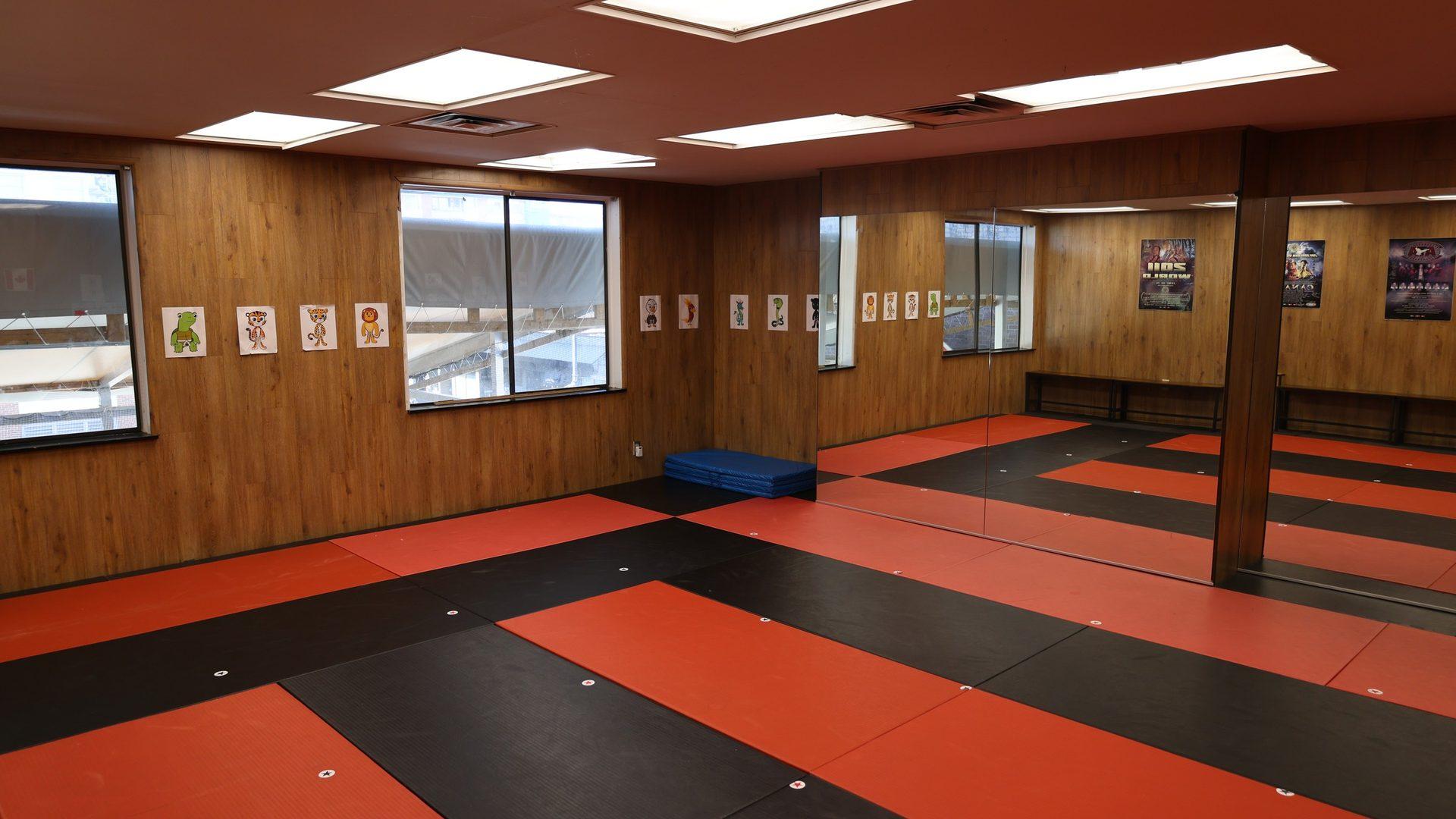
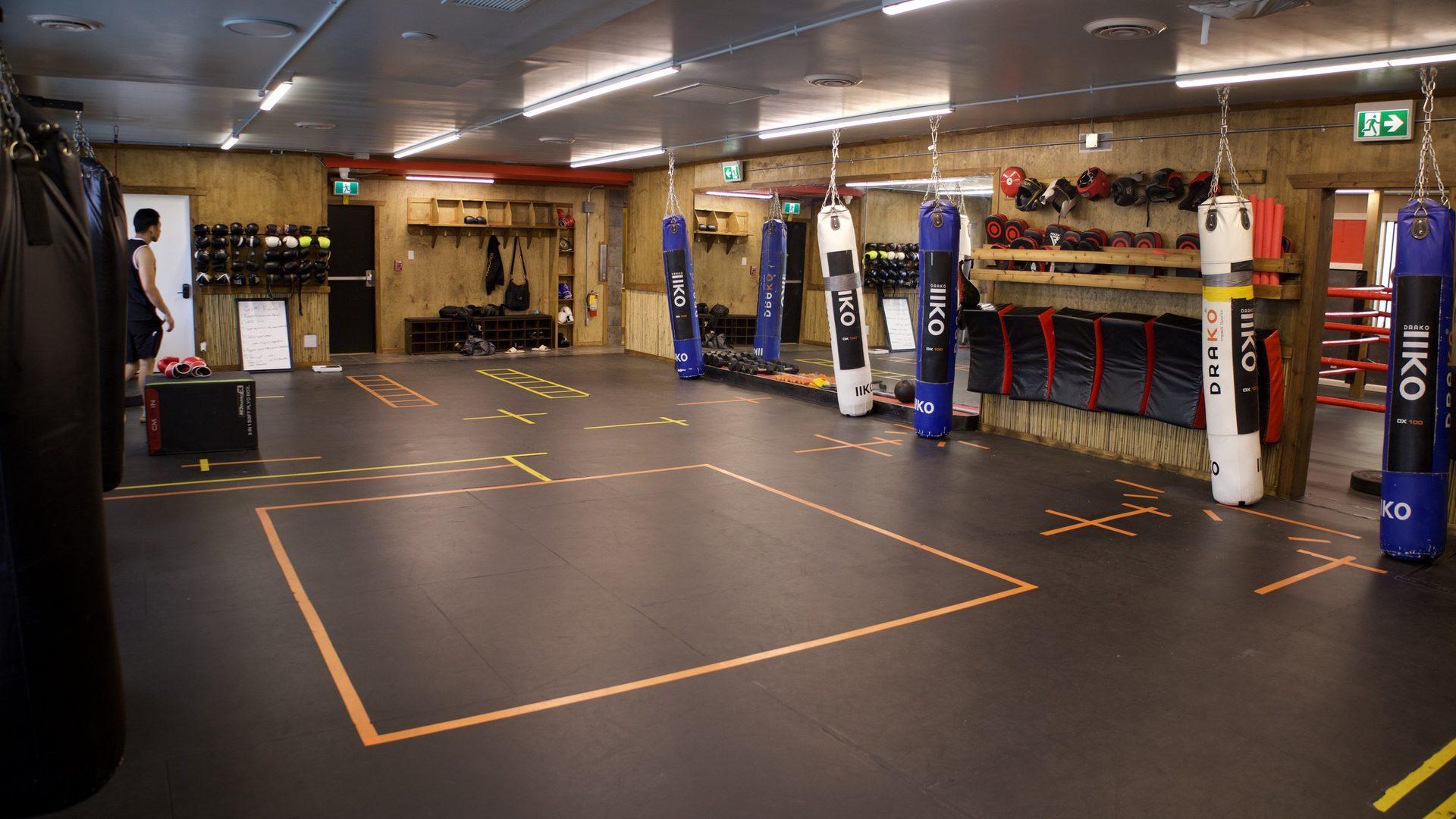
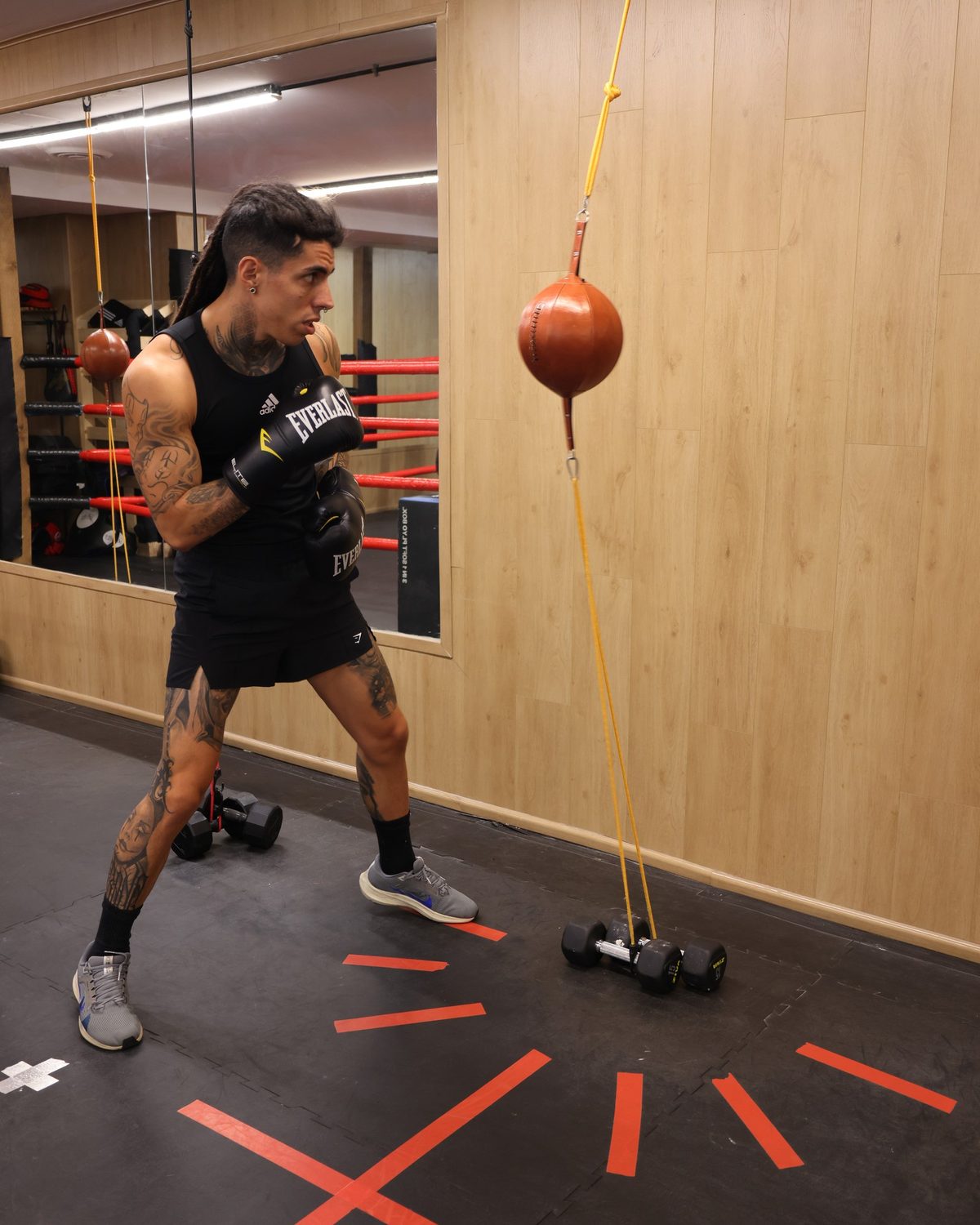
We are honest about what we are. Kingdom is a boxing and martial arts gym first, built around heavy bags, a boxing ring, mat space and mirrors, and we also have barbells for strength work. That means a strength and conditioning South Surrey athlete can train both halves of the equation under one roof, coached by people who understand each side. Kingdom brings 20+ years of experience and 10K+ students trained to that work.
That is why this guide frames the 8-week block as two strength sessions plus boxing classes. Kenny, our strength trainer and boxer, and Arion, our athletic trainer and strength coach, can help you decide how your lifting fits around your classes and your season.
One flat monthly membership covers unlimited classes across our boxing and martial arts programs, so you can mix Conditioning, Technical and Kickboxing classes as your strength and conditioning South Surrey block demands without counting visits. You can see every program we run and read what our coaches believe about training before you visit. If you have questions about how that would work for you or your teenager, get in touch with our coaches or call (778) 237-5905.
Frequently Asked Questions
What is the difference between strength and conditioning and personal training?
Personal training is a delivery format, one coach and one client. Strength and conditioning is a method: assessing what a sport or goal demands and building a phased plan to meet it. A personal trainer can use S&C methods, and a group setting can too. Our post on personal training in White Rock covers the one-on-one side.
How many days a week should I do strength and conditioning?
For most adults and off-season athletes following a strength and conditioning South Surrey plan, two strength sessions plus two or three conditioning or skill sessions is a sustainable starting point. That meets the Canadian guideline of muscle strengthening at least twice a week and leaves room for recovery. In season, school athletes can often drop to one or two short strength sessions.
Will lifting weights make me slower or bulky?
Not when the program is designed for speed. Heavy strength work followed by fast power work tends to make athletes quicker, and building large amounts of muscle takes years of eating and training specifically for size. Combat-sport S&C keeps volume moderate and reps fast.
What age can my child start strength training?
Supervised, well-coached resistance training is supported by international youth consensus for children and teens who can follow instructions, starting with bodyweight and light loads. For specific advice about your child, ask our coaches and your family doctor. Kingdom’s youth boxing classes focus on skill and fitness, not competition.
Do I need to be fit before I start?
No. Week 1 of any sensible strength and conditioning South Surrey block starts where you are, with moderate loads and plenty of coaching. The point of a phased plan is that fitness is built inside it, not required before you begin.
Start Strength and Conditioning South Surrey Athletes Trust
Real strength and conditioning South Surrey athletes can build on is not a class name or a hashtag. It is a way of thinking: understand the demand, train strength, power and endurance in the right order, respect the energy systems, and give yourself time to recover. Do that for eight weeks and you will feel the difference in your sport, in the ring and on the stairs.
If you are ready to put your strength and conditioning South Surrey plan into action, come and train with us. Book your first class at Kingdom Athletics, bring your questions for Kenny and Arion, and we will help you fit boxing around your lifting and your season.