Technical Boxing White Rock: 6 Proven Fundamentals That Change Everything
September 3, 2026•14 min read•Boxing & Martial Arts, Training Tips
Anyone can be taught to swing hard. Almost nobody arrives able to punch properly, and the difference between those two things is the entire sport. Technical boxing white rock training is where that gap gets closed. It is slower, less dramatic, and considerably more rewarding than the cardio boxing most people have tried. This guide covers the fundamentals that matter, the order to learn them in, and why the least glamorous parts produce the biggest changes.
What Technical Boxing White Rock Training Actually Means
Technical boxing white rock gyms teach is the study of how to hit and not be hit, broken into components and drilled deliberately. It is closer to learning an instrument than to a fitness class.
A cardio boxing session asks you to move fast and sweat. A technical session asks you to move correctly, then gradually faster, then under fatigue, then against resistance. The sweat is incidental.
The distinction matters because habits formed early are extremely hard to unlearn. Six months of enthusiastic bad technique takes far longer to fix than six months of careful correct technique takes to build. Almost every coach has spent years undoing damage done by well meaning fitness classes.
The organising bodies of the sport structure their coach education around exactly this progression. Boxing Canada and USA Boxing both publish athlete development frameworks that put fundamentals before output, and the Coaching Association of Canada applies the same logic across every sport it certifies.
The Six Fundamentals That Change Everything
1. Stance
Everything begins here. Feet roughly shoulder width, lead foot forward, weight balanced, knees soft. Too narrow and you fall over. Too wide and you cannot move.
Most beginners stand too square and too upright because it feels natural and it is comfortable. It is also the position from which you can neither generate power nor defend efficiently.
2. Guard
Hands up, elbows in, chin down. Simple to describe and remarkably difficult to maintain once you are tired, which is precisely why it is drilled relentlessly.
The guard is not a static wall. It moves with you, and the discipline of returning your hands after every punch is the single habit that most separates trained boxers from untrained ones.
3. Footwork
Boxing is a movement sport that happens to involve punching. Step and slide, never cross your feet, never bounce for the sake of it. Distance is controlled entirely with your feet and everything else follows from it.
4. The jab
The most important punch in boxing by a wide margin, and the one beginners least want to practise. It measures distance, interrupts, sets up everything else, and scores more than any other shot.
A good jab is thrown from the guard, travels straight, and returns straight. It does not wind up and it does not drop the hand on the way back. Our complete introduction to boxing breaks the mechanics down step by step.
5. Rotation and the kinetic chain
Power comes from the ground. Foot, hip, trunk, shoulder, hand, in that order. Arm punches are weak and expensive, and understanding this is the moment most people’s boxing changes.
Physiopedia has good material on how force transfers through the kinetic chain, and the principle is identical whether you are throwing a punch or a shot put.
6. Defence
Slips, rolls, parries, and blocks. Defence is what allows you to stay in range long enough to work, and it is the aspect that recreational boxers most neglect and most regret neglecting.
The Order Matters More Than the Content
This is where technical boxing white rock instruction differs most from a fitness class. Most people want to learn combinations. Combinations are the easy part and they are almost worthless on a foundation that cannot hold them.
A sensible progression looks like stance and guard, then movement, then the jab in isolation, then the cross, then simple two punch combinations, then defensive movement, then everything under fatigue, then everything against a moving partner.
That takes months rather than weeks, and it is the reason technical boxing white rock classes look slower from the outside than a cardio session. The people in them are getting better at boxing rather than better at being tired.
Our post on the mistakes beginners make covers what happens when this order gets ignored, and our honest list of things nobody tells you before your first class is worth reading before you start.
Why Technical Boxing White Rock Beginners Learn Sticks
Skill acquisition is more motivating than fitness improvement, and it lasts longer. That is the quiet reason technical boxing white rock members stay for years. Fitness plateaus within a year. Technique does not plateau at all.
There is also a compounding effect. Better technique means less wasted energy, which means you can work longer, which means you get fitter, which means you can drill more. Everything reinforces everything else.
The literature on deliberate practice supports this. Improvement comes from focused work on specific weaknesses with immediate feedback, not from repetition of what you can already do. The British Journal of Sports Medicine and PubMed hold plenty on skill acquisition in sport if you want the underlying research.
What a Technical Session Looks Like
A technical boxing white rock class follows a fairly consistent shape. Warm up and shadow boxing. Ten minutes. Shadow boxing is not filler, it is where technique is rehearsed without the distraction of impact.
Technical instruction. One or two concepts, taught in detail, with correction.
Partner drilling. Cooperative at first. One person works, one provides a target or a controlled reaction.
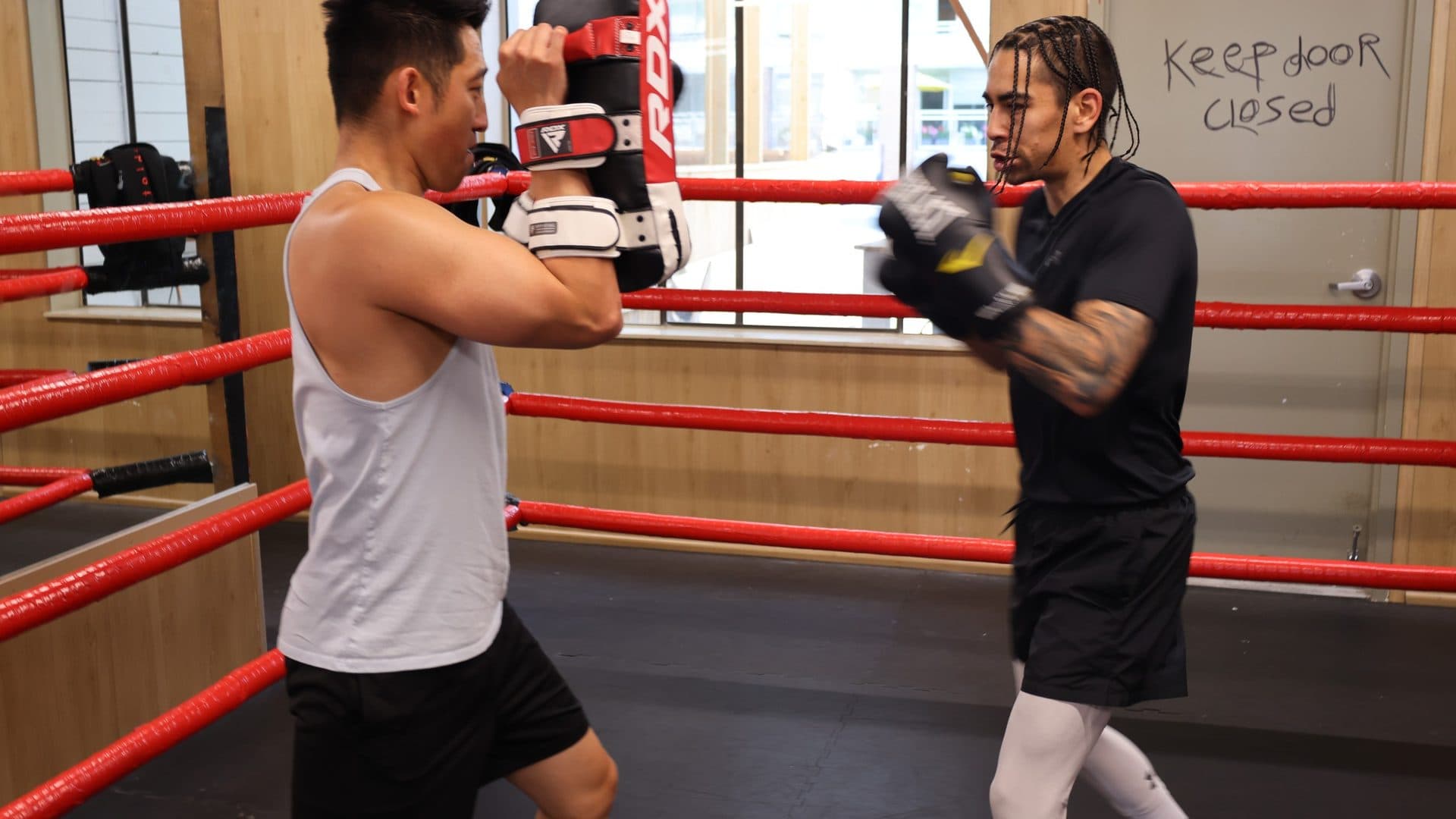
Pad work. Where technique meets timing. A good pad holder makes you better, a poor one just makes you tired.
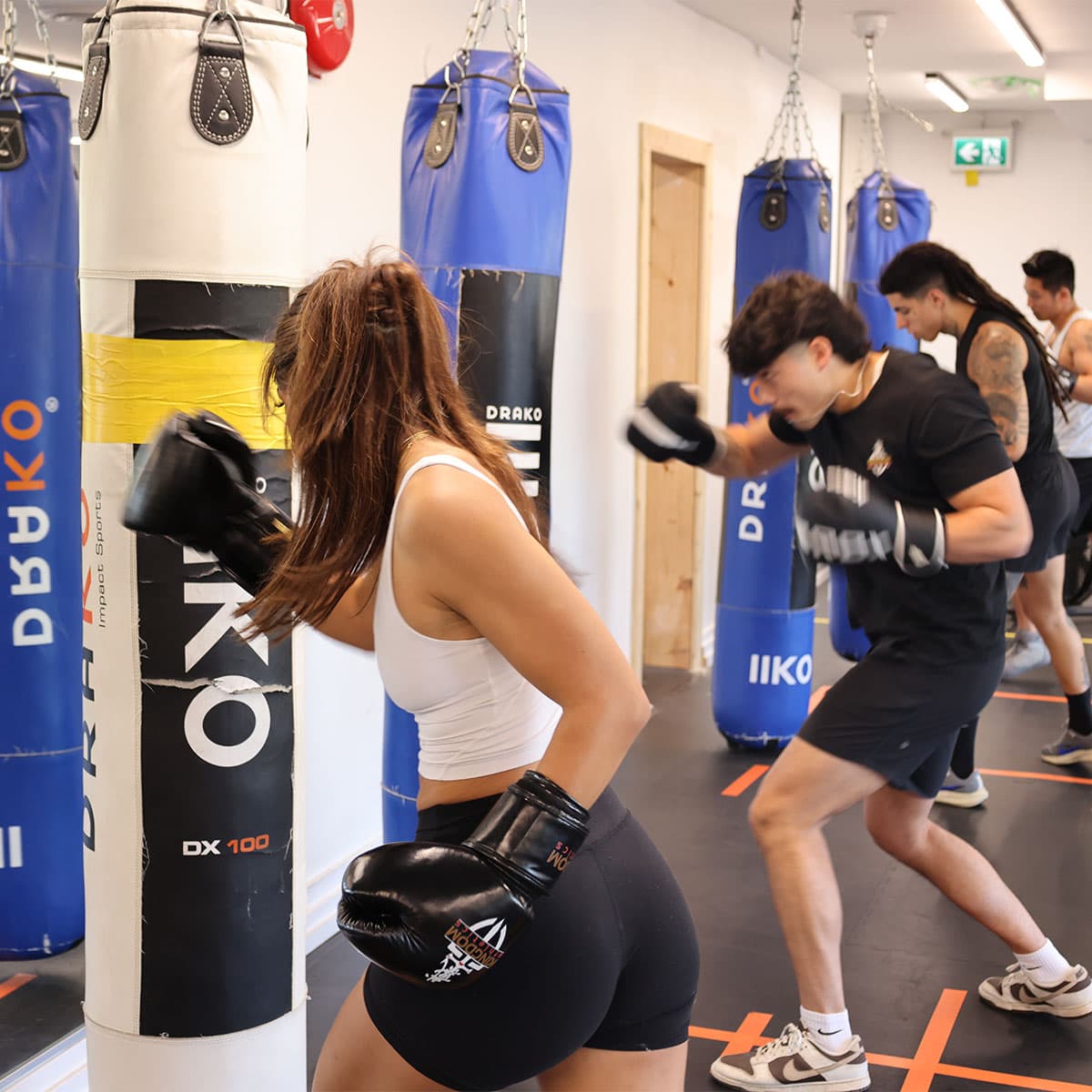
Bag work. Where you develop power and rhythm without a partner to worry about.
Conditioning. Usually last, so that fatigue does not compromise the technical work. Our conditioning classes handle that side separately for people who want more of it.
Equipment and When You Need It
- Hand wraps. From day one, no exceptions. The metacarpals are small bones and they do not forgive.
- Gloves. Sixteen ounce for most adults doing bag and pad work. Our glove buying guide covers sizing and what not to waste money on.
- Boxing shoes. Not necessary for a year. Flat, stable trainers are fine.
- Mouthguard. Only once you approach contact.
- Headgear. Same. Provided in most gyms when the time comes.
Resist buying a full kit in week one. Almost everybody who does regrets the choices they made before they understood what they were buying.
The Road Toward Sparring
Sparring is not the goal of technical boxing white rock training, but it is where technique gets tested honestly. Nothing exposes a flaw faster than someone who is not cooperating.
Nobody should spar in their first months. The correct sequence is technique, then controlled drills with resistance, then light touch sparring with a trusted partner and a coach watching, then anything harder.
Our guide to sparring for beginners lays out that ladder in detail and, importantly, explains how to say no to a round you should not take.
If you do progress to contact, understand the risk properly. Parachute Canada is the definitive Canadian resource on concussion recognition and management, and the Canadian Centre for Ethics in Sport covers the broader safe sport framework worth knowing.
Strength Work That Supports Boxing
Boxers used to avoid weights on the theory that muscle slows you down. That idea has been comprehensively abandoned.
Strength work supports boxing when it targets the right qualities. Posterior chain strength for rotation, trunk stability for force transfer, shoulder endurance for holding a guard, and neck strength for anyone approaching contact.
What it should not be is bodybuilding. High volume arm work is largely wasted training time for a boxer. The National Strength and Conditioning Association and the American College of Sports Medicine both publish sensible frameworks for combining strength with skill sports.
Our strength training guide covers how to build that without compromising your technical sessions.
How Long Until You Are Any Good
The honest answer for anyone starting technical boxing white rock classes depends entirely on what good means to you.
Three months. You will have a stance that holds, a jab that works, and enough footwork to move without tripping. You will look like someone who boxes.
One year. Reliable fundamentals under fatigue, functional defence, and the ability to hold your own in controlled sparring.
Three years. Genuine competence. Timing rather than speed. The ability to solve problems in front of you rather than execute memorised patterns.
Beyond that it becomes a lifelong study, which is either the appeal or the problem depending on your temperament.
The Canadian Olympic Committee pages on boxing give a sense of what the top of that ladder looks like, though almost nobody reading this needs to care.
Who Technical Boxing Suits
People who like learning. If you enjoyed music lessons or chess or anything with depth, this will hold you.
People bored by fitness classes. The problem was never discipline. It was that nothing asked for your attention.
People who want to be good at something. Adults get very few opportunities to become genuinely competent at a new physical skill.
Women who want the real thing. Our post on boxing for women describes an environment where technique is taught properly rather than diluted.
Anyone rebuilding after time away. Technical work is low impact by nature. HealthLink BC has straightforward guidance on returning to activity safely.
The Jab Deserves a Chapter of Its Own
If you take one thing from this article, make it this. Almost every problem a beginner has traces back to a poor jab.
The jab controls distance. Without it you are either too far away to do anything or too close to be safe, and you spend the whole round oscillating between those two bad positions.
The jab creates openings. Nothing else in boxing sets up a right hand as reliably, because it forces a reaction that you can then exploit.
The jab buys time. Thrown as you move, it interrupts and lets you reset when you are under pressure and need a moment.
And the jab is what everybody skips. Given a free ten minutes on the bag, almost nobody chooses to throw two hundred jabs. They throw hooks, because hooks feel powerful and jabs feel like homework.
The fix is boring and effective. Spend the first round of every bag session throwing nothing but jabs. Vary the level, vary the timing, step in and out behind it. Do this for three months and your boxing will be unrecognisable, which is a claim we would not make about any other single drill.
Learning to Relax Under Pressure
New boxers are tense. Shoulders up, jaw clenched, fists gripped tight from the first bell. It is completely natural and it is enormously costly.
Tension slows you down. A relaxed muscle can contract faster than an already contracted one, which is why the hardest punchers usually look the most casual right up until the moment of impact.
Tension also burns energy. A great deal of the exhaustion beginners feel is not cardiovascular at all, it is the metabolic cost of holding unnecessary muscular contraction for three straight minutes.
Relaxation is trainable. Breathe out on every shot. Keep a loose fist until immediately before impact. Drop your shoulders deliberately between combinations. Shadow box slowly, with the specific intention of staying soft, rather than always going hard.
Experienced boxers are not fitter than you in some mystical way. They are simply spending far less energy to do the same work, and most of that saving comes from not being tense.
Training the Eyes, Not Just the Hands
Boxing is a reactive sport, and reaction is largely a perceptual skill rather than a physical one. Elite boxers are not meaningfully faster than good club boxers in raw reaction time. They simply see things earlier because they know where to look.
Beginners watch the hands, which is exactly wrong. Hands are fast and deceptive. The chest and shoulders move first and cannot lie about intent, which is why coaches keep telling you to look at the centre of your partner rather than at whatever is coming toward your face.
This is trained through partner drills at controlled speed. Slow, cooperative work where you have time to recognise a pattern builds the perceptual library that later lets you respond without conscious thought.
It is also why sparring too early is counterproductive. Under genuine pressure you revert to flinching, and flinching teaches you nothing except to be afraid of the situation.
Boxing as a Long Term Practice
Most fitness activities have a natural endpoint. You reach a level, maintain it, and the interest fades. Boxing does not work that way, which is why gyms are full of people in their forties and fifties who started in their twenties.
The technical ceiling is effectively unreachable. There is always a shot you cannot yet make, a defensive habit you have not cleaned up, a rhythm you cannot yet impose. That keeps the practice alive long after the initial fitness novelty burns off.
It is also unusually social for an individual sport. You cannot drill without a partner, and holding pads for somebody well is a genuine skill and a genuine act of generosity. That produces a room where people are invested in each other’s progress rather than competing for equipment.
Many members eventually broaden out. Some move toward our kickboxing classes for variety, others focus on the fitness side, and some simply keep refining the same handful of punches for a decade. Our post on what your first month at a boxing club looks like is a good picture of how that journey usually begins.
Canada’s physical activity guidance frames the goal as lifelong movement rather than short term programmes, and a skill you never exhaust is about the most reliable way to achieve that.
Shadow Boxing Properly
Shadow boxing is the most powerful tool in technical boxing white rock training and the one nearly everybody wastes.
Done badly it is aimless arm waving to fill time before the bags are free. Done well it is the single fastest way to build technique, because there is no impact to hide behind and no target to distract you.
Have an intention every round. One thing. Footwork only. Jab only. Head movement after every combination. A round without a purpose teaches nothing.
Use a mirror, then stop using it. Mirrors are excellent for checking position and terrible for developing awareness, because you end up watching yourself rather than an imagined opponent.
Imagine somebody. Sounds silly and matters enormously. Throwing at nothing produces habits that do not survive contact with an actual opponent at an actual distance.
Go slowly. Speed hides errors. Slow work exposes them, which is uncomfortable and exactly why it works.
Finish your defence. Most people throw and stop. Every combination should end with movement, a guard reset, or both.
Five minutes of deliberate shadow boxing daily will change your boxing more than an extra class per week. It costs nothing, requires no equipment, and can be done in a kitchen.
How Coaches Actually See You
Beginners routinely worry about being judged, and it is worth knowing what a coach is actually watching, because it is almost never what you think.
They are not looking at how hard you hit. Power is the last thing to develop and the least informative early on.
They are looking at your feet, because everything else follows from them. At whether your hands return. At whether you breathe. At whether you can take a correction and apply it, which is the single best predictor of how far somebody will get.
They are also watching whether you are safe to put with a partner. Control matters far more than skill at this stage, and a beginner with poor control is a problem regardless of talent.
What no coach cares about is whether you are fit, coordinated, or good. Everybody starts uncoordinated. The only genuinely frustrating student is the one who will not listen, and simply not being that person puts you ahead of a surprising number of people.
The Difference Between Practising and Repeating
Two people can throw the same thousand jabs and only one of them improves. The difference is attention.
Repetition without intention reinforces whatever you are already doing, including the errors. If your hand drops on the return, a thousand repetitions makes that habit a thousand times more automatic.
Deliberate practice means picking one specific fault, working at a speed slow enough to correct it, and checking. It is slower, duller, and vastly more effective, which is why almost nobody does it voluntarily.
The practical version is simple. Before every bag round, decide what you are fixing. After every round, ask whether you fixed it. That two second habit separates people who improve for years from people who plateau in six months and never understand why.
Frequently Asked Questions
Do I need to be fit to start? No. Technical classes are the most forgiving entry point in the whole gym because the pace is dictated by learning rather than by conditioning.
Will I have to spar? No. Many members never do and train happily for years.
Am I too old? Almost certainly not. Technique is a skill, and skills are learnable at any age. Harvard Health publishes good material on maintaining coordination and strength through later decades.
Is boxing bad for my hands? Not with wraps and correct technique. It is bad for hands with poor wrist alignment, which is exactly what technical training prevents.
How often should I train? Two sessions a week produces steady progress. Three is better. More than four without strength work usually produces niggles.
What about my joints? Boxing is lower impact than running. Mayo Clinic has balanced general material on exercise and joint health.
Can I combine it with other classes? Yes, and it is encouraged. Check the schedule and see what fits.
Starting Technical Boxing White Rock Coaches Teach Properly
If you have done cardio boxing and found it hollow, this is what was missing. Technical boxing white rock training rewards patience in a way very little else in fitness does, and the progress compounds instead of plateauing.
Kingdom Athletics teaches technical boxing white rock residents can start with zero background, in a room where getting things wrong is expected rather than embarrassing. Have a look at the technical boxing programme, see what else runs in our full timetable, read a little more in our training tips, and when you are ready, get in touch.