
Fitness Classes South Surrey: 7 Proven Class Types Compared
October 6, 2026•22 min read•Strength & Conditioning, Training Tips
If you have been scrolling through fitness classes South Surrey has to offer and every option looks the same, you are not imagining it. Every studio promises results, energy and community. What the marketing rarely tells you is what a class actually trains, how hard it is on your joints, and whether it will still fit your life in February when it is dark at 4:30 and the rain is sideways. This guide fixes that.
We coach boxing, kickboxing and martial arts on Johnston Road in uptown White Rock, a short drive for anyone in Ocean Park, Morgan Creek, Grandview Heights or Semiahmoo. We have strong opinions about striking, but this is not a sales pitch dressed up as a comparison. Below you will find an honest look at seven kinds of group class, what Canada’s movement guidelines actually ask of an adult, a week-by-week plan, and a practical system for staying consistent through a Lower Mainland winter. If you want the short version first, our full list of classes shows everything we run.
By the end you should know which fitness classes South Surrey adults like you would actually keep attending, and why.
How to Compare Fitness Classes South Surrey Adults Can Choose From
Most people choose a class by vibe: the music, the lighting, a friend’s recommendation. Vibe helps you show up, but says nothing about what your body gets out of the hour. Before you compare fitness classes South Surrey studios advertise, score each one on five physical qualities and three practical ones.
The five physical qualities are:
- Aerobic base: steady, sustained work that builds your heart and lungs. Think of the fitness you need to walk the promenade hill without stopping.
- Anaerobic power: short, hard bursts where you run out of breath fast and recover. This is what makes you feel fit rather than just active.
- Strength: the ability to produce force against load. It protects joints and bones and gets harder to keep as you age.
- Mobility and balance: moving through a full range and staying stable on your feet.
- Skill: coordination, timing and technique. This is the one most people forget, and it is the one that keeps training interesting for years.
The three practical qualities are impact (how much pounding your knees, hips and back take), coaching (whether anyone corrects your form or you just follow a screen), and progression (whether there is anywhere to go after month three). A class that scores well physically but offers no progression is usually the class you quit.
Seven Group Class Types, Compared on What They Actually Train
These are the formats you will find across the fitness classes South Surrey and White Rock have available. Some of them we teach. Some we do not, and we will say so. All of them have a place in someone’s week.
1. Boxing conditioning
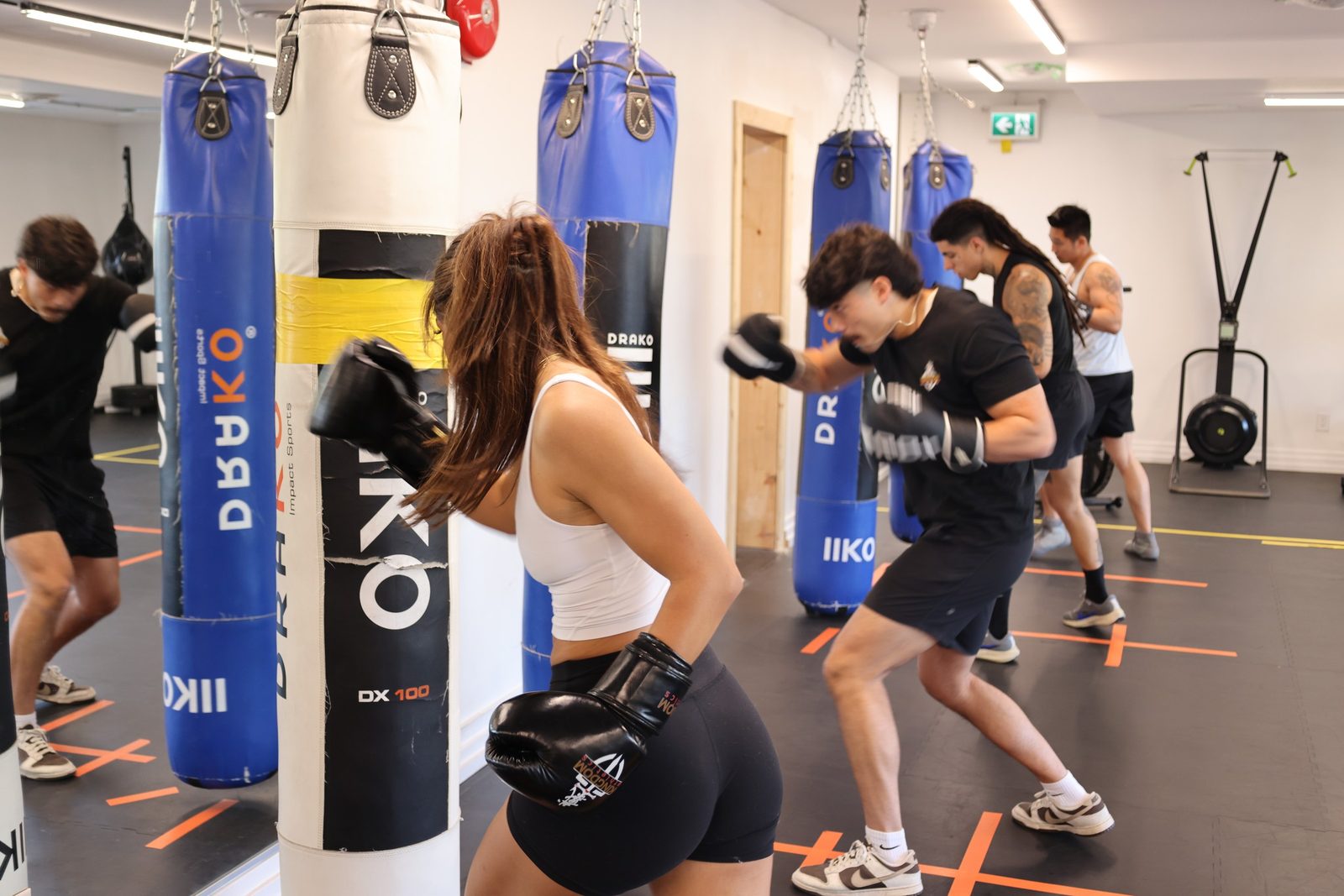
Boxing conditioning uses the tools of a boxing gym (heavy bags, pads, footwork drills, skipping and bodyweight work) to build fitness rather than to prepare for a fight. You learn a jab, a cross, hooks and uppercuts, then string them into rounds. The rounds are the magic: a structured work period followed by a short rest, repeated. That is interval training with a skill attached. Of all the fitness classes South Surrey adults ask us about, this is the one we recommend first.
How hard is it? A laboratory study on heart rate response to fitness boxing at different punching tempos measured trained volunteers during two-minute bag trials and recorded heart rates of 85 to 93 percent of maximum, with energy expenditure of roughly 10 to 11 calories per minute. The authors concluded that fitness boxing compares favourably with other exercise modes. Our Conditioning Boxing program runs weekdays at 17:00 and is the natural starting point for most adults.
Trains well: anaerobic power, aerobic base, coordination, shoulder and core endurance. Trains less: maximal strength, deep flexibility. Impact: low to moderate, since there is no jumping unless the coach adds it.
2. Kickboxing
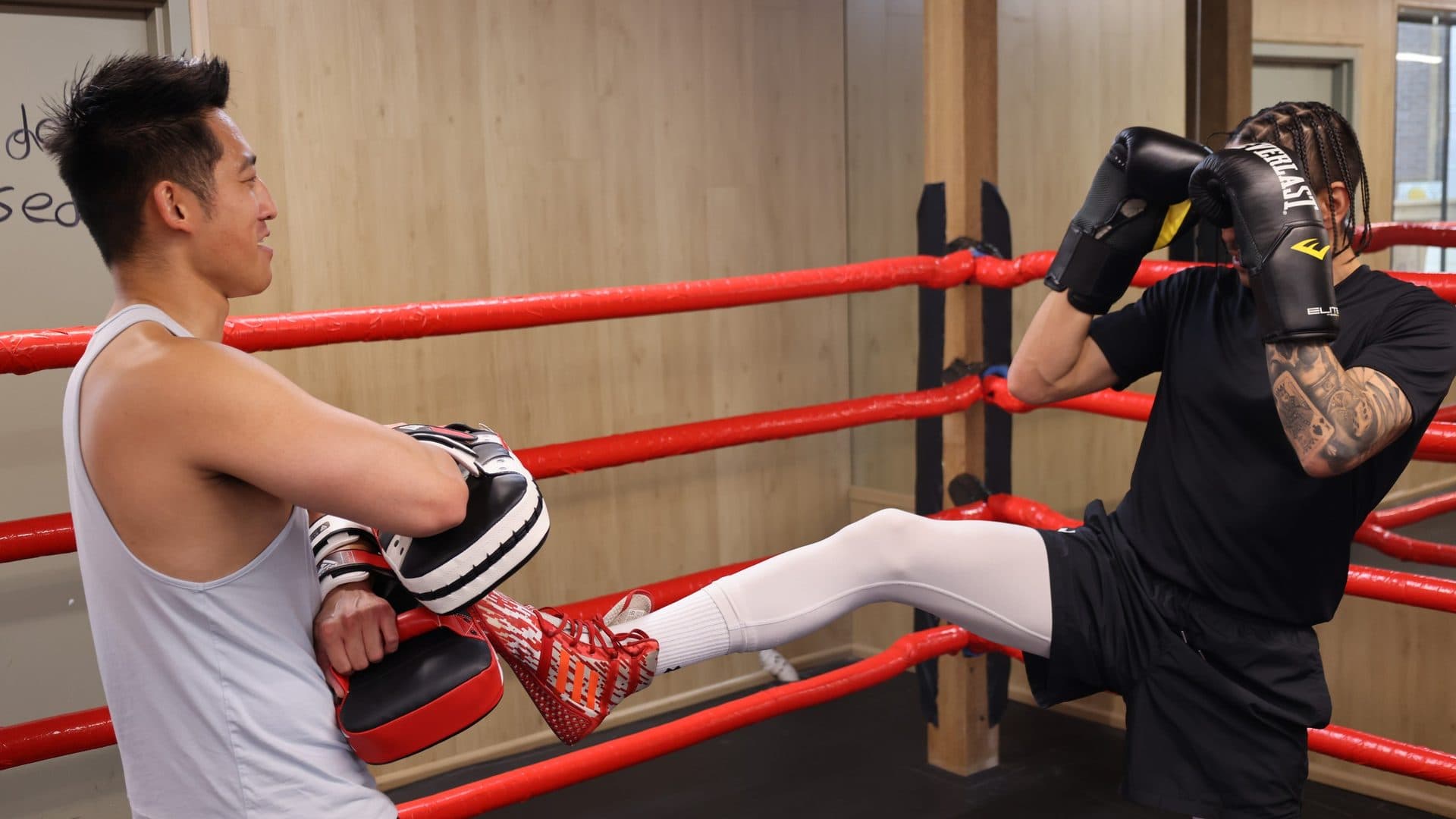
Kickboxing adds kicks and knees to the punching game, and it changes the class more than people expect. Every kick is a single-leg balance drill, every knee is a hip flexor and core contraction, and switching between hands and legs forces your brain to plan. Among the fitness classes South Surrey residents can take in the evening, few are as complete, though it is also the most technical for beginners.
Our kickboxing classes for all levels run weekdays at 19:00 and cover punches, kicks, knees and combinations. If you want the deep dive on what to expect, read our kickboxing guide for White Rock beginners.
Trains well: anaerobic power, hip mobility, balance, skill. Trains less: heavy strength. Impact: moderate. Pivoting on a mat is kinder to knees than running on pavement, but newcomers should build kick height gradually.
3. HIIT
HIIT is probably the most common label on the fitness classes South Surrey studios advertise. It is a structure, not a sport: work hard, rest, repeat, and the research behind it is strong. An umbrella review of 24 meta-analyses on HIIT and cardiorespiratory fitness, covering more than 12,000 participants, found HIIT consistently improved aerobic fitness compared with no exercise and compared with steady moderate cardio, across healthy adults, older adults and people living with obesity.
The weakness of generic HIIT is the content, not the science. Burpees and jump squats work, but they are repetitive, high impact and skill-free, and many people plateau on boredom long before they plateau physically. Striking classes use the same interval structure while giving you something to get better at.
Trains well: anaerobic power, aerobic base. Trains less: skill, mobility. Impact: often high.
4. Spin
If you are comparing fitness classes South Surrey offers with a sore knee in mind, indoor cycling is a strong aerobic option that is very forgiving on joints. Harvard Health notes that cycling is easy on the joints while still giving you an aerobic workout that builds leg muscle. For anyone coming back from a knee or hip issue, spin is a sensible bridge.
The limits are just as clear. Spin trains your legs and your engine, while your upper body, rotation, balance and coordination sit idle. It works best as one piece of a week, not the whole week.
Trains well: aerobic base, leg endurance. Trains less: upper body, balance, skill. Impact: very low.
5. Yoga
No list of fitness classes South Surrey residents enjoy is complete without yoga. It fills the gap nearly every other format leaves: range of motion, breathing, balance and a deliberate slowdown. Harvard Health describes a small study of sedentary adults who practised twice a week for eight weeks and gained muscle strength and endurance, flexibility and cardiorespiratory fitness. We do not run yoga classes at Kingdom, and we are happy to say that a weekly yoga session pairs brilliantly with boxing or kickboxing.
Trains well: mobility, balance, breathing, recovery. Trains less: anaerobic power, heavy strength. Impact: very low.
6. Bootcamp
Bootcamp is the most variable of the fitness classes South Surrey parks and studios host: stations, circuits, sprints, sometimes outdoors. On a dry June morning it is fun. The quality depends entirely on the coach. A good one programs progression and teaches form; a weak one repeats the same circuit and shouts.
Trains well: general fitness, variety. Trains less: specific skill, planned strength progression. Impact: moderate to high.
7. Strength classes
Group strength classes use barbells, kettlebells, dumbbells or bands to build force. Strength sessions are the fitness classes South Surrey adults most often skip, yet strength is the quality we lose fastest if we ignore it. Harvard Health explains that strong muscles lead to strong bones, which helps reduce the risk of fractures linked to osteoporosis. Two sessions a week is the Canadian guideline minimum, which we cover below.
We are a boxing and martial arts gym first, but we have barbells for strength work, our coaches Kenny and Arion both work as strength trainers, and bodyweight strength work is built into our conditioning rounds. For the full picture, read our coaches’ approach to strength training in White Rock.
Trains well: strength, bone health, posture. Trains less: aerobic base unless it is circuit based. Impact: low if coached well.
The comparison at a glance
| Class type | Aerobic | Anaerobic | Strength | Mobility and balance | Skill | Impact |
|---|---|---|---|---|---|---|
| Boxing conditioning | High | High | Moderate | Moderate | High | Low to moderate |
| Kickboxing | High | High | Moderate | High | High | Moderate |
| HIIT | High | High | Moderate | Low | Low | High |
| Spin | High | Moderate | Low (legs only) | Low | Low | Very low |
| Yoga | Low | Low | Moderate | High | Moderate | Very low |
| Bootcamp | Moderate | High | Moderate | Low | Low | Moderate to high |
| Strength | Low | Moderate | High | Moderate | Moderate | Low |
No row is all “High”, which is the point. The best week of fitness classes South Surrey adults can build pairs a primary class you love with one or two others that cover its gaps.
What Canada’s 24-Hour Movement Guidelines Actually Ask of You
Before building a schedule, it helps to know the target, because it is the fairest benchmark for judging any fitness classes South Surrey studios sell. The Canadian 24-Hour Movement Guidelines for adults aged 18 to 64, from the Canadian Society for Exercise Physiology, look at the whole day rather than just your workout. For a healthy adult they recommend:
- At least 150 minutes per week of moderate to vigorous aerobic activity.
- Muscle-strengthening activities using major muscle groups at least twice a week.
- Several hours of light physical activity, including standing.
- 7 to 9 hours of good-quality sleep, with consistent bed and wake-up times.
- No more than 8 hours of sedentary time, including no more than 3 hours of recreational screen time, and breaking up long periods of sitting as often as possible.
If you are 65 or older, the guidelines for adults 65 and older keep the same 150 minutes and twice-weekly strength work, and add activities that challenge balance. That is one reason kickboxing footwork and kicking drills are so useful as we age.
ParticipACTION’s summary of the adult guidelines gives a handy way to tell intensities apart: vigorous activity raises your heart rate and body temperature, while light activity, like slow walking or stretching, does not make you sweaty or short of breath. A striking class sits squarely in the moderate to vigorous zone for most of its working rounds.
The World Health Organization’s physical activity fact sheet reports that 31 percent of adults worldwide do not meet recommended activity levels. The WHO’s own guidelines on physical activity and sedentary behaviour line up closely with Canada’s.
Here is the practical math. If each class gives you around 50 minutes of moderate to vigorous work, three a week lands you at 150 minutes. If two of those classes include bodyweight strength rounds, you are close to the strength target too. Add a daily walk and a standing break every hour at your desk, and you are meeting the full 24-hour picture. That is achievable with the fitness classes South Surrey workers can reach from the office or on the way home.
And if three sessions sounds impossible right now, start with one or two. A large pooled analysis of British survey data on “weekend warrior” activity patterns, which followed more than 63,000 adults aged 40 and over, found that people who fit their activity into one or two sessions a week had lower risk of death from all causes and from cardiovascular disease than inactive people. It is observational research, so it shows an association rather than proof, but the message is clear: some is far better than none.
Why Striking Suits the Busy Adults Who Search for Fitness Classes South Surrey Offers
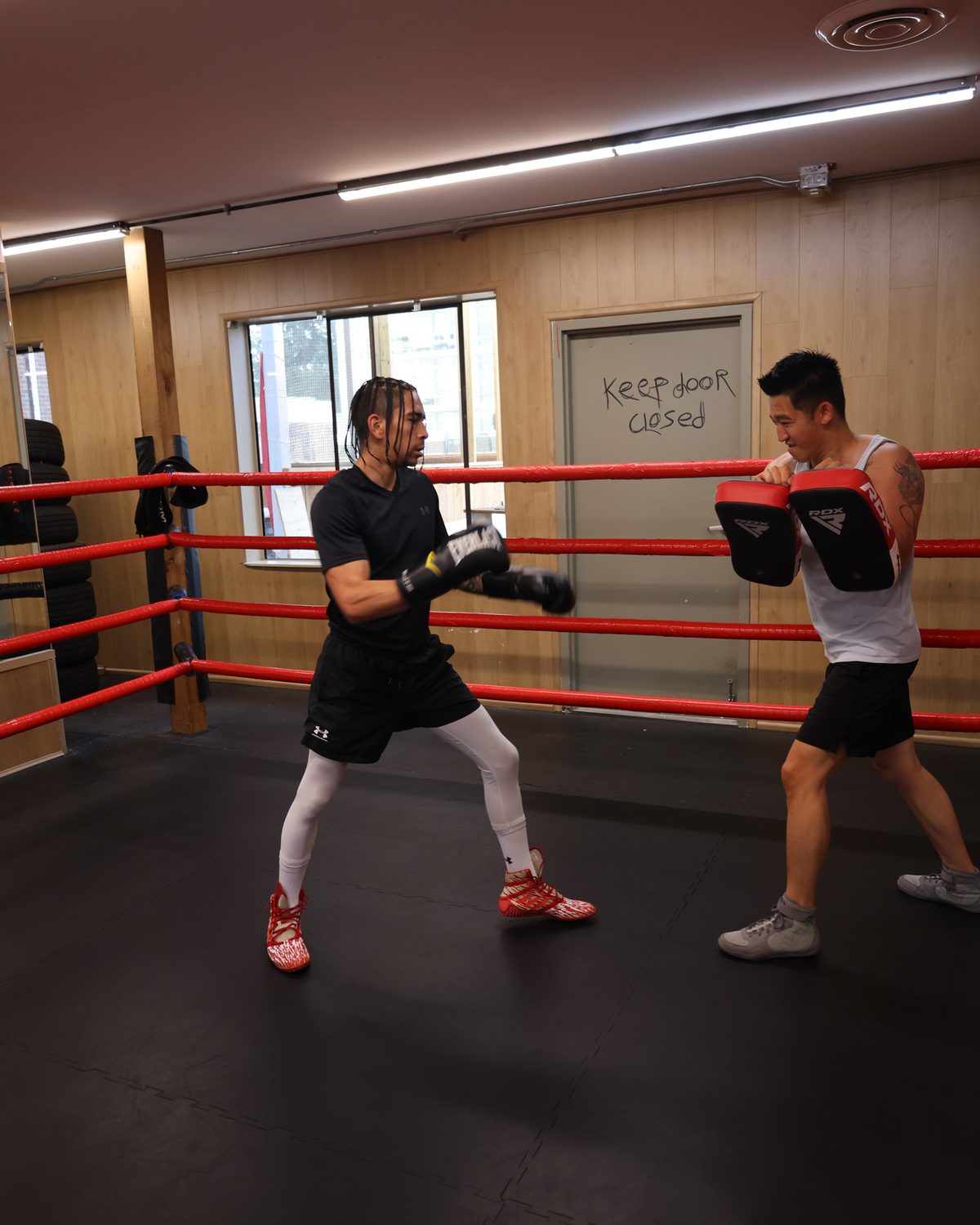
We are biased, and we will own it. After more than 20 years of experience and over 10,000 students trained, we keep seeing the same pattern: busy adults stay with striking longer than with almost anything else. When adults choose among the fitness classes South Surrey offers and pick striking, these are the reasons we believe they stay.
- It is time efficient. Rounds on the bag hit the aerobic, anaerobic and muscular endurance boxes in the same hour. You do not need a cardio day, an arms day and a core day.
- It demands your full attention. You cannot plan tomorrow’s meeting while a coach is calling combinations and holding pads. For people whose jobs live inside their heads, that forced presence is the best part.
- There is always a next skill. Your jab gets sharper, your footwork gets lighter, your defence gets smarter. Progress you can feel keeps you coming back after the novelty fades, which is where most fitness plans die.
- It releases stress in a way other classes do not. Cleveland Clinic lists stress relief alongside heart health, balance, coordination and full-body strength among the benefits of boxing. Hitting a heavy bag after a long day is a very direct form of decompression. We explore this more in our article on the mental health benefits of martial arts.
- It is coached, not just led. A striking coach watches your hands, hips and feet and corrects them. That attention makes technique safer and progress faster than following an instructor at the front of a room.
- The group holds you accountable. Research on group fitness classes and stress in medical students found that students who attended group classes for 12 weeks reported lower perceived stress and better physical, mental and emotional quality of life, while students who trained alone did not show the same broad improvements. It was a small, non-randomized study, but it matches what we see on the gym floor.
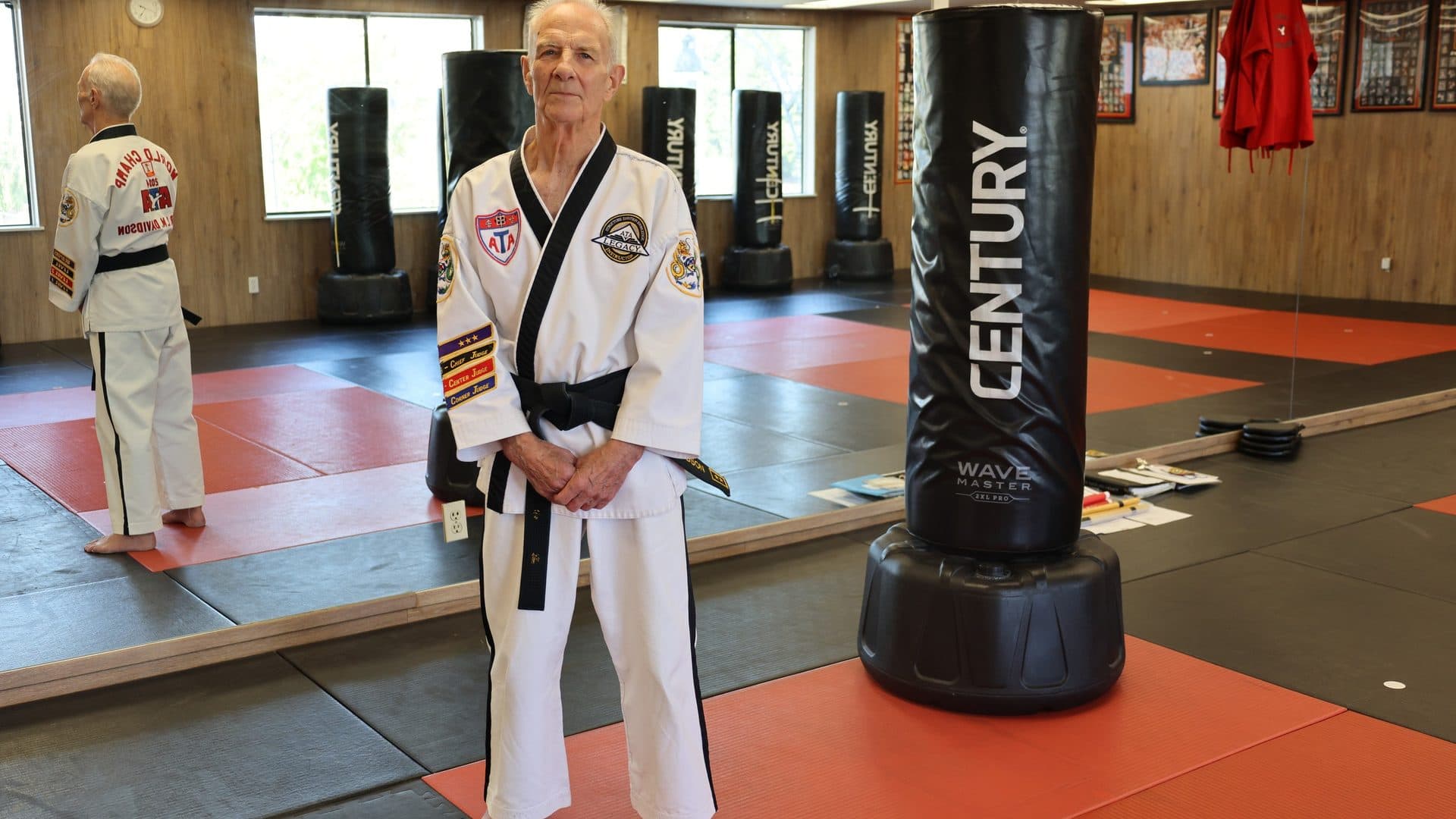
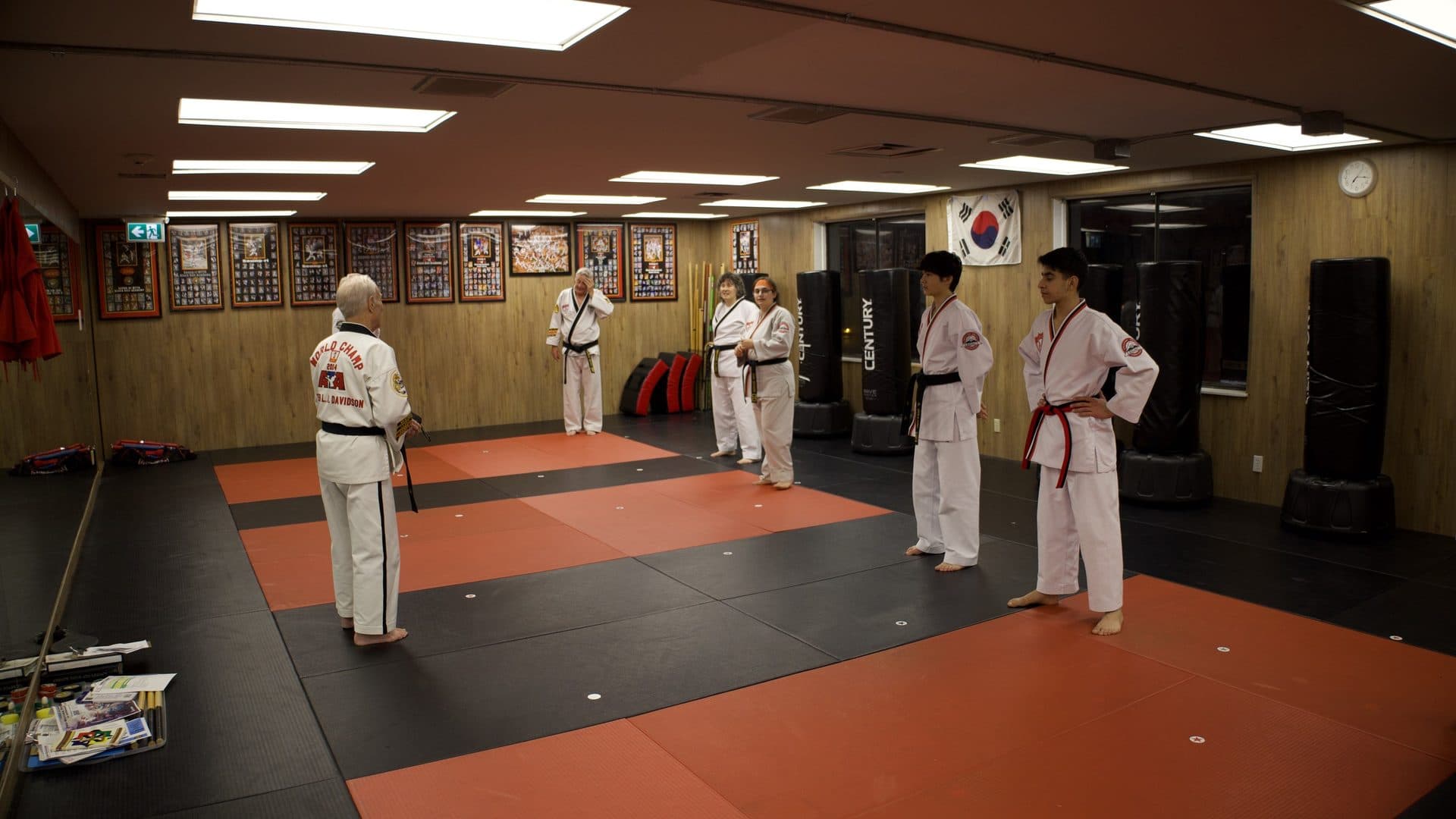
If boxing as a sport interests you rather than just the fitness side, we wrote a full guide to boxing classes in Surrey that covers technique progression and what separates good boxing gyms from average ones. For the martial arts side, our guide to martial arts in South Surrey covers the taekwondo programs we run with Seung-ri Academy at the same address.
What a Striking Class Looks Like, Phase by Phase
Fear of the unknown keeps more people out of a boxing gym than fear of getting tired, so here is how a well-built striking conditioning class usually unfolds. Most fitness classes South Surrey gyms run follow a warm-up, main set and cool-down; striking adds a technique block. Exact timings shift with the coach and the day, but the shape stays the same.
- Arrive and wrap. Get there a few minutes early to wrap your hands. Wraps protect the small bones of the hand and support the wrist. If you have never wrapped, ask a coach; it takes about two minutes once you know how. Our beginner’s guide to buying boxing gloves explains what to bring.
- Warm-up. Skipping, shadowboxing, light footwork and joint circles, aiming for a light sweat, not exhaustion.
- Technique block. The coach teaches or reviews one idea: a jab and step, a slip to the outside, a roundhouse kick. You drill it slowly in the air, then on the bag. Beginners get a simplified version.
- Bag or pad rounds. This is the main set. Rounds of work, short rests, and combinations that build on the technique block. Pad work with a coach, like the sessions Spencer, Fabian and Khaila run, adds timing and feedback.
- Conditioning finisher. Bodyweight strength and core: push-ups, squats, planks, sit-ups, or partner drills. This is where the twice-weekly strength guideline gets covered.
- Cool-down and stretch. Breathing slows and hips and shoulders get some attention.
A good first-class rule: go at 70 percent. You will be tempted to swing as hard as the person beside you. Resist it, because clean technique at moderate speed builds the habit your body defaults to when tired. For more first-day detail, these tips nobody tells you before your first boxing class are worth five minutes.
A note on safety. The same Cleveland Clinic article recommends checking with your healthcare provider before starting if you are not used to high-intensity exercise, and planning two to three boxing workouts a week with recovery in between. We agree. Tell your coach about any injury, heart condition or medication before your first round.
Building a Weekly Schedule Around Work
The best class is the one you actually attend, and attendance is mostly a scheduling problem. Here is how to fit the fitness classes South Surrey commuters and remote workers can reach around a real job. Check the current weekly class timetable before you plan, but the core boxing schedule looks like this:
- 12:00 Boxing, Monday to Friday. The lunchtime option.
- 17:00 Conditioning, Monday to Friday. The straight-from-work option.
- 18:00 Technical Class, Monday to Friday. Skill-focused boxing.
- 19:00 Kickboxing, Monday to Friday. The later evening option.
- Saturday 10:00 and 11:00 Light Sparring, for members who are ready for controlled partner work.
Adults and teens interested in taekwondo also have a weekday evening class at 18:30. All of it is covered by one flat monthly membership, which means you can mix boxing, kickboxing and martial arts without juggling passes.
Profile 1: the lunchtime trainer
Lunchtime is the most underused slot for fitness classes South Surrey workers could be taking. If you work in uptown White Rock, around Semiahmoo Town Centre, or from home, the 12:00 class is the most reliable slot in your week. Block the time in your calendar as a recurring meeting, keep a gym bag in the car, and eat a small snack around 10:30 so you are not training on empty. From Campbell Heights it works too, if you plan the drive both ways and trade a slightly longer lunch for an earlier start.

Profile 2: the commuter
If you drive into Vancouver or across the border, noon is out. The 17:00 and 18:00 classes are built for you, and the 19:00 kickboxing class catches anyone held up on Highway 99. Go directly from work. Once you are home on the couch, the odds of heading back out on a rainy Tuesday fall off a cliff. Most of South Surrey is a short drive down 152 Street, which becomes Johnston Road at the White Rock border.
Profile 3: the parent
Parents often have the hardest schedule and the most to gain. One option many families like: the kids’ boxing class runs at 16:00 on weekdays and kids’ martial arts classes start from 15:15, so a child can train while a parent plans around the 17:00 class. If you have a young boxer at home, read our guide to kids’ boxing classes in White Rock for what the Junior Gloves program looks like.
A sample week that meets the guidelines
| Day | Lunchtime trainer | Commuter | Why it works |
|---|---|---|---|
| Monday | 12:00 Boxing | 17:00 Conditioning | Start the week with a hard session while motivation is high. |
| Tuesday | 30-minute walk | 30-minute walk | Light activity and recovery. |
| Wednesday | 12:00 Boxing | 18:00 Technical Class | Skill focus, lower fatigue. |
| Thursday | Yoga or mobility at home | Yoga or mobility at home | Covers the flexibility gap. |
| Friday | 12:00 Boxing | 19:00 Kickboxing | Third striking session hits the 150-minute mark. |
| Saturday | Promenade walk or Light Sparring when ready | Promenade walk or Light Sparring when ready | Social, outdoors when dry. |
| Sunday | Rest | Rest | Sleep in, recover, plan the week. |
Whatever mix of fitness classes South Surrey residents like you settle on, two scheduling rules make the difference between a plan and a habit. First, decide your class days on Sunday night and put them in your calendar with a reminder. Second, have a backup slot for each class. If Monday’s 17:00 falls through, you already know Monday’s 19:00 is your fallback. A fixed backup removes the decision, and decisions are where skipped sessions come from.
If you prefer a smaller, more personal setup for a while, our comparison of group fitness and personal training breaks down when each makes sense.
Staying Consistent Through a Wet Lower Mainland Winter
Every September we meet motivated new members. By January, the people still showing up to the fitness classes South Surrey members started in the fall share one trait: they planned for winter before it arrived. The Semiahmoo Peninsula does not get much snow, but it gets months of rain, grey skies and early darkness. That is a bigger threat to your routine than any injury.
The weather here can be serious. The City of White Rock’s pier and promenade page recounts the December 2018 storm, when a 91 km/h windstorm combined with heavy rain and a king tide destroyed a third of the 470-metre pier. Most winter nights are less dramatic, but they are wet, dark and persuasive.
Understand the winter slump
Shorter days affect mood and energy for a lot of people. HealthLink BC’s page on seasonal affective disorder notes that regular exercise and more sunlight can help, and that being active during the daytime, especially earlier in the day, may help you feel more energetic. Cleveland Clinic’s guide to seasonal depression also recommends getting outside every day, even when it is cloudy. If low mood is persistent, talk to your doctor or call 8-1-1; a gym is not a substitute for medical care.
This is a strong argument for the 12:00 class in winter. A midday session puts your training in daylight hours, breaks up your sitting time, and gives you an energy lift for the afternoon, right when the light is starting to go.
Winter consistency system
- Pack the bag the night before. Wraps, gloves, a dry shirt, a towel, a water bottle and a warm layer for the drive home.
- Book it like a meeting. Calendar invites with a 30-minute reminder work better than good intentions.
- Train with someone. A friend from Sunnyside or Elgin Chantrell who expects you at 17:00 is stronger motivation than any app.
- Use the “just show up” rule. On bad days, promise yourself only the warm-up. You will almost always stay for the whole class.
- Drive safely. The Province of B.C.’s winter driving page reminds drivers to obey winter tire and chain signs from October 1, with requirements on most routes running to April 30 and some lower-elevation highways ending March 31. Check before you commute on Highway 99.
- Grab daylight on weekends. A Saturday walk on the White Rock promenade or the beachfront pathway at Crescent Beach, which the City of Surrey keeps open dawn until dusk, gets you outside while the light lasts and counts toward your light activity hours.
Why indoor striking wins in winter
Outdoor bootcamps pause and runners fight slippery pavement in the dark, but heavy bags, a ring and mat space work the same on a stormy January night as on a July afternoon. That reliability is one of the best arguments for making indoor, coached fitness classes South Surrey residents can reach in minutes the backbone of the week.
How to Evaluate Any Gym Before You Commit
Whether you end up with us or somewhere else, use this checklist when you try fitness classes South Surrey studios run. It takes one visit to answer most of it.
- Does a coach correct individual form? Watch whether the instructor walks the room and adjusts people, or stays at the front.
- Is there a beginner pathway? Ask what your first month looks like. A clear answer is a good sign.
- Is the timetable realistic? Count the classes you could actually attend.
- Is there progression? Ask what someone in their second year does that a beginner does not.
- How are injuries handled? A good gym asks about them before you start and modifies drills.
- Is the membership clear before you sign? Any gym worth joining answers plainly.
We wrote a longer version of this for combat sports specifically in what to look for in a boxing gym in South Surrey. If you want to know what drives our own coaching, our mission page explains it.
Your First Four Weeks: A Week-by-Week Plan
Here is the first-month plan we would give a friend trying the fitness classes South Surrey has on offer this fall.
Week 1: learn the basics
- Attend two classes. Pick a 12:00 Boxing or 17:00 Conditioning class for both.
- Focus on stance, guard, jab and cross. Ignore everything else.
- Work at 70 percent effort. Soreness on day two is normal; sharp pain is not.
- Walk on at least three other days.
Week 2: build the habit
- Attend two or three classes on the same days and times as week 1.
- Add hooks and basic footwork. Ask a coach for one correction per class and write it down afterwards.
- Set a bedtime that gets you 7 to 9 hours. Sleep is when your body adapts.
Week 3: add variety
- Try the 18:00 Technical Class once. Slower pace, more detail, more “aha” moments. Our Technical Boxing program page explains the focus.
- Add one mobility session at home: 20 minutes of hips, thoracic spine and shoulders.
- Increase effort to 80 percent in the final round of each class.
Week 4: find your mix
- Attend three classes, including one kickboxing class at 19:00.
- Decide which two slots are your “non-negotiables” and which one is flexible.
After week 4, most people are ready to settle into three classes a week, which meets the aerobic guideline with room to spare. Sparring is optional and never rushed; when the time comes, our guide to boxing sparring for beginners covers the rules we follow. If you are coming at this completely new, our complete introduction to beginner boxing fills in the rest.
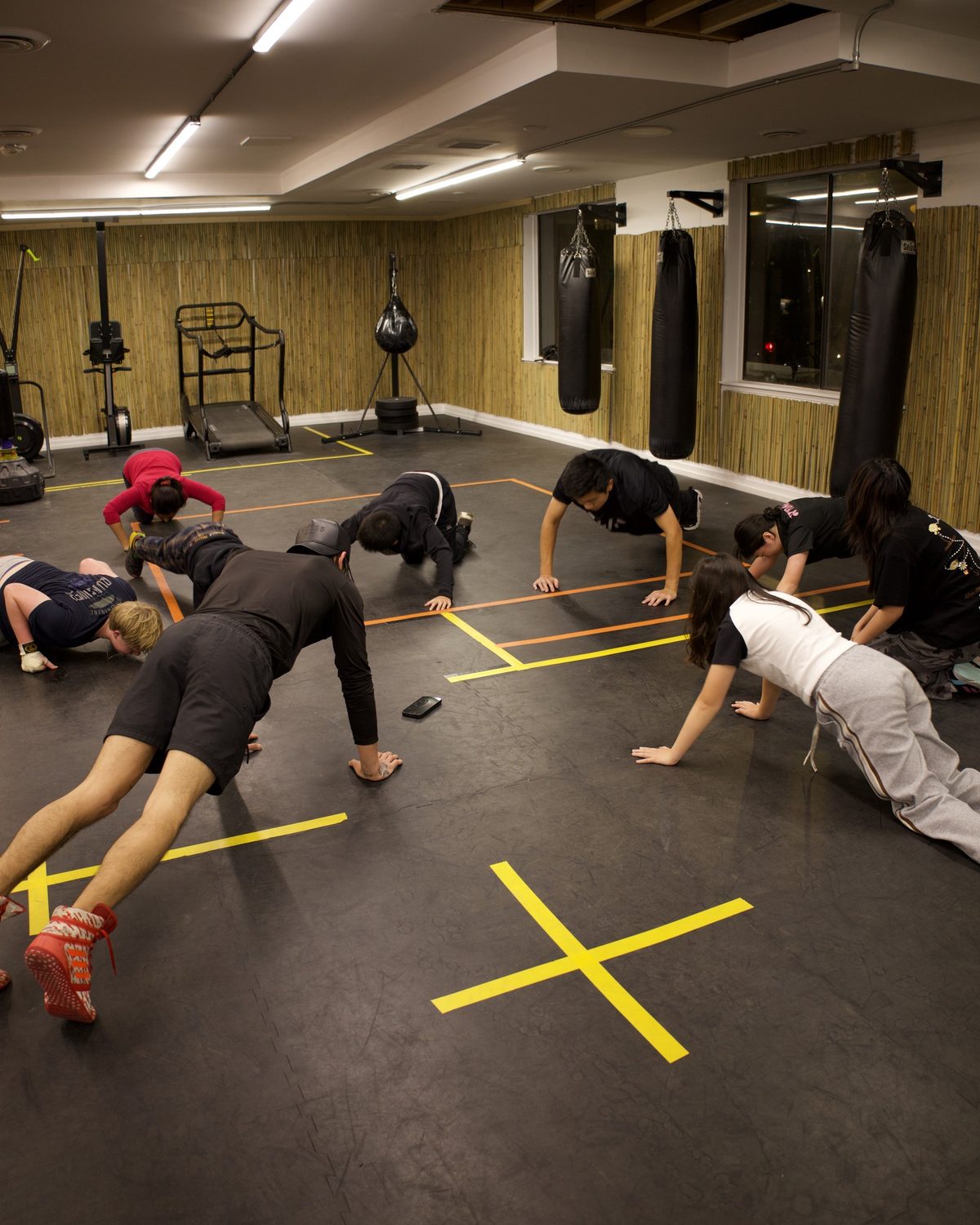
Mistakes That Stall Progress in Group Classes
- Going all out every session. Intensity is a tool, not a personality. Mix hard and technical days, as the sample week does.
- Skipping strength entirely. Cardio-only weeks miss the twice-weekly strength guideline. Conditioning finishers and bodyweight rounds cover a lot of it.
- Chasing variety too early. Sampling every one of the fitness classes South Surrey has in five weeks means you are a beginner five times. Give one primary class type at least eight weeks.
- Ignoring recovery. Sore shoulders from poor punching mechanics are usually a technique problem; ask a coach. Nick works on rehab, fascial release and stretching, and our coaches can point you to the right help.
- Training through pain. Muscle fatigue is fine. Joint pain is a signal to stop and ask.
Adults starting later in life often worry they have missed the window. They have not, and our article on martial arts for adults explains why age is far less of a barrier than people think. And if you want to understand the engine-building side in depth, our guide to boxing conditioning in White Rock goes further into rounds, rest periods and progress.
Frequently Asked Questions
Do I need to be fit before I join a boxing or kickboxing class?
No. Beginners work at their own pace and coaches scale drills. Everyone in the room was new once, and fitness is the result of attending, not the entry requirement.
Will I get hit in a boxing fitness class?
No. Conditioning, technical and kickboxing classes are bag, pad and drill based. Light sparring is a separate Saturday session for members who choose it and are ready for it.
How many classes a week should I do?
Start with two. Build to three once your body has adapted, usually within a month. Three solid sessions plus daily walking meets Canada’s 150-minute aerobic guideline for most adults.
What should I bring to my first class?
Comfortable athletic clothes, a water bottle and a towel. Ask about footwear for your chosen class when you book. If you have hand wraps and gloves, bring them; if not, mention it when you book and a coach will point you in the right direction.
Is boxing or kickboxing better for a beginner?
Among the fitness classes South Surrey beginners try, conditioning boxing has the gentlest learning curve, since you only manage your hands and feet. Kickboxing adds balance and hip work sooner. Many members begin with conditioning boxing, then add kickboxing after a few weeks.
Can I combine your classes with yoga or spin elsewhere?
Yes, and it is a smart mix. Yoga adds mobility and spin adds low-impact aerobic volume.
Is there a class during lunch?
Yes. Boxing runs at 12:00 Monday to Friday, which suits people working in White Rock, around Semiahmoo Town Centre or from home in South Surrey.
Start Your Fitness Classes South Surrey Routine at Kingdom Athletics
The right fitness classes South Surrey adults choose are the ones that train what matters, fit the calendar, and still feel worth the drive on a wet Thursday in January. Striking checks all three: interval conditioning, real skill, strength work and coaching in one session, at noon or after work. Pair it with a walk and a weekly stretch, and you are meeting Canada’s guidelines without living at the gym.
Kingdom Athletics runs fitness classes South Surrey and White Rock adults can fit around real jobs, and one flat monthly membership covers every boxing, kickboxing and martial arts class on the timetable. The easiest next step is to book your first class through our contact page or call us at (778) 237-5905. Want to read more first? Browse our training tips and guides, then get in touch to reserve a spot in the class that suits your week. We will see you on Johnston Road.