Kids Boxing Classes White Rock: 9 Proven Answers for Parents
September 30, 2026•22 min read•Boxing & Martial Arts, Youth Sports
If you are a parent weighing up kids boxing classes White Rock has to offer, you probably have two feelings at once. One is curiosity, because your child keeps shadowboxing in the kitchen and asking when they can “do real boxing”. The other is a knot in your stomach, because boxing has a reputation, and you are not about to sign your eight-year-old up to get hit in the head. Both feelings are reasonable.
At Kingdom Athletics on Johnston Road, our youth boxing program is called Junior Gloves. It is for ages 6 to 12, it runs Monday to Friday at 16:00, and it is built around one idea: children learn boxing as a skill, the way they would learn swimming strokes or a tennis serve, not as a fight.
Below you will find how we keep it safe, what a class actually looks like, what the research says about activity at this age, how to tell if your child is ready, what to pack, and how it compares with team sports and with taekwondo for younger kids. By the end you should know whether kids boxing classes White Rock families are booking suit your child right now.
Kids Boxing Classes White Rock Parents Can Trust: How We Keep It Safe
Let us start with the hard question, because any honest guide to kids boxing classes White Rock parents are considering has to. The Canadian Paediatric Society has publicly recommended that children and teens not participate in boxing. The concern is specific: competitive boxing rewards deliberate blows to the head, children’s brains are more vulnerable to concussion, and recovery takes longer than it does for adults. The same statement notes that there is no evidence head guards reduce the incidence of concussion.
We take that seriously, and it shapes everything about Junior Gloves. The joint statement from the Canadian Paediatric Society and the American Academy of Pediatrics also acknowledges that boxing gives young people exercise, self-discipline and self-confidence. It encourages kids toward activities in which intentional blows to the head are not central. That is the line our kids program is designed to sit on the right side of. Here is what that means in practice:
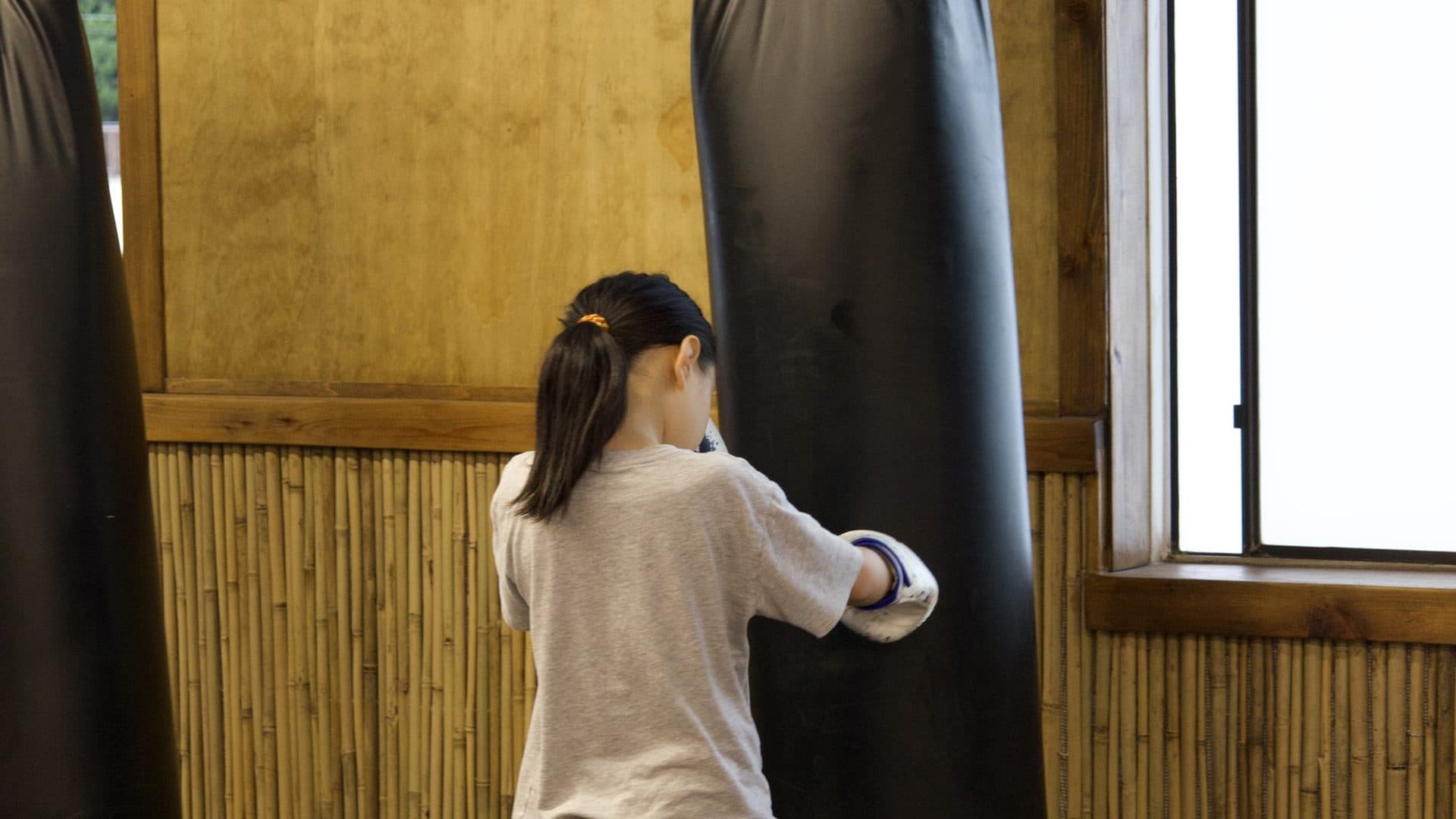
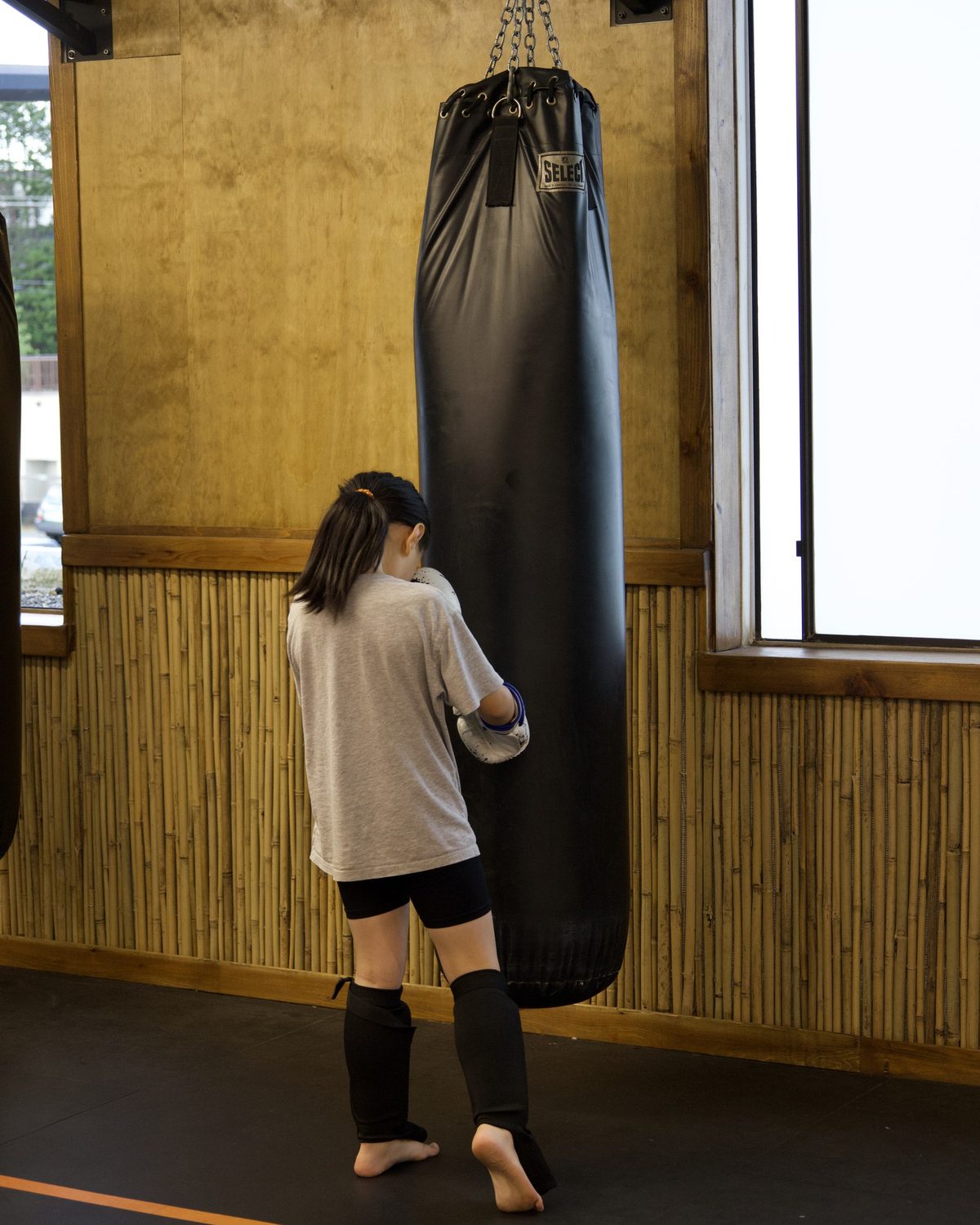
- Skill work is non-contact. The bulk of every class is footwork, stance, shadowboxing, heavy bag work, target mitts held by a coach, and movement drills. The child is the one doing the hitting, and they are hitting equipment.
- Beginners should not be taking head shots. In a well-run youth program, new kids do not trade punches to the head with anyone. Defensive drills use slow, controlled touches to the gloves and body, or a coach’s mitt moving toward them, so they learn to slip and block without being struck. Ask our coaches exactly how partner work is introduced at each stage.
- Protective gear has limits. Gloves protect small hands and wrists. Headgear protects against bumps, scrapes and cuts, but it is a precaution against knocks, not a concussion shield. That is why the real safety rule in any good youth program is controlling contact, not “wear a helmet and carry on”.
- Coaches control the intensity. Every partner exercise has a defined target, a defined speed and a defined job for each child. If a drill gets wild, it stops.
Put simply, the version of boxing paediatricians warn about and the version taught in well-run kids boxing classes White Rock parents can trust are different activities that share equipment and vocabulary. A good youth program gives kids the footwork, the fitness and the focus, and leaves the head-hunting out. If you want to read more about how controlled partner work is introduced to adults later on, our guide to rules for beginner sparring rounds shows how gradual that process is even for grown-ups.
What to do if a knock does happen
Children fall over in every sport. They bump heads on the soccer field and on the playground. What matters is that the adults around them know the signs. The Canadian Guideline on Concussion in Sport from Parachute sets out how suspected concussions should be recognized, removed from play and managed before a return to sport, and it is worth any sports parent’s twenty minutes.
For B.C. specifics, HealthLink BC’s concussion page explains the warning signs and reminds families that 8-1-1 connects you with a registered nurse around the clock. In our kids boxing classes White Rock coaches follow a simple rule: if there is any doubt, the child sits out and the parent is told.
What a Junior Gloves Class Looks Like, Start to Finish
Parents new to kids boxing classes White Rock gyms run often picture two kids in a ring. In reality, the 16:00 slot on the weekly Kingdom Athletics class timetable looks much more like a lively practice for any skill sport. It sits right before the 17:00 conditioning class for adults, so kids get the room while it is set up for them. Here is the shape a typical session follows. Drills change week to week, but the structure stays familiar, which helps younger kids settle in.
| Part of class | What the kids do | Why it matters |
|---|---|---|
| Arrival and gloves on | Check in with the coach, water bottle down, wraps or gloves on with help | Routine calms nerves and teaches kids to look after their own gear |
| Warm-up games | Tag variations, skipping, shuffle races, animal crawls on the mats | Raises heart rate and builds agility without feeling like “exercise” |
| Stance and footwork | Boxing stance, step-drag forward and back, pivots, staying balanced | Balance and coordination are the base for every other skill |
| Technique block | One or two punches taught properly: jab, cross, hook, uppercut, then short combinations | Focus on doing a few things well rather than lots of things badly |
| Bag and mitt rounds | Short timed rounds on heavy bags or hitting a coach’s target mitts | Burns energy, builds power and timing, and it is the part kids love most |
| Defence drills | Slipping a slow mitt, blocking with the gloves, moving out of range | Teaches calm reactions under mild pressure with no head contact |
| Fitness finisher | Partner challenges, core work on the mats, relay races | Covers the muscle and bone strengthening the guidelines recommend |
| Cool-down and wrap-up | Stretching, a quick question about what they learned, gloves away | Builds the habit of reflecting and finishing properly |
A few details separate good kids boxing classes White Rock parents recommend from the rest. Rounds are short, because children’s attention and energy come in bursts. Coaches demonstrate first, then let kids copy, then correct one thing at a time. Good coaches also pair kids by size and experience, so a small six-year-old is not matched with a tall twelve-year-old for anything that involves movement toward each other.
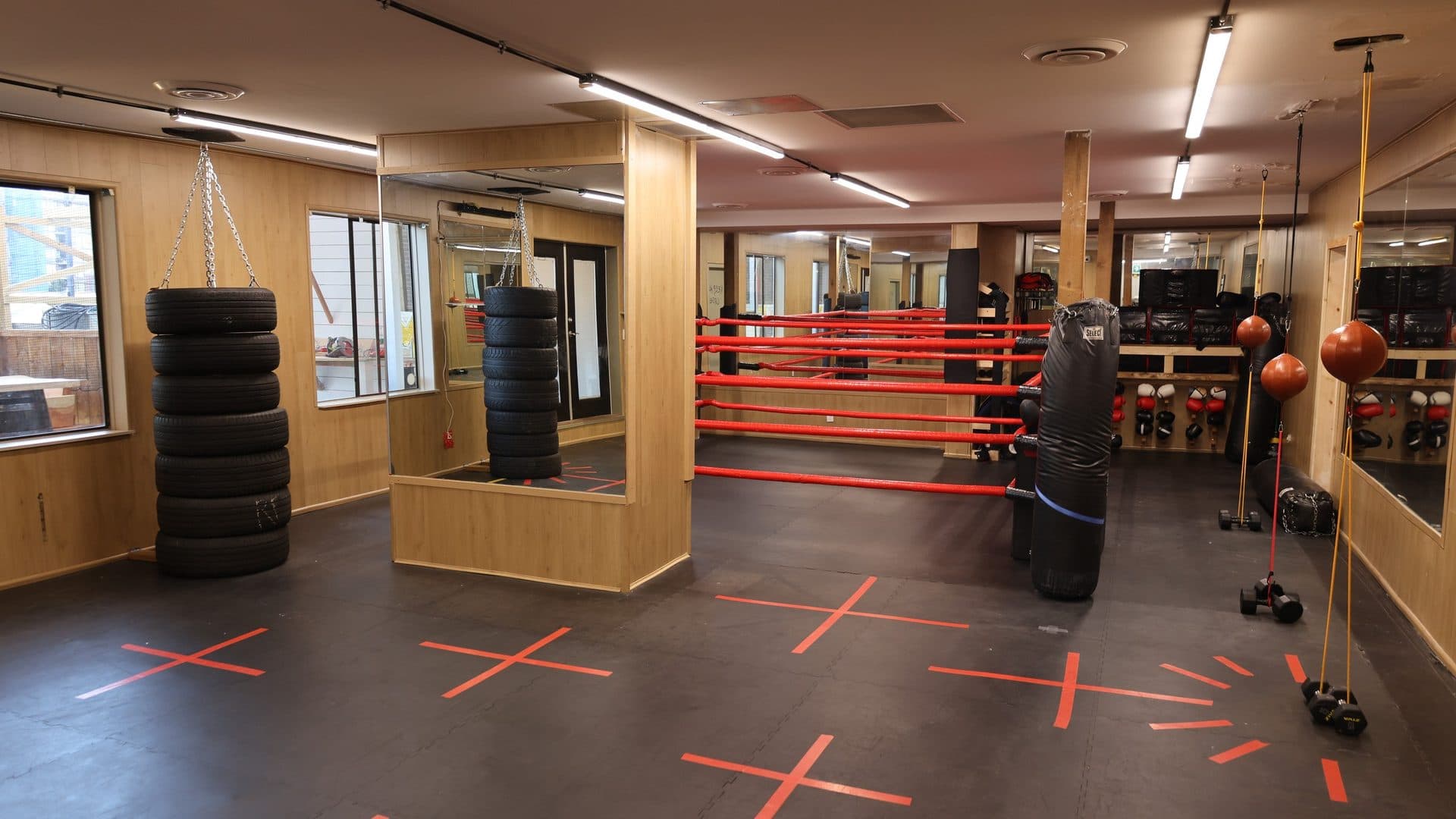
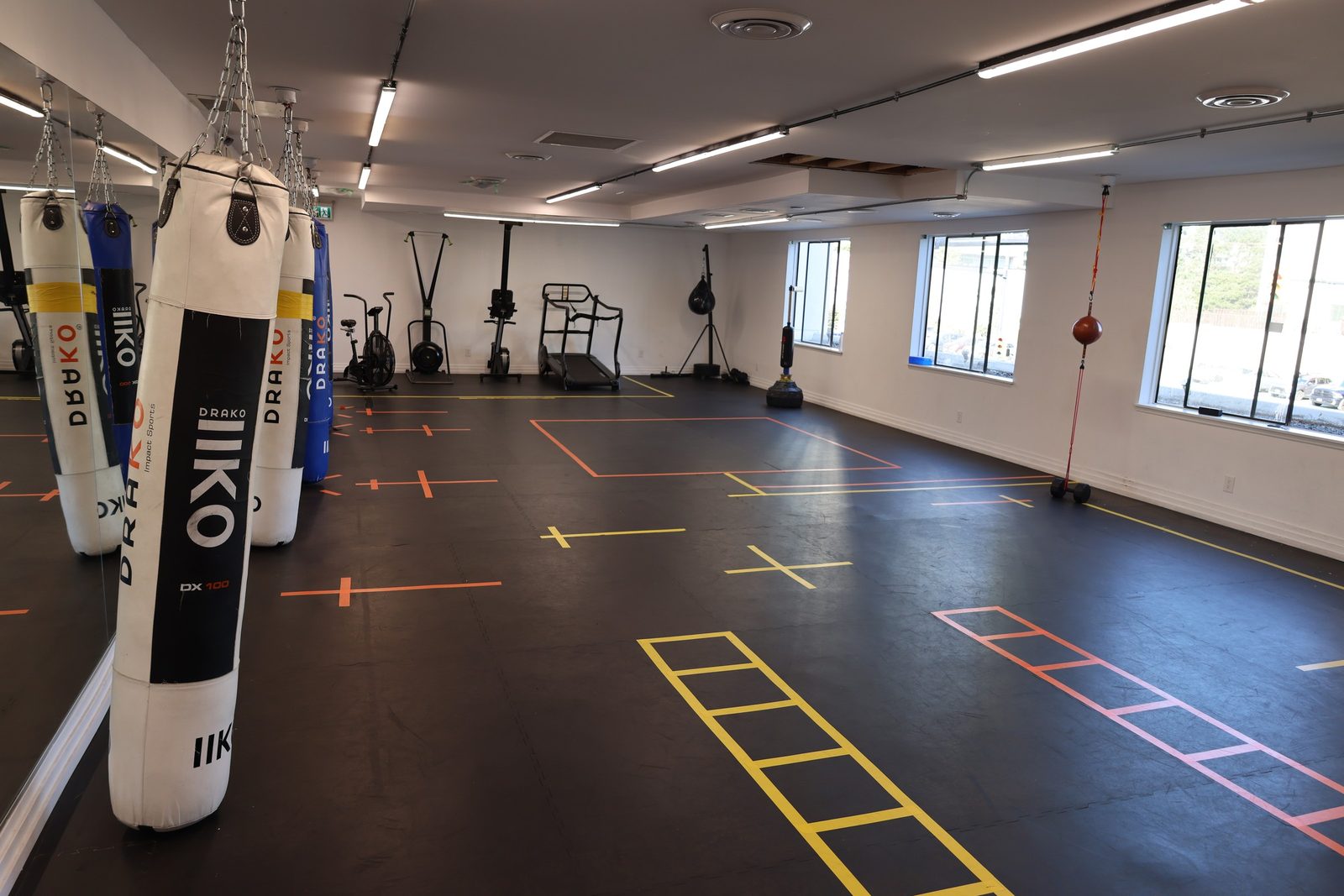
The equipment in our kids boxing classes White Rock sessions is the same gear adults use in our technical boxing fundamentals classes: heavy bags, the boxing ring, mat space and mirrors. Mirrors are underrated for kids: a child who sees their own guard drop gets instant feedback.
The first month, week by week
Most children progress along a fairly predictable path. It varies with age and temperament, but this is a useful rough map for the first four weeks of kids boxing classes White Rock children usually follow:
- Week 1: Get comfortable. Learn the room, the coaches and the routine. Stance, basic footwork, the jab and the cross. Lots of games. The goal is for your child to leave wanting to come back.
- Week 2: Put punches together. One-two combinations on the bag, starting to turn the hips on the cross, first attempts at the hook. Skipping gets a little smoother.
- Week 3: Add defence. Slipping a slow-moving mitt, blocking, stepping back out of range. Kids start to understand that boxing is as much about not getting hit as it is about hitting.
- Week 4: String it together. Short combinations with a defensive move built in, better balance while moving, and more confidence calling out numbers for combinations. Many parents notice the posture change first.
The Developmental Benefits, Backed by Paediatric Guidelines
You do not have to take a gym’s word for why kids need vigorous activity. The Canadian 24-Hour Movement Guidelines for Children and Youth recommend that 5 to 17 year olds accumulate at least 60 minutes of moderate to vigorous physical activity a day, and that vigorous activity and muscle and bone strengthening activity each be included at least three days a week. The same guidelines recommend no more than two hours of recreational screen time a day and 9 to 11 hours of uninterrupted sleep for kids aged 5 to 13.
Kids boxing classes White Rock children attend after school tick several of those boxes at once. Skipping, bag rounds and relay races are vigorous. Punching, pivoting, crawling and core work load muscles and bones. And a child who has trained hard at 16:00 tends to be ready for dinner and bed at a reasonable hour, which is not a small thing for parents trying to protect sleep.
The bigger picture shows why this matters. According to Statistics Canada’s Canadian Health Measures Survey results for 2022 to 2024, 66 percent of boys aged 5 to 11 met the physical activity recommendation, compared with only 37 percent of girls the same age.
Globally, the World Health Organization’s physical activity fact sheet reports that 81 percent of adolescents aged 11 to 17 are not active enough, and it lists better fitness, stronger bones, improved cognitive outcomes and mental health among the benefits of regular activity for young people. That gap is one reason we love seeing girls join the kids boxing classes White Rock families book with us. Boxing is not a “boys’ sport”, and the skills transfer just as well.
Coordination, focus and the brain
Boxing is a coordination sport disguised as a fitness workout. A simple jab-cross-hook asks a child to keep their feet under them, rotate the hips, extend one arm while the other protects the face, and then do it all again on the other side. That kind of left-right, upper-lower patterning is what coaches mean by physical literacy.
The research on activity and thinking is encouraging but careful. A large systematic review on physical activity, fitness and cognition in children aged 5 to 13 found that most studies support a benefit of fitness and physical activity for children’s cognitive functioning, while the effect on school test scores is mixed. It also found no sign that more activity hurts academic performance. For parents worried that an after-school class will eat into homework time, that last point is reassuring.
Why the “FUNdamentals” years matter
Canada’s Sport for Life Long-Term Development framework describes the Active Start, FUNdamentals and Learn to Train stages as the window to build physical literacy before puberty, so that children have the basic skills to be active for life. Kids boxing classes White Rock coaches plan for ages 6 to 12 cover almost exactly that window. Kids are not training for a title. They are building balance, agility, rhythm and body awareness they will carry into every other sport they try.
Confidence, Self-Control and Standing Up to Bullying
Ask parents why they are looking at kids boxing classes White Rock gyms run, and confidence comes up more than fitness. Some kids are shy, some are the smallest in their class, some have had a rough year at school. Here is what a boxing class can and cannot do.
First, the definition. The Province of B.C.’s ERASE guidance on bullying describes it as intentional harm, repeated over time, in a relationship where there is an imbalance of power, and notes it can be verbal, physical, social or online. Most of that is not solved by punching. What boxing can change is the child’s side of the power imbalance: how they carry themselves, how calmly they handle pressure, and whether they believe they can cope.
The evidence on combat sports and behaviour deserves a straight reading. A 2026 systematic review of martial arts training and aggression in children and adolescents found no consistent effect in either direction, and concluded that any benefit depends on the teaching goals, the coaching and the training context. In other words, a class does not make kids calmer or kinder by magic. The culture of the room does. That is why we put so much weight on rules, respect for partners and coaches who stop drills the moment they get sloppy.
Here is what those rules build over time in kids boxing classes White Rock children stick with:
- Posture and eye contact. Kids who practise a boxing stance every day stand differently. A child who stands tall and looks people in the eye is a harder target for a bully.
- Calm under mild pressure. Slipping a coach’s mitt teaches a child to stay composed when something comes at them, rather than freezing or flailing.
- Self-control. Kids learn that boxing skills stay in the gym. A child who can hit a heavy bag hard and then stop instantly when the coach says “time” is practising restraint every round.
- Earned confidence. Nobody hands a child a better jab. They see it improve over weeks, and that kind of proof sticks.
We also teach kids plainly that walking away, telling an adult and using their voice come first. Boxing is not a licence to fight at recess. If you want more on this side of training, our articles on how martial arts builds confidence in kids and on the mental health benefits of martial arts go deeper, and our essential self-defence skills guide covers awareness and de-escalation for older students.
Is My Child Ready for Kids Boxing Classes White Rock Coaches Run?
For kids boxing classes White Rock coaches run, age is a starting point, not the whole answer. Junior Gloves takes children from 6 to 12, but a six-year-old and an eleven-year-old are very different athletes. Instead of focusing only on the birthday, look for these signs.
Signs your child is ready
- They can follow a two or three step instruction from an adult who is not their parent (“step forward, jab, step back”).
- They can stay engaged in a group activity for a good stretch without needing to leave the room.
- They handle being corrected without falling apart. A little frustration is normal. Complete meltdowns every time are a sign to wait.
- They can play physically with other kids and respect “stop” when someone says it.
Signs to wait a little, or start somewhere else
- Your child is at the very young end of the range and still struggles to separate from you in a new place. The Tigers taekwondo class for ages 4 to 6, covered below, is built for exactly this stage.
- They want to “fight” rather than learn. Boxing can channel that energy well, but the child needs to accept the rules first. A trial class usually makes it clear either way.
- They have a medical condition, a recent concussion or a heart or joint issue. Talk to your family doctor first, and tell the coach before the first class.
A quick home test
Try this in the living room. Show your child a boxing stance: feet shoulder-width, one foot forward, hands up by the cheeks. Ask them to hold it while stepping forward three times and back three times without their feet crossing. Then ask them to throw five slow jabs, bringing the hand back to the face each time. If they giggle, try hard and ask to do it again, they are probably ready for kids boxing classes White Rock coaches run.
If you are still unsure, the easiest step is to book your child’s first class with our team and watch. One session tells you more than a week of reading about kids boxing classes White Rock gyms advertise online.
Choosing Between Kids Boxing Classes White Rock and South Surrey Families Can Reach
When you compare kids boxing classes White Rock and South Surrey gyms offer, look past the logo and the website. Whether the gym is in uptown White Rock, down near Semiahmoo Town Centre or out toward Campbell Heights, the same questions apply. Here is a checklist parents can take to any youth program, ours included:
- Ask how contact is handled. A good answer is specific: which drills involve partners, whether beginners have any head contact, and who decides when a child progresses. Vague answers like “it’s pretty safe” are a red flag.
- Ask about safeguarding. Sport organizations in Canada have been moving toward clear conduct codes. Boxing BC’s Safe Sport commitment and Taekwondo Canada’s Safe Sport policies both lay out what respectful, maltreatment-free sport should look like. Programs such as Commit to Kids from the Canadian Centre for Child Protection give youth organizations practical tools on screening and adult-child interaction. It is completely fair to ask any gym how they approach this.
- Watch a class before joining. Are kids moving most of the time or standing in lines? Do coaches know names? Is it loud and happy, or loud and chaotic?
- Check the timing works. A class your child can actually get to consistently beats a slightly better class you miss every other week.
For Grandview Heights, Morgan Creek and Rosemary Heights families, the drive into uptown White Rock after school is usually short via 152 St or King George Blvd, then along to Johnston Road. Families in Ocean Park, Crescent Beach and Elgin Chantrell tend to come across on 16 Ave or through the neighbourhood roads. Families in Sunnyside and Semiahmoo are close by.
If you are further out and weighing a longer drive, our post on how to compare boxing classes across Surrey covers travel, timing and what to look for. Our guide on what to look for in a South Surrey boxing gym applies to adult programs, but most of its checklist works for kids too.
What to Bring to Your Child’s First Class
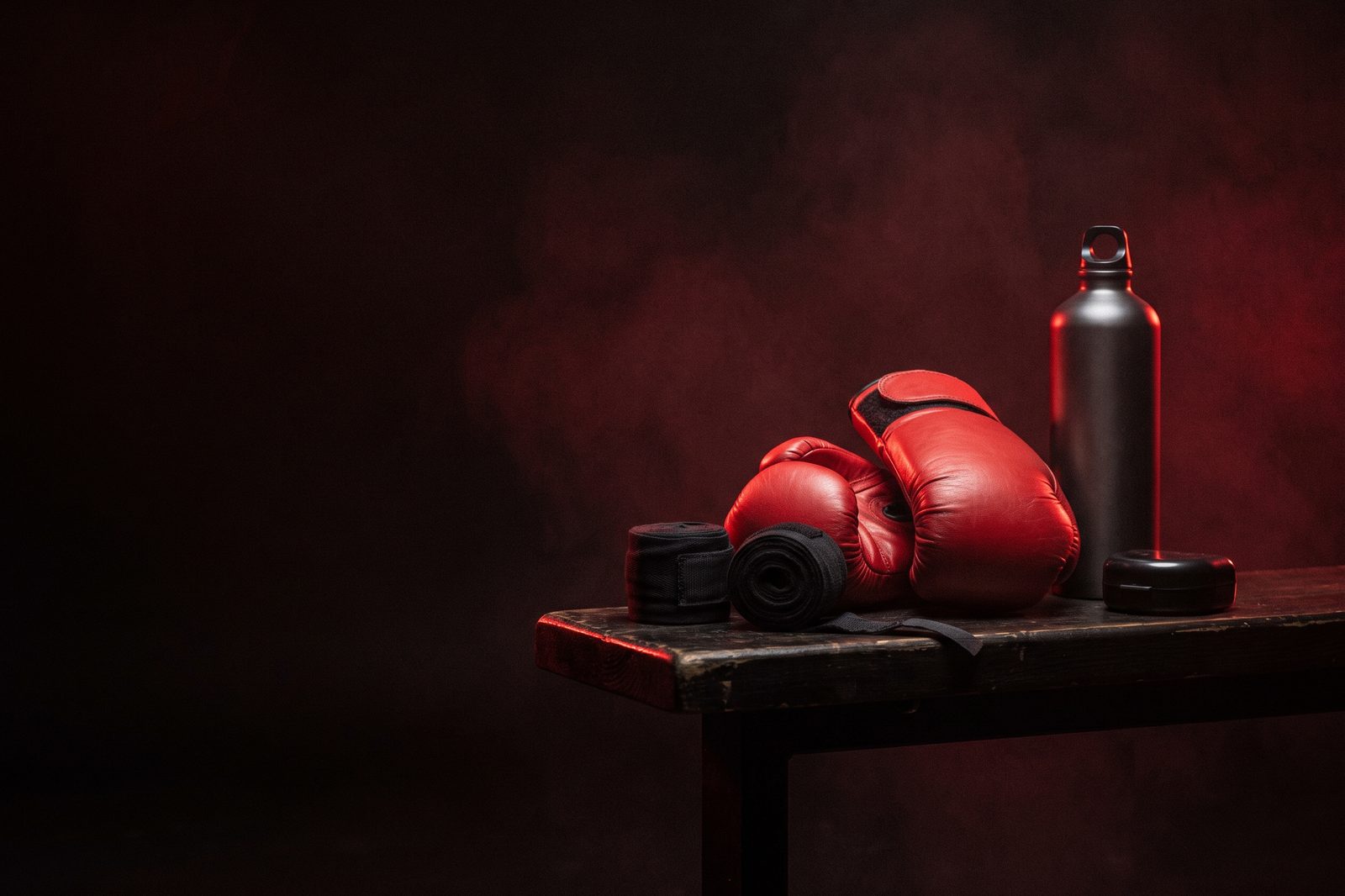
You do not need to buy a pile of gear before your child’s first session. Here is the short list for the first visit and a longer one for later.
For the first class
- Comfortable athletic clothes. Shorts or track pants and a T-shirt. Nothing with zippers, buttons or dangling strings.
- Clean indoor running shoes. Shoes worn outside in a wet White Rock October bring grit onto the mats. A pair kept just for the gym is ideal.
- A full water bottle with their name on it.
- Hair tied back and jewellery left at home.
- A small snack for afterwards. A 16:00 class lands between lunch and dinner, and hungry kids get cranky on the drive home.
Once they are hooked
- Their own boxing gloves in a youth size. Our complete buying guide to beginner boxing gloves explains sizing, closures and why a hook-and-loop strap is easiest for kids to manage themselves.
- Hand wraps. Shorter kids’ wraps are easier to learn with. Wrapping is a skill in itself, and many kids take real pride in doing it without help.
- A mouthguard if the coach recommends one for partner drills. The Nemours KidsHealth guide to preventing children’s sports injuries advises parents to ask coaches about mouthguards and to make sure all safety gear is the right size and fits well.
- Headgear only if and when a coach says your child needs it. Ask us before buying, since fit matters more than brand.
How Boxing Compares With Team Sports
Plenty of families on the Semiahmoo Peninsula already have kids in soccer, hockey, basketball or swimming. Kids boxing classes White Rock families add are not a replacement for team sports. It is a different tool, and for many kids it works best alongside them.
| Factor | Kids boxing | Typical team sport |
|---|---|---|
| Touches of the ball or skill per session | Every child works continuously on bags, mitts and footwork | Varies a lot by position and playing time |
| Individual feedback | Frequent, one skill at a time | Often shared across a whole squad |
| Weather | Indoors, so rain and wind do not cancel it | Outdoor field sports can lose sessions to weather |
| Schedule | Weekday classes at the same time each day | Practices plus weekend games, often at different venues |
| Teamwork | Partner drills, encouragement, group games | Central to the sport |
| Confidence source | Personal, visible skill improvement | Shared team success plus personal role |
| Contact | Beginners work on bags, coach-held mitts and footwork; ask coaches how partner work is introduced | Depends on the sport and level |
Weather deserves a mention, because anyone who has stood on a sideline near Crescent Beach in November knows the feeling. ParticipACTION’s Children and Youth Report Card points out that heavy rain, heatwaves and smoke-filled air increasingly cancel recess and outdoor sport, which pushes kids indoors toward screens. An indoor skill class is a reliable way to keep a child moving through a wet Lower Mainland winter or a smoky summer week.
Why variety beats specializing early
There is also a strong argument for adding a second sport rather than doubling down on one. A review of evidence-based recommendations on sports specialization in young athletes concluded that for most sports there is no evidence intense training in a single sport before puberty is needed to reach elite level, and that early specialization is linked to higher injury rates, more psychological stress and quitting sport young. Its recommendation is to delay intense single-sport training until late adolescence.
Kids boxing classes White Rock children take fit nicely in a multi-sport week. The footwork helps basketball and tennis players move laterally. The core work helps swimmers. The upper-body conditioning balances a leg-dominant sport like soccer. We have written about the fundamentals of several other youth sports, including youth basketball training drills, swim training for kids and junior tennis lessons, and you will notice the same themes of balance and coordination running through all of them.
A sample weekly plan for a multi-sport kid
Here is how one family might fit kids boxing classes White Rock offers around a team sport without overloading their child. Treat it as an example, not a prescription:
- Monday: Junior Gloves at 16:00.
- Tuesday: Team practice.
- Wednesday: Junior Gloves at 16:00.
- Thursday: Free play outside, a bike ride or a walk along the White Rock promenade.
- Friday: Rest or an easy family activity.
- Weekend: Team game, plus unstructured play.
That gives two skill sessions, a team environment, free play and real rest. Because our flat monthly membership covers unlimited classes across all boxing and martial arts programs, a keen child can add a third Junior Gloves session in a quiet week, and you are not paying per class to do it.
Junior Gloves and Taekwondo: Which Program for Which Age?
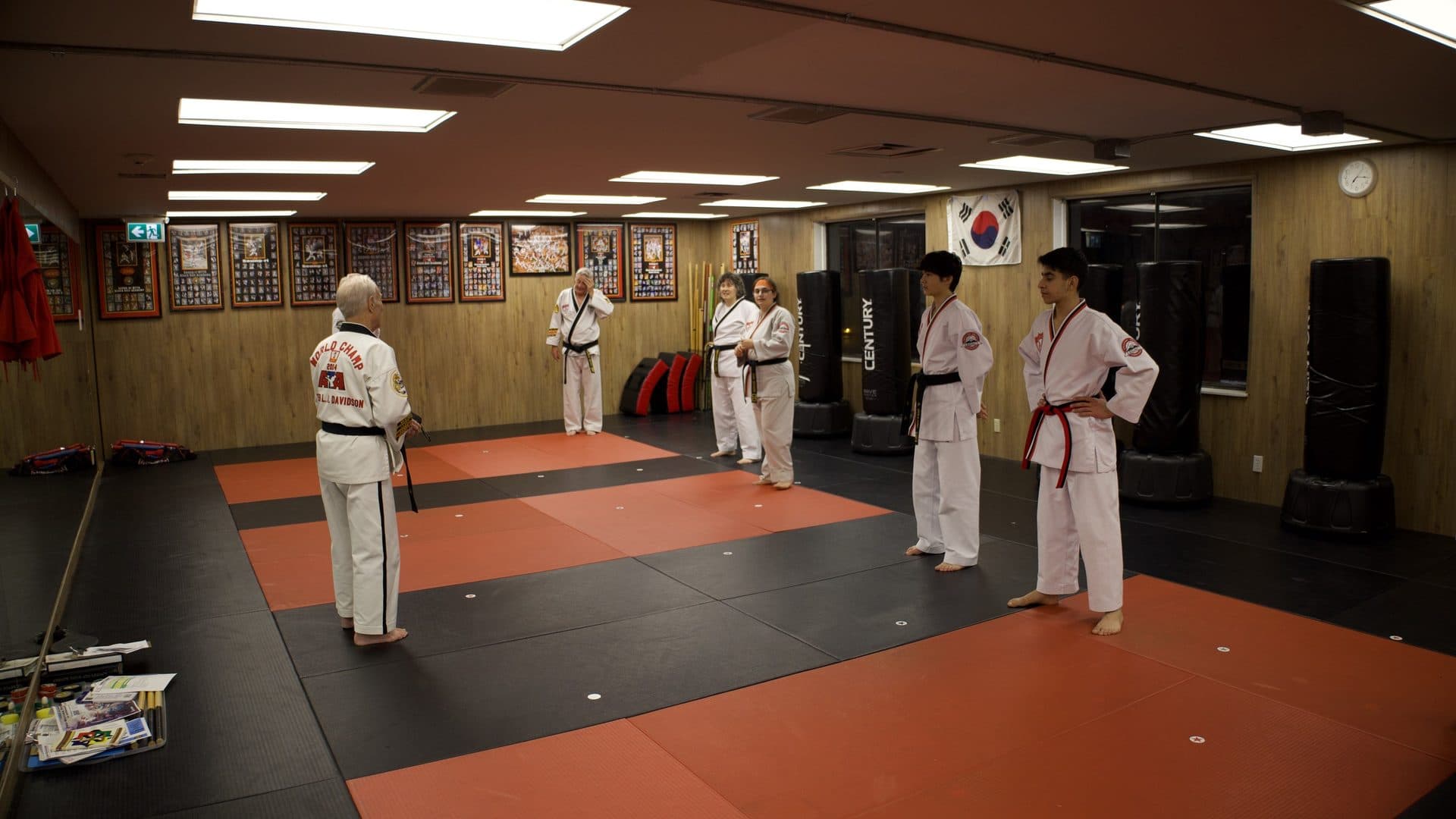
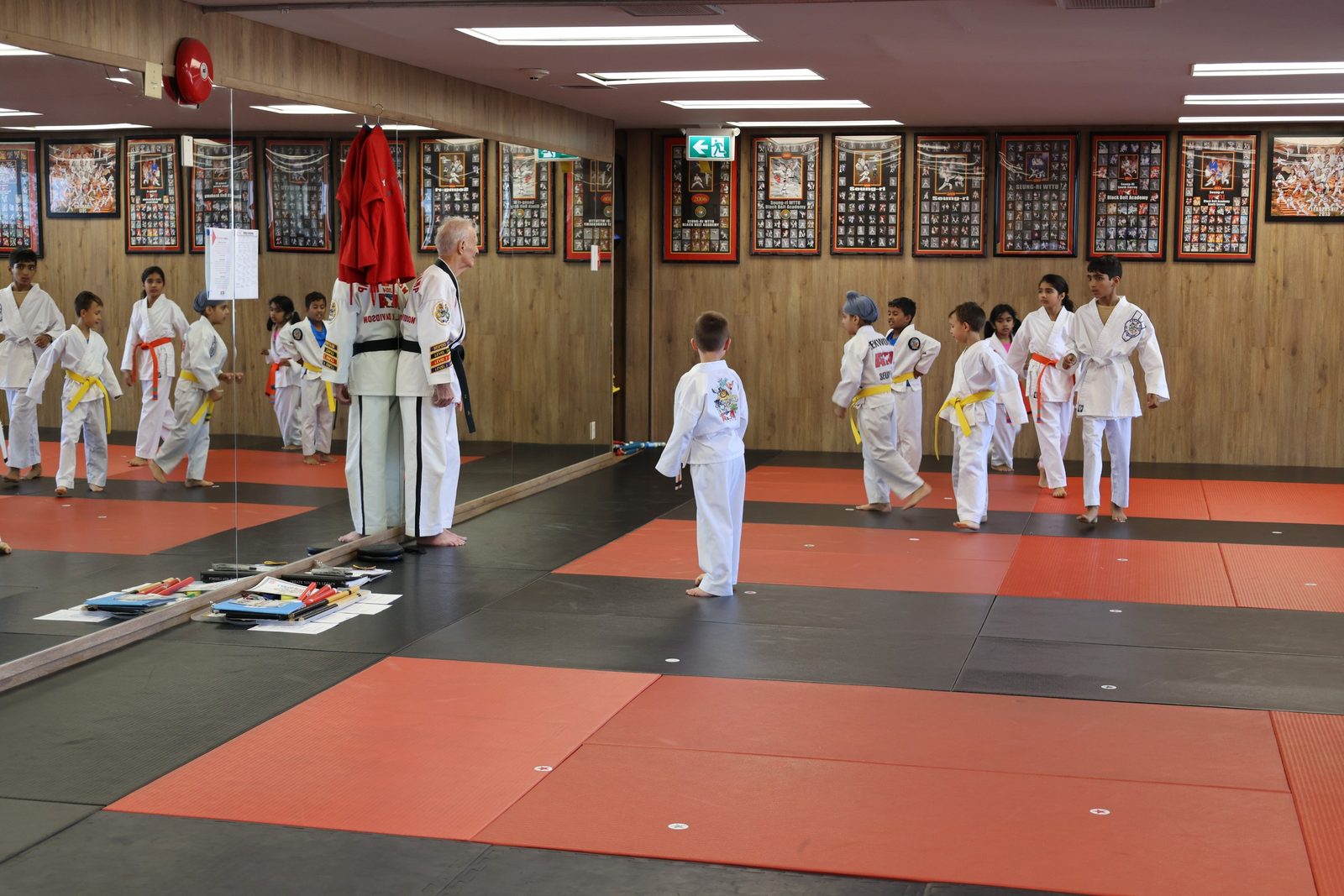
Kingdom Athletics shares its home at 1493 Johnston Rd with Seung-ri Academy, which runs our taekwondo program. That means families can start a young child in martial arts and later move into boxing, or run both, all under one roof. The full list of taekwondo programs at every belt level is on our martial arts page, but here is the short version for parents of younger children.
Tigers: ages 4 to 6
For preschoolers and kindergarteners, Tigers is usually the better first step. The class is built around the attention span and motor skills of four to six year olds: listening games, kicking targets, balance, following instructions and the structure of bowing in and out. It gives young children the routine of a martial arts class before they are ready for the pace of Junior Gloves. Our taekwondo coach, Lorne Davidson, works alongside the Seung-ri Academy team, and kids martial arts classes begin from 15:15 on weekdays.
There is interesting research on this age group’s older neighbours. A randomized field experiment on taekwondo and children’s self-regulation with 240 primary school children aged 7 to 11 found that an 11-week beginner course improved teacher-rated attentional control and reduced symptoms of conduct problems, and that children rated the classes very positively. It is one study and did not find effects on every measure, but it fits what many parents describe.
From 6 and up: choosing the lane
Between 6 and 9, families often have a genuine choice. K4K Basic covers taekwondo for ages 7 to 9, while Junior Gloves takes children from 6. Some ways to decide:
- Choose taekwondo if your child loves kicking, enjoys forms and patterns, and is motivated by belts and clear milestones. Our article on the benefits of ATA taekwondo for kids explains the belt structure.
- Choose Junior Gloves if your child is drawn to punching, likes high-energy rounds and fast feedback, and enjoys the rhythm of bag and mitt work.
- Do both if your child has plenty of energy and you want them to build both upper-body and kicking skills. The unlimited membership model means you are not choosing based on cost per program.
As kids grow, both paths continue. Teens can move into adult boxing and kickboxing classes as they mature, and taekwondo students progress into Junior Leadership, the Adult/Teen class for ages 13 and up and beyond. Our guide to teen martial arts in White Rock covers what those later years look like.
Frequently Asked Questions
These are the questions parents ask most often about kids boxing classes White Rock gyms offer.
Will my child get hit in the head?
Junior Gloves is built around skill work: bags, coach-held mitts, footwork and controlled drills. How and when any partner work is introduced is decided by the coaches, so ask them directly before your child starts. A good program will give you a specific answer.
Does headgear make boxing safe for kids?
Headgear protects against cuts, scrapes and bumps, but it is not proof against concussion, and paediatric groups say there is no evidence it prevents one. Controlling contact matters far more than any piece of equipment.
My child is six. Junior Gloves or Tigers?
It depends on the child. A confident six-year-old who can follow multi-step instructions and loves the idea of boxing may thrive in Junior Gloves. A six-year-old who is still settling into group activities is often happier in Tigers taekwondo, which is designed for ages 4 to 6. A first class usually answers the question.
Will boxing make my child more aggressive?
The research does not show a consistent effect either way, and the reviews say the coaching and culture matter most. Our classes are built on rules, respect for partners and self-control, and kids are taught that their skills stay in the gym.
Can girls join Junior Gloves?
Absolutely. Boxing skills, fitness and confidence are just as valuable for girls, and Canadian data shows girls are far less likely than boys to meet activity recommendations at this age, so a class they enjoy can make a real difference.
What does it cost?
Our kids boxing classes White Rock families join are included in one flat monthly membership that covers unlimited classes across all boxing and martial arts programs. For current membership details, call us at (778) 237-5905 or get in touch through our contact page.
Can my child do boxing alongside soccer or hockey?
Yes. For most kids, pairing kids boxing classes White Rock offers with a team sport is a great combination. Sports medicine research recommends variety over early specialization, and the footwork, core strength and conditioning from boxing carry over well to team sports.
Book Kids Boxing Classes White Rock Families Love: Your Next Step
If your child keeps throwing punches at the couch cushions, the best next step is simple. Bring them to one class. Watch how they respond, then decide. Kids boxing classes White Rock families stick with are the ones children ask to go back to, and you will know within an hour whether this is one of them.
Here is a quick recap of the kids boxing classes White Rock families can join with us:
- Junior Gloves is for ages 6 to 12, weekdays at 16:00, at 1493 Johnston Rd #101 in uptown White Rock.
- Classes centre on skill work: bags, coach-held mitts and footwork, with coaches deciding how partner work is introduced.
- Classes cover the vigorous activity and muscle and bone strengthening the Canadian guidelines recommend.
- Younger children, ages 4 to 6, often start best in Tigers taekwondo, with kids martial arts classes from 15:15.
- One flat monthly membership covers unlimited classes across all our boxing and martial arts programs.
Kingdom Athletics has more than 20 years of experience and has trained more than 10,000 students, and our coaching team, including owner Matt and coaches Kenny, Spencer, Fabian, Arion and Khaila, cares about getting the basics right for every age. You can read more about what drives our gym and coaching team, browse every boxing and martial arts class we run, or head back to the Kingdom Athletics home page.
Parents who want to try a class themselves while their child trains can look at our boxing conditioning program for adults, our kickboxing classes for all levels, or our complete intro to beginner boxing. If you like reading before you commit, our tips nobody tells you before a first boxing class and the rest of the Kingdom Athletics training blog are good places to start.
When you are ready, book your child’s first Junior Gloves class through our contact page, or call (778) 237-5905. We will help you pick the right program, whether that is kids boxing classes White Rock kids can start this week or Tigers taekwondo for your youngest, and we look forward to meeting your family on Johnston Road.