
Fitness After 40 White Rock: 12 Proven Weeks to a Strong Comeback
November 17, 2026•22 min read•Lifestyle & Wellness, Training Tips
If you are searching for fitness after 40 White Rock options, you are probably not starting from zero. You have a body that used to play rec hockey, a back that complains after yard work, and a schedule full of kids, clients and aging parents. This guide covers what honestly changes in your 40s, what the research says works, and a 12-week plan to get you back.
We are a boxing, kickboxing and martial arts gym on Johnston Road in uptown White Rock. Our coaches bring 20+ years of experience and more than 10K students trained, and the pattern is consistent: the people who succeed are not the fittest on day one, they are the ones who start sensibly and keep showing up.
One thing before we start. Nothing here is medical advice, and we are coaches, not doctors. If you have a heart condition, high blood pressure, a recent surgery or anything your physician is managing, talk to them first. Everything below assumes a generally healthy adult returning after time away.
Fitness After 40 White Rock: Why This Decade Is Different
Your 40s are the decade when fitness stops being automatic. In your 20s you could stop training for a year, play one pickup game and feel roughly fine. At 45, a year off shows up in your stairs, your sleep and your belt. That is not a crisis, it is information. It tells you that fitness after 40 White Rock adults can rely on has to be planned rather than assumed.
The good news is that training pays back handsomely in this decade. You have more patience and self-knowledge than you did at 30, and you know motivation comes and goes, so you can build a routine that does not depend on it.
Most people come to us wanting to feel strong again, lose some weight, or find training they enjoy. All three are realistic goals for fitness after 40 White Rock adults set, and none requires punishing workouts.
What Actually Changes in Your Body in Your 40s
You do not wake up at 40 in a different body. The changes are gradual, most started in your 30s, and almost all of them respond to training.
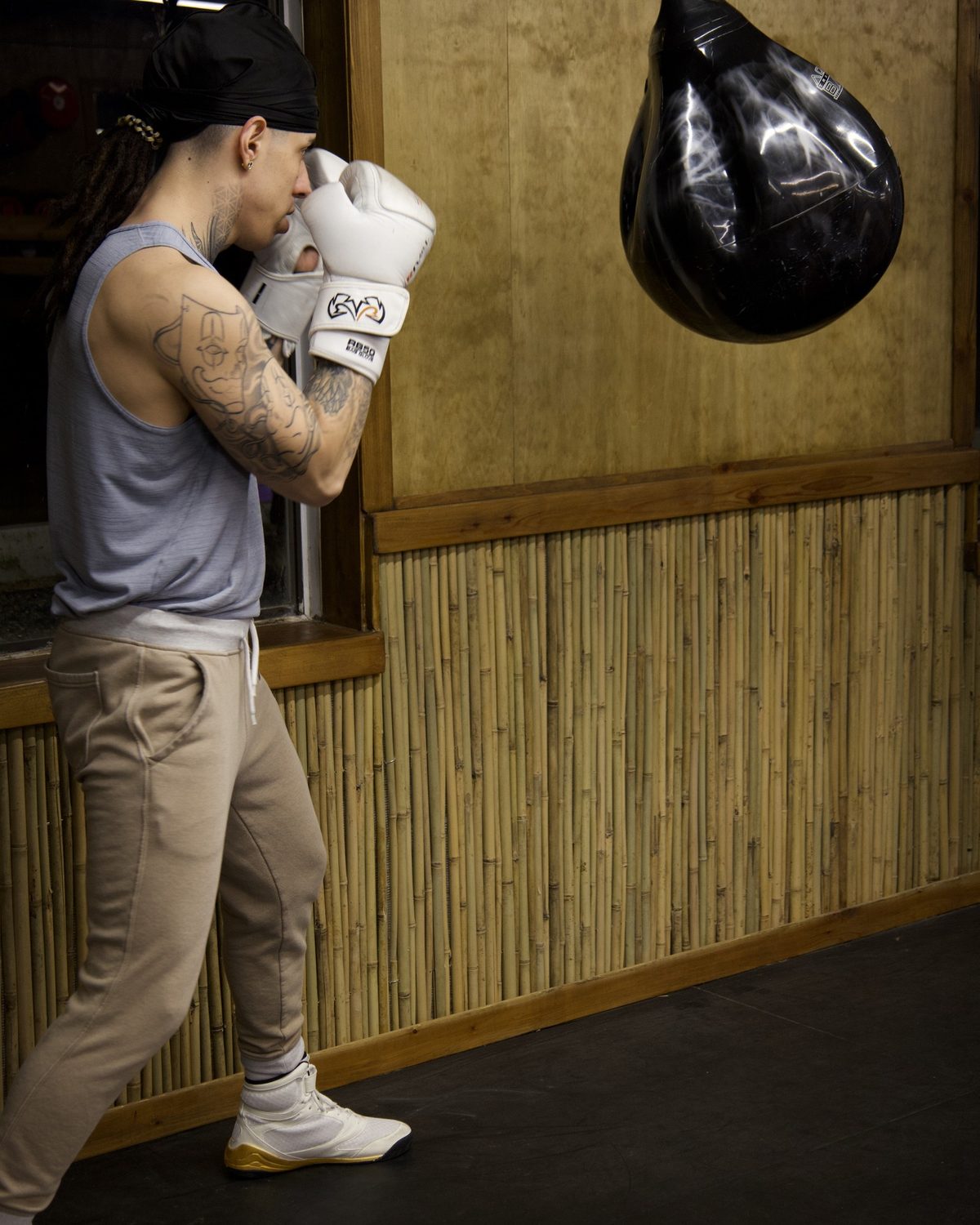
Muscle quietly starts to leave
Age-related muscle loss has a name: sarcopenia. According to Harvard Health’s guide to preserving muscle mass, you can begin losing as much as 3% to 5% of your muscle per decade after age 30. The Cleveland Clinic’s sarcopenia overview notes that the loss of muscle mass and strength typically begins in your 30s or 40s, with physical inactivity listed as a risk factor.
Less muscle is not just a cosmetic issue. It means less strength for carrying groceries up from the Marine Drive parking, less power when you catch yourself on a slippery sidewalk, and a lower resting energy burn. The encouraging part, repeated by both sources, is that resistance training can slow, stop and partly reverse this. Muscle at 45 still responds to the right signal, and that fact is the foundation of fitness after 40 White Rock coaches build on.
Recovery takes longer
At 25, a hard session left you sore for a day. At 45, it can be two or three. That is normal and it changes how you should schedule training, not whether you should train. The practical rule is simple: never put two hard sessions for the same muscles on back-to-back days, and treat soreness that lingers past 72 hours as a sign the previous session was too much, too soon.
Recovery also depends on sleep, stress, alcohol and protein, all of which move the needle more than they used to. Planning around recovery is the least glamorous and most important part of fitness after 40 White Rock members learn.
Hormones shift for men
For men, testosterone declines gradually rather than suddenly. The Cleveland Clinic’s page on low testosterone explains that levels can drop about 1% per year starting in the late 30s. Harvard Health describes testosterone as a hormone that stimulates protein synthesis and muscle growth, which helps explain why muscle gets harder to keep as the decade goes on.
What this means in the gym: you still build strength, you just need a clearer signal to do it. Lifting or working against real resistance twice a week matters more than it did at 30. If you are dealing with persistent fatigue, low mood or other symptoms, that is a conversation for your doctor, not something a training plan can diagnose or fix.
Perimenopause changes the picture for women
For many women, the 40s bring perimenopause, the transition before menopause. The Cleveland Clinic’s perimenopause guide notes it can begin as early as the mid-30s or as late as the mid-50s, driven mostly by declining estrogen. Harvard Health reports that about 40% of perimenopausal women have sleep problems, and that the transition averages three to four years but can run as long as a decade.
Estrogen also matters for bone. The Cleveland Clinic’s menopause overview states that, on average, women lose 25% of their bone mass from the time of menopause to age 60, largely because of the loss of estrogen. That makes your 40s the ideal time to build strength and bone-loading habits, before the steepest part of that curve.
Training through perimenopause is very doable. The same Cleveland Clinic guide lists weight-bearing exercise such as walking, hiking and strength training among the ways to manage symptoms, and says regular exercise has been shown to improve energy, mood swings and sleep problems. Scale a session on a bad-sleep day rather than skip it. Our guide to boxing for women in White Rock covers more of how women use our classes.
Joints and tendons need a longer runway
Tendons adapt more slowly than muscles, and after 40 that gap widens. Your cardio can come back in three weeks while your Achilles or shoulder is still catching up. This is the root of most comeback injuries: the engine is ready before the chassis is.
Harvard Health’s piece on stretching points out that sitting in a chair all day leaves hamstrings tight, and that tight muscles suddenly asked to do something strenuous are at risk of damage. It recommends stretching daily, or at least three or four times a week. That is exactly why every good plan for fitness after 40 White Rock adults follow includes mobility work, not just sweat.
Sleep and stress carry more weight
Canada’s 24-Hour Movement Guidelines for adults from the Canadian Society for Exercise Physiology treat sleep as part of fitness: 7 to 9 hours of good-quality sleep with consistent bed and wake-up times. The US National Heart, Lung, and Blood Institute notes that about 1 in 3 American adults report not getting enough sleep, and the 40s, with teenagers, careers and hormones, are prime time for it.
Stress stacks on top. Harvard Health’s explainer on the stress response describes how cortisol keeps the body revved up, and lists physical activity as one of the ways to counter chronic stress. We explore that side in our article on the mental health benefits of martial arts.
What the Evidence Says Works for Fitness After 40 White Rock Adults
There is a lot of noise aimed at people in their 40s: supplements, fasting protocols, gadgets. Strip it away and the evidence points to a short list of things that work, most of which cost nothing beyond showing up. The CSEP guidelines, which ParticipACTION summarises for Canadian adults, ask for at least 150 minutes a week of moderate to vigorous activity, muscle strengthening at least twice a week, and limiting sedentary time.
The World Health Organization’s physical activity fact sheet reports that 31% of the world’s adults do not meet the 150-minute recommendation, and that insufficiently active people have a 20% to 30% higher risk of death than people who are sufficiently active. Two or three well-chosen classes a week, plus walking, gets most people chasing fitness after 40 White Rock residents talk about over that line.
1. Strength training, at least twice a week
If you only do one thing for fitness after 40 White Rock coaches recommend, make it strength work. It is the most direct answer to muscle loss, it loads your bones, and it makes every other activity feel easier. Bodyweight squats, push-ups, band rows, lunges and carries all count, as long as the last few reps feel genuinely hard.
For a deeper look at programming strength, read our guide to strength training in White Rock, or the batch post on strength and conditioning in South Surrey, which goes into how we blend lifting patterns with athletic work.
2. Intervals, in measured doses
Interval training alternates hard efforts with recovery, which is exactly how a boxing round works. A systematic review in the British Journal of Sports Medicine found that high-intensity interval training increased cardiorespiratory fitness by almost double that of moderate continuous training in people with lifestyle-related cardiometabolic disease. The catch for a 40-something is dose: intervals are potent, so one or two sessions a week is plenty at first.
Our post on HIIT classes in White Rock explains how to tell a well-designed interval class from a random sweat session, and our boxing conditioning guide shows how bag rounds build the same engine with more skill involved.
3. Enough protein, spread through the day
Muscle needs raw material. A widely cited meta-analysis on protein and resistance training found that protein supplementation improved gains in strength and muscle, that benefits levelled off beyond roughly 1.6 grams per kilogram of body weight per day, and that increasing age reduced its effect. Harvard Health cites a suggested intake of 1 to 1.3 grams per kilogram for older adults who are trying to keep muscle.
In practical terms, include a palm or two of protein at each meal: eggs or Greek yogurt at breakfast, chicken, fish, tofu or beans later. Protein is the most overlooked piece of fitness after 40 White Rock clients ask us about. If you have kidney disease or a specific dietary plan, ask your doctor or a registered dietitian before changing your intake.

4. Balance and coordination, trained on purpose
Balance is a skill that fades quietly when you stop using it. The US National Institute on Aging recommends getting all three types of exercise, aerobic, muscle strengthening and balance, noting that variety helps reduce boredom and risk of injury. A Cochrane review of exercise for preventing falls in adults over 60 found that exercise programmes reduced the rate of falls by 23%.
You are not 60, which is the point: fitness after 40 White Rock adults build now protects them later. The footwork, stance changes and pivots you learn in boxing and kickboxing train balance under movement, not just standing on one leg. Osteoporosis Canada’s exercise page makes a similar case, noting that physical activity slows the rate of bone loss and builds the muscle strength that can prevent falls.
5. Mobility you actually do
Ten minutes of mobility after class beats a 45-minute session once a month. Focus on hips, hamstrings, thoracic spine and shoulders, the areas a desk job punishes most. If you want hands-on help, our batch post on stretch therapy in White Rock explains the work Nick, our rehab and fascial release coach, does around mobility.
How to Restart After Years Off Without Getting Hurt
Most comeback injuries follow one script: five hard sessions in week one, great on Friday, unable to lift an arm on Sunday. The fix is not willpower, it is restraint in the first month. The National Institute on Aging’s tips on getting started put it plainly: increase activity gradually over weeks to months, and start at a lower intensity.
Here are the rules we give every adult who starts fitness after 40 White Rock training with us:
- Start at two sessions a week. Not four. Two sessions with full recovery beats four with lingering soreness.
- Work at about 7 out of 10 effort for the first month. You should finish each class feeling you had a round or two left.
- Leave your ego at the door. Your 25-year-old self is not in the room. Compare yourself only to last week.
- Wrap your hands properly every time. Wrists and knuckles are small joints and they deserve protection.
- Separate hard days. Keep at least one easy or rest day between intense sessions.
- Tell the coach about old injuries. A bad shoulder or a rebuilt knee changes what we suggest, not whether you can train.
- Stop when something is sharp. Muscle burn is fine. Sharp, localised or joint pain means stop and tell someone.
Your equipment matters too. Decent 14 to 16 ounce gloves and 180-inch wraps protect your hands far better than whatever is in the garage from 2009. Our beginner boxing gloves buying guide walks you through sizes and what to skip.
For a pre-activity self-check, CSEP publishes the Get Active Questionnaire, a short form that flags when to talk to a health professional first. It is a sensible first step toward fitness after 40 White Rock adults can trust.
Choosing Between the 12:00 Lunchtime Class and Evening Classes
Whether a 40-something keeps training usually comes down to whether the class fits their week. Our boxing timetable runs Monday to Friday, with a 12:00 Boxing class at lunch and three evening options. Taekwondo runs alongside it, with the Adult/Teen class at 18:30 on weekday evenings. Check the current weekly class schedule before you plan, then pick the slot you can protect.
| Class time | Class | Best for | Role in your plan |
|---|---|---|---|
| 12:00 Mon to Fri | Boxing | Remote workers, business owners, shift workers, parents on school hours | Your anchor session; midday training also leaves your evening free for sleep |
| 17:00 Mon to Fri | Conditioning | People who want the most work in the least time | Your engine day once the first month is behind you |
| 18:00 Mon to Fri | Technical Class | Anyone who likes learning, detail and slower drilling | Your skill day; lower impact, high focus |
| 19:00 Mon to Fri | Kickboxing | People after variety: punches, kicks, knees and combinations | An option from month two, once hips and knees are warmed into kicking |
| 18:30 weekday evenings | Taekwondo Adult/Teen | Those who want belts, forms and a structured curriculum | An alternative path; see our adult martial arts guide |
| Sat 10:00 and 11:00 | Light Sparring | Experienced members, by coach invitation and your own choice | Optional and never required; ask our coaches if and when it makes sense |
A note on sleep. The Sleep Foundation’s review of exercise and sleep says moderate to vigorous exercise can help adults fall asleep faster, but that vigorous workouts in the hour before bed can reduce sleep efficiency for some people. If you already sleep badly, the 12:00 or 17:00 class may suit you better than the 19:00 slot.
If you work from home in Ocean Park or Morgan Creek, the 12:00 class is often the easiest to keep. Commuters coming home over Highway 99 or King George Boulevard tend to prefer the 18:00 technical session. Either way, fitness after 40 White Rock commuters sustain is built on the slot they can protect.
A 12-Week Return Plan for Fitness After 40 White Rock Members
This is the plan we would hand a healthy adult who has been off for years. It uses our real timetable, builds from two sessions to three, and adds home strength and mobility work on the side. Treat the numbers as a ceiling. If a week goes sideways, repeat it rather than skipping ahead. This is how fitness after 40 White Rock adults can build without breaking down.
| Weeks | Gym sessions | Suggested classes | At home | Effort |
|---|---|---|---|---|
| 1 to 2 | 2 | 12:00 Boxing and 18:00 Technical Class | 10 minutes mobility, 3 days | 6 to 7 out of 10 |
| 3 to 4 | 2 | 12:00 Boxing and 18:00 Technical Class | Mobility plus one 20-minute strength circuit | 7 out of 10 |
| 5 to 6 | 3 | Add 17:00 Conditioning once a week | Mobility plus one strength circuit | 7 to 8 out of 10 |
| 7 to 8 | 3 | Boxing, Technical, Conditioning | Mobility, two strength circuits, one long walk | 7 to 8 out of 10 |
| 9 | 2 | Deload: Boxing and Technical only | Walks and mobility | 6 out of 10 |
| 10 to 12 | 3 | Swap in 19:00 Kickboxing for one session if you like | Two strength circuits, mobility, one long walk | 7 to 8 out of 10, with one harder day |
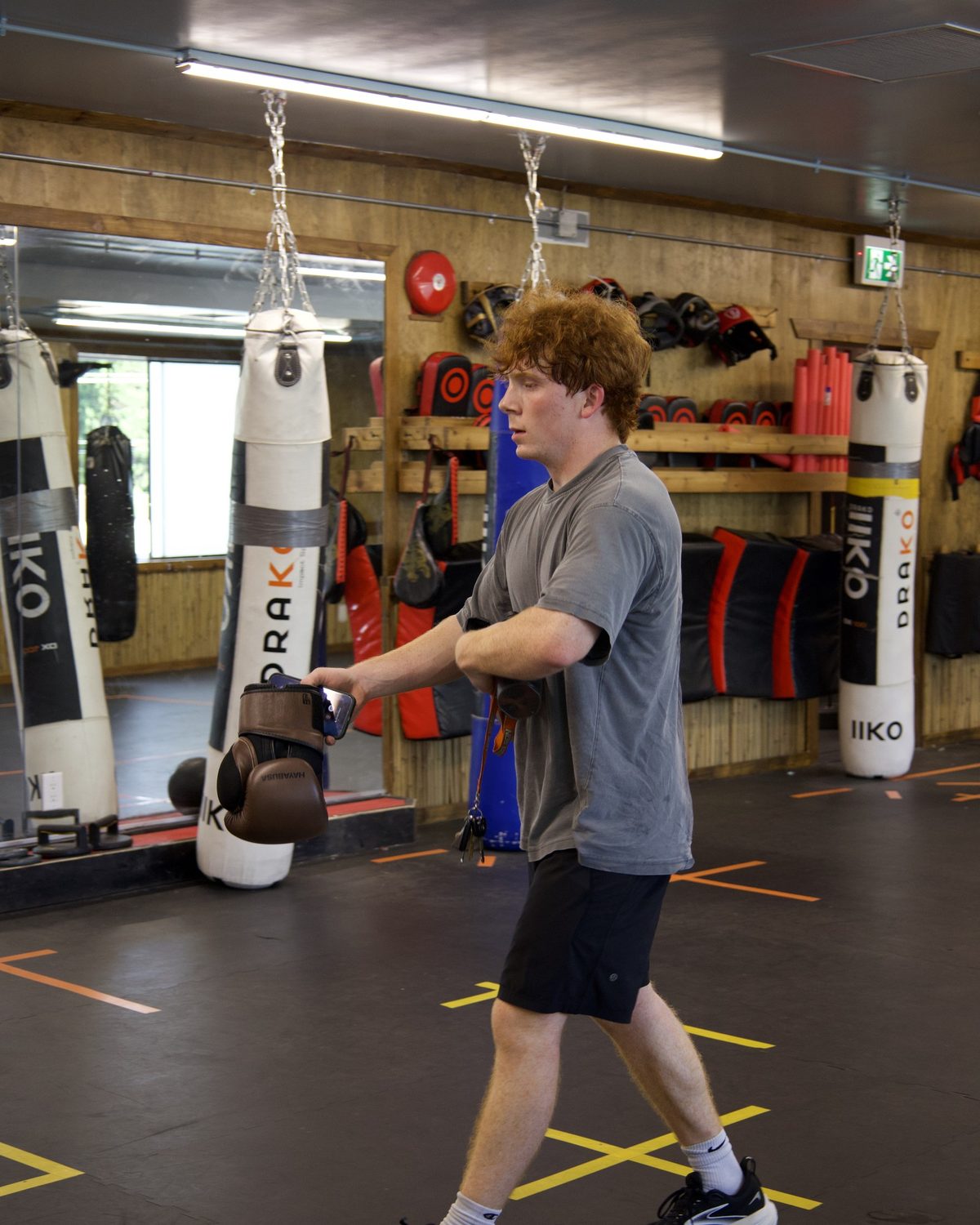
Weeks 1 to 4: Foundations
Your only job for the first month of fitness after 40 White Rock training is to show up twice a week and leave feeling better than you arrived. In class, focus on stance, guard, the jab and the cross, and breathing on every punch. Our coaches will scale the rounds for you. Outside class, do ten minutes of mobility three times a week: hip flexor stretches, hamstring stretches, thoracic rotations and shoulder circles.
In week three, add a simple home strength circuit: 10 bodyweight squats to a chair, 8 incline push-ups on the kitchen counter, 10 band rows, a 20-second plank and 10 glute bridges. Do three rounds. If you are still sore two days after a class, keep the circuit easy. Our complete intro to beginner boxing covers the technique side of these first weeks in more detail.
Weeks 5 to 8: Building the engine
Once two sessions a week feel routine, add a third, ideally the 17:00 Conditioning Boxing class. This is where the interval work lives. You will do rounds on the heavy bag, bodyweight strength and core work between rounds, and a lot of honest sweating. Keep one full rest day after it.
Progress the home circuit by adding reps or a harder variation: squats without the chair, push-ups on a lower surface, split squats instead of bridges. Add one longer walk, 40 to 60 minutes, on a weekend. The White Rock promenade from the pier to the east end and back is ideal, and the hill back up to uptown is a free strength session for your legs and lungs.
Week 9: Deload on purpose
Week nine is deliberately lighter. Drop back to two classes at a comfortable effort and skip the home strength circuit. This is not slacking. Adults over 40 accumulate fatigue quietly, and a planned easy week lets tendons, joints and sleep catch up before the final push. Most people come back from it feeling sharper and stronger.
Weeks 10 to 12: Owning it
By now your wraps go on in two minutes and a few combinations come without thinking. Keep three sessions a week and, if your hips and knees feel good, try the 19:00 Kickboxing class for one of them. Kicks demand balance and hip mobility, which is why they are worth learning now. Keep one session each week noticeably harder than the others and the rest steady.
At the end of week 12, test yourself against week one. Can you finish every round of the 12:00 class? Are you sleeping better? Can you do 15 push-ups where you once managed 5? Write it down. Then set the next 12 weeks. That is what sustainable fitness after 40 White Rock looks like in practice: blocks, not binges.
What a Class Actually Looks Like When You Are 45
Walking into a boxing gym in your 40s can feel intimidating, so here is roughly how a typical 60-minute session runs. Structure varies by coach and class.
- Minutes 0 to 5: Wrap your hands and tell the coach about any sore spots.
- Minutes 5 to 15: Warm-up: skipping, dynamic stretches, slow shadowboxing.
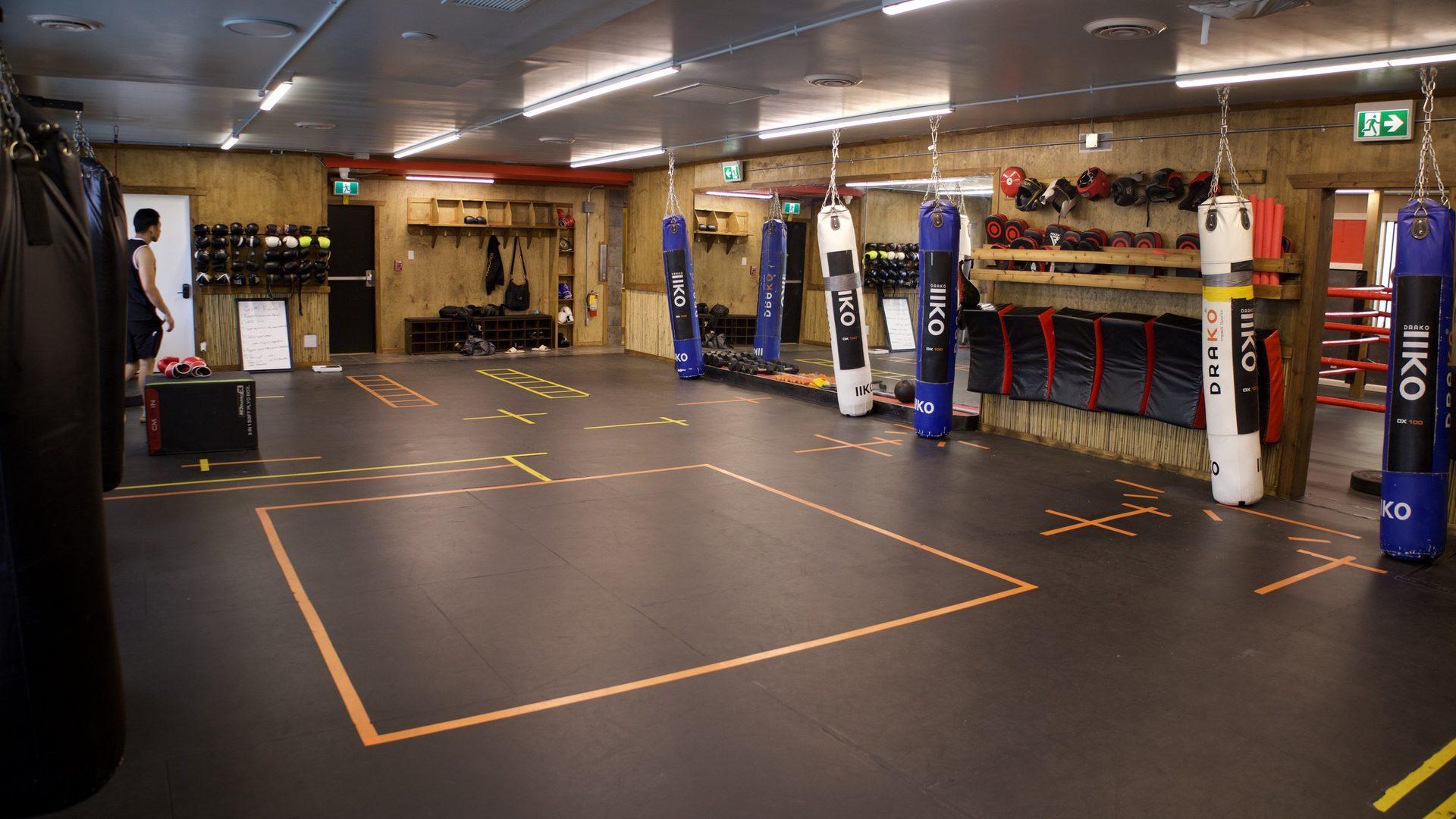
- Minutes 15 to 30: Technique. The coach demonstrates a punch, combination or defensive move, then you drill it slowly in front of the mirrors.
- Minutes 30 to 45: Bag rounds or pad work in timed rounds with short rests.
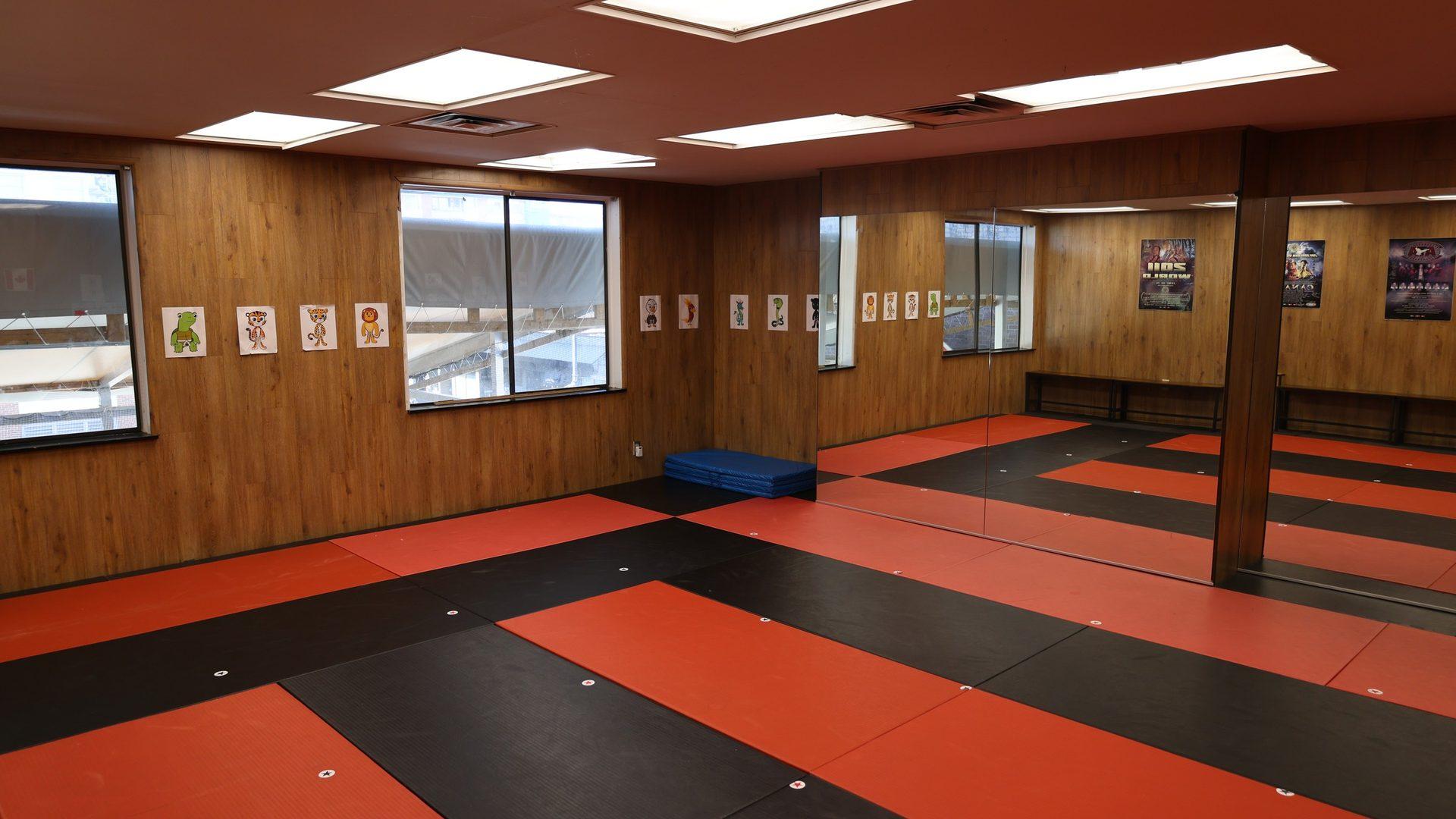
- Minutes 45 to 55: Conditioning and core on the mats, scaled to your level.
- Minutes 55 to 60: Cool-down and stretching.
You control your intensity inside every one of those blocks. On the bag, nobody can see how hard you are hitting except you. Training at a steady 6 out of 10 for months is exactly right for fitness after 40 White Rock beginners. Our list of things nobody tells you before your first boxing class has more first-day detail.
Nervous about contact? Bag work and pad work are the core of a beginner’s training. The Saturday Light Sparring slot is separate and optional. If you ever get curious, our guide to beginner sparring rules explains the safety steps.
Why Skill-Based Training Keeps 40-Somethings Consistent
Here is the truth about fitness after 40 White Rock adults eventually learn: the program you pick matters less than the program you keep. None of the research helps if you quit in week six. Most adults do not quit because training is too hard. They quit because it is boring, because they cannot see progress, or because nobody notices when they stop coming.
Skill-based training such as boxing, kickboxing and martial arts solves all three problems at once, which is why it sits at the centre of the fitness after 40 White Rock members actually stick with.
There is always something to learn
A treadmill never gets more interesting. A jab does. In week one you learn to throw it. In week six you learn to double it, then to step off the line after it, then to slip a return and counter. Your brain stays engaged, so the hour disappears. Our technical boxing fundamentals post shows how deep that rabbit hole goes.
Progress is visible even when the scale is stubborn
At 45, weight can move slowly, especially during perimenopause or a stressful stretch at work. Skill gives you another scoreboard. You finish more rounds, your combinations get crisper, your coach stops correcting your guard. Those wins keep you coming back during the weeks the scale refuses to cooperate. If weight loss is your main goal, read our honest guide to what actually works at a weight loss gym in White Rock.
Coordination is trained, not just calories burned
Combinations ask your brain to sequence movement, shift weight and react. That is balance and coordination training disguised as a workout, which lines up neatly with what the National Institute on Aging says about getting aerobic, strength and balance work together. You are building the qualities that keep you steady on the pier stairs in your 70s while you think you are just hitting a bag.
People notice when you are missing
In a class environment, coaches like Kenny, Spencer, Fabian, Arion and Khaila learn your name, your old injuries and your favourite combination. Other regulars at the 12:00 class start expecting you. That accountability is worth more than any app streak, and it is why group classes suit many adults better than solo training, as we compare in group fitness versus personal training.
How This Guide Differs From Our 55+ and Adult Martial Arts Posts
This post is about the transition decade: people roughly 40 to 55, still working, often parenting, and returning after a gap. Fitness after 40 White Rock adults need is about hormones, perimenopause, recovery and fitting training around a busy life.
Our post on boxing for seniors in White Rock is written for people 55 and older, where priorities shift further toward balance, bone health and independence. If you are 58, start there.
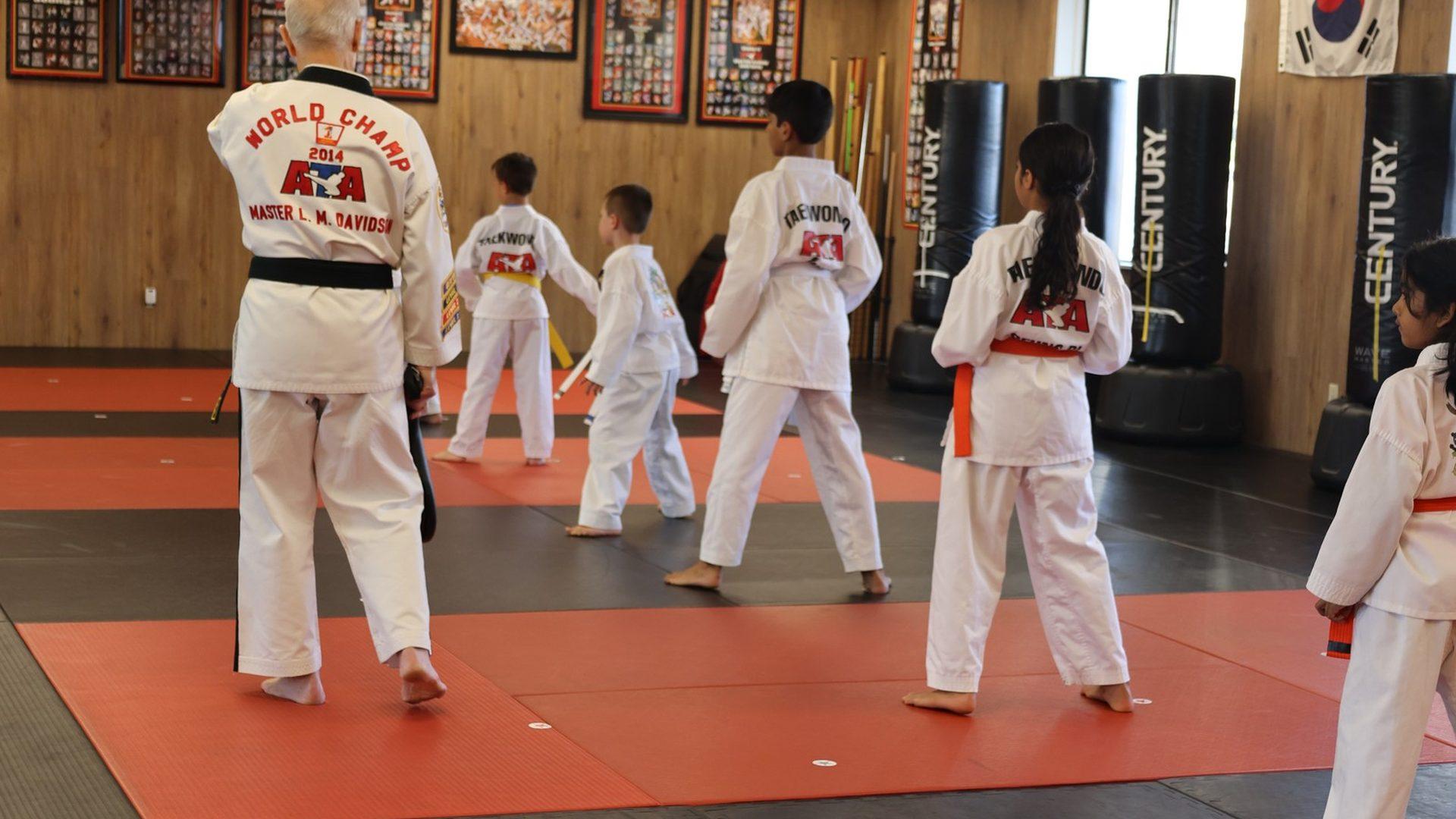
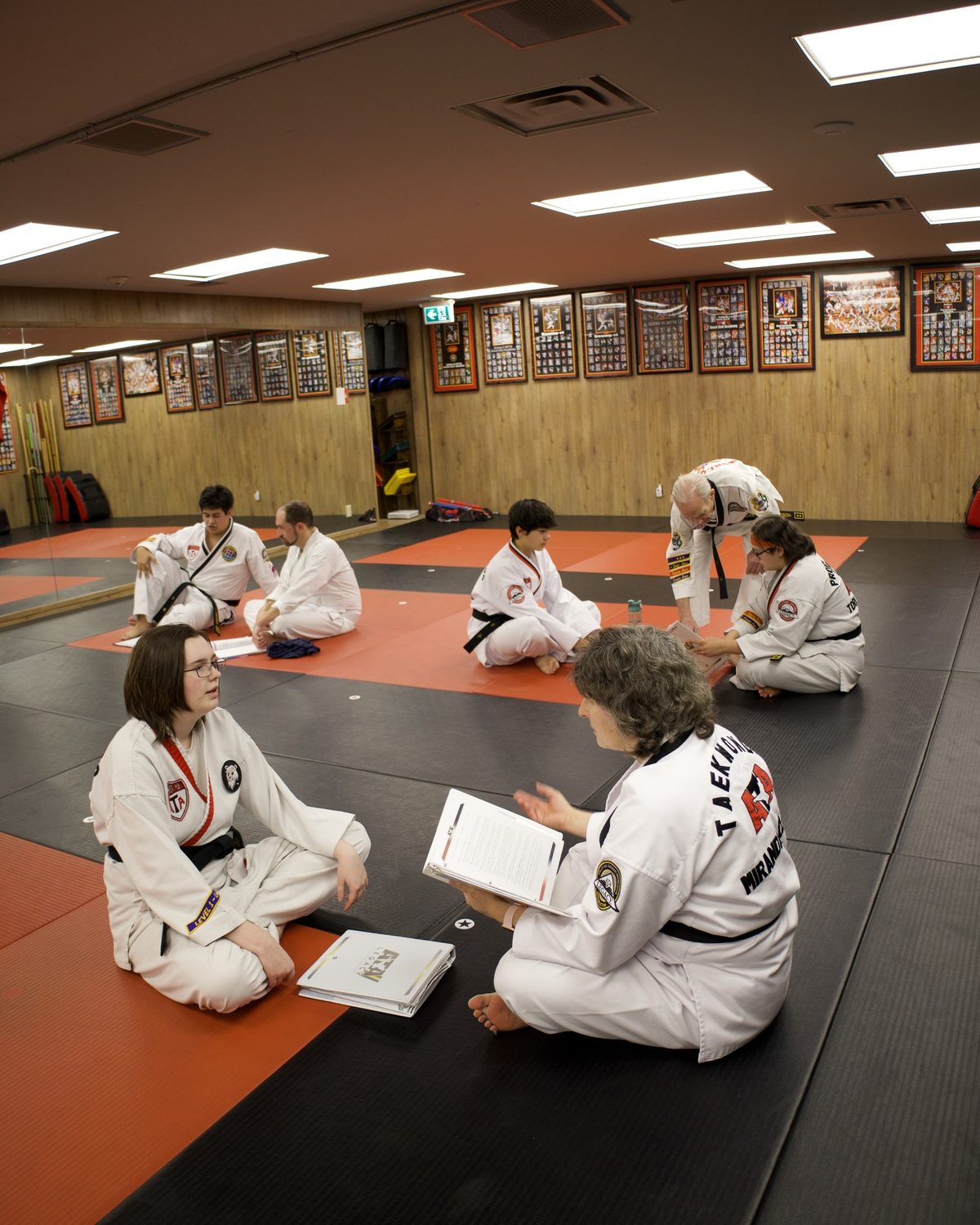
If what draws you is belts, forms and a structured curriculum rather than boxing, our guide to martial arts for adults in White Rock covers taekwondo with Seung-ri Academy, which runs at the same address. The Adult/Teen class is open to ages 13 and up on weekday evenings at 18:30. You can see every level on our martial arts programs page.
Fitting Training Into a White Rock and South Surrey Week
White Rock and South Surrey adults juggle the border commute, kids in sport across the peninsula and a long wet season. A realistic plan for fitness after 40 White Rock residents can keep has to account for all of it.
- Use the lunch hour. If you work in uptown White Rock, Semiahmoo Town Centre or from home in Grandview Heights, the 12:00 class removes the evening scramble entirely.
- Stack it with kid activities. Kids martial arts classes start from 15:15 on weekdays, so you can plan your own evening class on the same days.
- Plan for rain. Indoor classes are your constant; the promenade and Crescent Beach are the bonus.
- Protect two slots, not five. Book your two anchor classes like client meetings.
Sitting is the other side of the ledger. The CSEP guidelines recommend limiting sedentary time to 8 hours or less a day and breaking up long periods of sitting as often as possible. Stand for calls, walk at lunch on non-training days and take a two-minute mobility break every hour. Those habits between classes are the quiet part of fitness after 40 White Rock desk workers often miss.
Still deciding whether a boxing gym suits you? Our checklist of questions to ask before signing a gym membership in White Rock helps you compare honestly. You can also browse all of our classes and read about why Kingdom Athletics exists before you visit.
Warning Signs to Stop and Get Checked
Training in your 40s is safe for most people, but some signals mean stop and talk to a doctor. No plan for fitness after 40 White Rock gyms offer is worth pushing through these:
- Chest pain, pressure or tightness, especially if it spreads to the arm, jaw or back.
- Unusual shortness of breath that does not settle with rest.
- Dizziness, fainting or feeling your heart race irregularly.
- Sharp joint pain, swelling, or pain that changes how you walk.
- Numbness or tingling that does not go away after you stop.
- Any headache after a knock to the head, or unusual headaches after training.
Tell your coach immediately if any of these happen in class. Muscle soreness a day or two later is normal; pain in joints, chest or head is not.
Frequently Asked Questions
Is 40 too late to start boxing?
No. Plenty of people take up boxing in their 40s. You will learn technique on bags and pads and progress at your own pace. For fitness after 40 White Rock beginners, the key is starting at two sessions a week and building gradually.
Do I need to get fit before I join a class?
No. Coaches scale rounds, reps and intensity for beginners, and you control your own effort on the bag. Start with the 12:00 Boxing class or the 18:00 Technical Class, which suit a steady pace.
Is boxing training safe during perimenopause?
For most healthy women it is very doable, and the Cleveland Clinic lists regular exercise and strength training among the ways to manage perimenopause symptoms. Expect energy and sleep to vary week to week, and scale on hard days. If you have specific symptoms or conditions, talk to your doctor first.
Will I have to spar?
No. Sparring is never required. Our Saturday Light Sparring slot is separate and optional. Most adults train for fitness, skill and stress relief without ever sparring, and our coaches will talk through whether it suits your goals if you become curious.
How many times a week should someone over 40 train?
Start with two sessions a week for the first month, then build to three if recovery allows. Aim to meet Canada’s guideline of 150 minutes of moderate to vigorous activity a week plus strength work twice a week, counting walks and home circuits too.
I have an old knee or shoulder injury. Can I still train?
Often yes, with adjustments. Tell your coach about it before class so they can modify drills, and get clearance from your doctor or physiotherapist if the injury is recent or still being treated. Sharp or worsening pain is always a reason to stop.
Do you have a class just for people over 40?
There is no separate over-40 class. Our regular boxing, kickboxing and taekwondo classes are all levels, and coaches adapt them for each person, which is how fitness after 40 White Rock members get works in practice.
Start Your Fitness After 40 White Rock Plan This Week
You do not need the perfect plan, the perfect gear or the perfect week to begin. You need two protected slots in your calendar and a coach who will meet you where you are. Strength work, well-dosed intervals, enough protein, balance training and decent sleep all respond at 40, 45 and 50. Start gently and let skill keep you interested.
Pick your first class from the Kingdom Athletics timetable, then book your first class through our contact page or call us at (778) 237-5905. We are at 1493 Johnston Rd #101 in uptown White Rock, a short drive from Ocean Park, Crescent Beach, Morgan Creek and Rosemary Heights. Tell us you are restarting and we will build your first month around you.
Twelve weeks from now you could be stronger, sleeping better and genuinely looking forward to training. That is the real goal of fitness after 40 White Rock adults deserve. If you have questions first, send our coaches a message and we will help you choose the right starting point.