Boxing Classes Surrey: The Proven 2026 Guide for Beginners
September 23, 2026•20 min read•Boxing & Martial Arts, Training Tips
If you live anywhere between Guildford and the border and you have started searching for boxing classes Surrey residents actually stick with, this guide is for you. Surrey is a big city, and the gym closest to your front door is not always the one that teaches you properly, keeps you safe, or fits the hours you really have. Kingdom Athletics sits on Johnston Road in uptown White Rock, just south of the Surrey line, and for much of the city the drive is shorter than people expect.
Below you will find everything we would tell a friend comparing boxing classes Surrey has on offer: the routes people use, a plain explanation of every class type on our timetable, a checklist for judging any boxing gym (ours included), the safety basics nobody should skip, and a four-week plan for your first month.
We have been coaching for more than 20 years and have trained over 10,000 students, so most of what follows comes from watching real beginners succeed or stall. If you already know you want to try it, you can book your first class with our coaches and skip ahead to the first-month plan.
Boxing Classes Surrey: What to Look For Before You Sign Up
Most people comparing boxing classes Surrey has to offer start with one question: how far away is it? That matters, but it is the fourth or fifth most important question, not the first. A gym ten minutes away that you quit in week three is further from your goals than one twenty minutes away that you attend three times a week for a year.
Here is the order we suggest you think about it in:
- Coaching. Is someone actually watching your stance, your guard and your feet, and correcting them? Boxing done badly is just flailing, and flailing hurts wrists and shoulders.
- Class structure. Are there distinct classes for technique, conditioning and contact, or is everything one sweaty blur? Separate class types let you build skill and fitness on purpose.
- Timetable fit. Do the class times line up with your workday, your commute and your family, week after week?
- Culture. Do beginners feel welcome, and do experienced people train with control?
- Distance and route. Can you get there reliably, including in November rain?
For a longer version of that checklist, our piece on what to look for in a South Surrey boxing gym goes deeper on facilities and coaching.
It is also worth remembering why you started looking at boxing classes Surrey residents recommend in the first place. Canada’s 24-Hour Movement Guidelines for adults aged 18 to 64 recommend at least 150 minutes of moderate to vigorous activity per week plus muscle strengthening at least twice a week. According to ParticipACTION’s Report Card on Physical Activity for Adults, only 46 percent of Canadian adults meet that 150-minute mark. Three one-hour boxing classes a week clears that bar, and it feels like learning a skill rather than serving time on a treadmill.
Why Surrey Residents Make the Short Drive South to White Rock
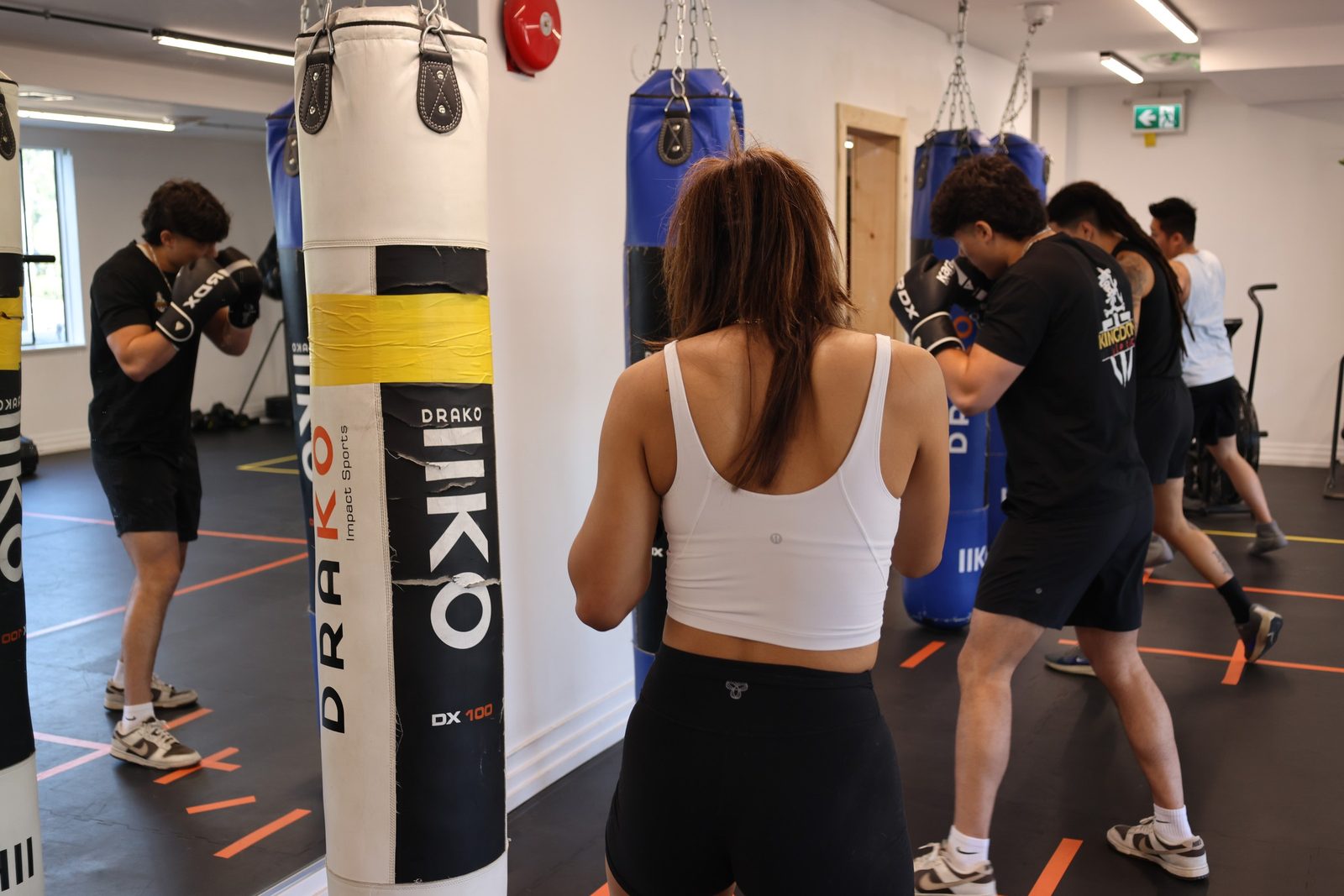
So why would someone in Fleetwood drive past other boxing classes Surrey offers to train on Johnston Road? Here is the case for it.
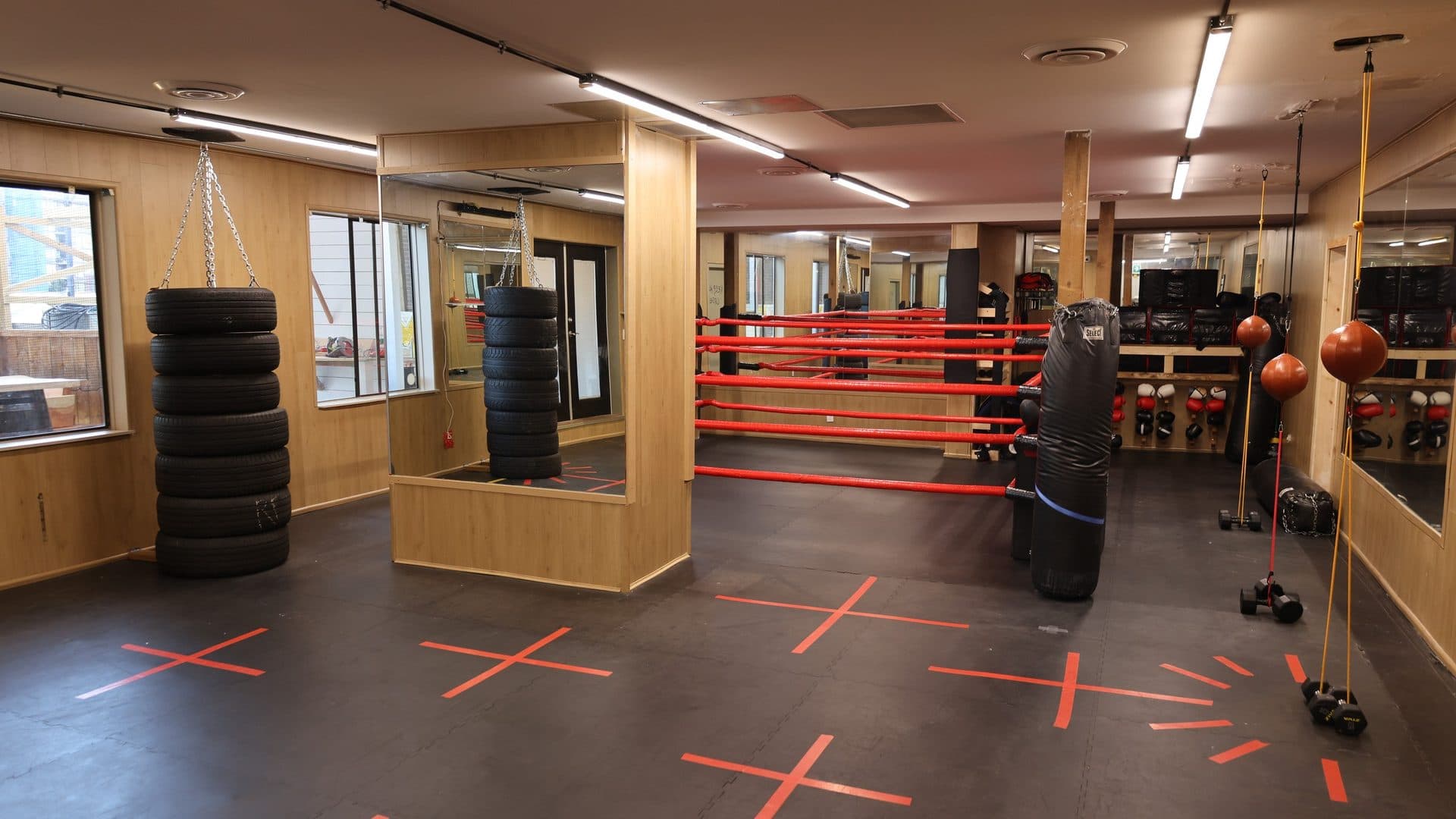
A boxing-first gym, not a gym with a bag in the corner. Kingdom Athletics is built around heavy bags, a boxing ring, mat space and mirrors. Mirrors let you see your own guard drop when you jab, and the ring gives footwork drills and supervised light sparring real space.
A timetable with purpose. Monday to Friday we run Boxing at 12:00 noon, Kids at 4:00 pm, Conditioning at 5:00 pm, our Technical Class at 6:00 pm and Kickboxing at 7:00 pm. On Saturdays there is Light Sparring at 10:00 am and 11:00 am. You can check the current weekly class timetable any time before you set off.
One membership, every class. Our model is a single flat monthly membership that covers unlimited classes across all boxing and martial arts programs. You are not choosing between technique and fitness, or paying extra to add kickboxing. When you weigh up boxing classes Surrey commuters can reach, that flexibility makes a longer drive easier to justify, because every trip can be whatever class suits your week.
There is also something few boxing classes Surrey inland can match: the destination. Uptown White Rock sits a short walk above the waterfront, where the city’s promenade and the 470-metre White Rock Pier run along Semiahmoo Bay. It is easy to build a Saturday around it: light sparring at 10:00, a walk along the 2.19-kilometre promenade afterwards, and coffee before driving home.
Drive Routes to Our Boxing Gym Near Surrey, Neighbourhood by Neighbourhood
We are at 1493 Johnston Rd #101, White Rock, BC V4B 3Z4, in uptown White Rock. The single most useful fact for anyone driving from the north is this: 152 Street becomes Johnston Road once it crosses 16 Avenue (North Bluff Road) into White Rock. If you can find 152 Street, you can find us. If you are mapping boxing classes Surrey commuters can realistically reach after work, remember that traffic changes everything, so check a live map before you leave.
From Fleetwood
Of all the routes to boxing classes Surrey residents ask us about, this is the easiest. Get onto 152 Street near Fraser Highway and point the car south. You will cross Highway 10, drop down past the Serpentine and Nicomekl rivers, and climb into South Surrey before 152 Street turns into Johnston Road.
The City of Surrey’s 152 Street road upgrades widened the stretch between the two rivers from two lanes to four and added a multi-use path. The city notes in its announcement on the finished widening that the corridor carries more than 30,000 trips a day, so give yourself a buffer at rush hour.
From Newton
King George Boulevard is the spine of Newton and it runs all the way south. Follow it past Highway 10, across the Nicomekl, and into South Surrey. Turn west on 16 Avenue, then south onto Johnston Road. If King George is backed up, cutting across to 152 Street and running south from there is a reliable alternative. If you are aiming for the 5:00 pm Conditioning class, leave enough margin to wrap your hands before the warm-up.
From Cloverdale
Cloverdale riders have two good options. Head west on Highway 10 and turn south on 152 Street, then follow it into Johnston Road. Or run south on 176 Street and cut west along 24 Avenue or 16 Avenue, which takes you past Grandview Heights and Morgan Creek before you reach uptown White Rock.
From Guildford
Guildford is the longest trip on this list, but it is also the simplest. Guildford Town Centre sits on 152 Street, so you can stay on it the entire way south to Johnston Road. It is a long straight run with a lot of lights, so we usually suggest the 6:00 pm Technical Class or the 7:00 pm Kickboxing class, once the worst of the traffic has cleared.
From South Surrey and the Highway 99 corridor
If you live in Morgan Creek, Rosemary Heights, Grandview Heights, Sunnyside, Elgin Chantrell or Campbell Heights, we are a short local drive away. Coming off Highway 99 from further north, take the King George Boulevard interchange and follow King George south to 16 Avenue, or exit at 8 Avenue near the Peace Arch crossing and come up into White Rock from the south. Ocean Park, Crescent Beach and Semiahmoo are closer still.
By transit or bike
Not everyone drives to boxing classes Surrey or White Rock, and you do not have to. TransLink’s trip planner gives live bus options from anywhere in Surrey to Johnston Road. For a pre-trip check on road conditions, especially in winter, DriveBC lists closures and incidents on Highway 99.
| Starting point | Main route | Good class fit on weekdays |
|---|---|---|
| Fleetwood | 152 Street south, straight into Johnston Road | 5:00 pm Conditioning or 6:00 pm Technical |
| Newton | King George Boulevard south, west on 16 Avenue | 5:00 pm Conditioning |
| Cloverdale | Highway 10 to 152 Street, or 176 Street to 24 or 16 Avenue | 6:00 pm Technical |
| Guildford | 152 Street south the entire way | 6:00 pm Technical or 7:00 pm Kickboxing |
| South Surrey neighbourhoods | Local roads, or Highway 99 to King George or 8 Avenue | 12:00 noon Boxing or any evening class |

The Class Types, Explained Without the Jargon
One reason people bounce between boxing classes Surrey gyms run is that class names rarely tell you what happens in the room. Here is exactly what each of ours is for.
Technical Boxing (weekdays, 6:00 pm)
This is the class that turns you into a boxer. The focus is on stance, guard, footwork, the six basic punches (jab, cross, lead and rear hook, lead and rear uppercut), defence, and how to put those pieces together into combinations that make sense. Expect drills that repeat one idea many times, such as slipping a jab and returning a cross, with coaches adjusting your elbow or weight as you go. It is slower than conditioning, and far more mentally demanding.
Of all the boxing classes Surrey beginners could start with, this is the one we recommend for your first month. Our program page on Technical Boxing explains the curriculum, and our article on six fundamentals of technical boxing breaks down the stance and guard work in detail.
Conditioning Boxing (weekdays, 5:00 pm)
Conditioning is where you build your engine. The structure borrows from how boxers really train: timed rounds on the heavy bag, bodyweight circuits, core work on the mats, and short rests that mimic the minute between rounds. You will still throw proper punches, and coaches will still correct you, but the goal is output and endurance rather than new technique.
There is decent science behind this format. A review of amateur boxers’ physical and physiological attributes published in Sports Medicine concluded that boxers need a high level of cardiorespiratory fitness to handle the demands of a bout and recover between rounds, along with power in both the upper and lower limbs.
A smaller study that measured young adults during a 30-minute heavy bag session made up of ten 3-minute rounds recorded average heart rates around 156 beats per minute and roughly 8 calories burned per minute. See the Boxing Conditioning program for how we structure it, or read how boxing conditioning builds a real engine.
Kickboxing (weekdays, 7:00 pm)
Kickboxing adds kicks, knees and the combinations that link hands and legs together. It is open to all levels, and it is the class most people browsing boxing classes Surrey listings do not realise they can add under the same membership. It also teaches boxers to manage distance differently, because a kick reaches further than any punch.
Coach Spencer, an athletic trainer and boxer with kickboxing and Muay Thai experience, is one of the people you will see teaching this style. The Kickboxing program page has the details, and our guide to starting kickboxing classes covers what your first sessions feel like.
Light Sparring (Saturdays, 10:00 am and 11:00 am)
Light sparring is where the drills meet a moving, thinking partner. “Light” is the important word. The aim is to practise timing, distance and defence at controlled speed and low power, not to win or hurt anyone. Coaches pair people sensibly and watch the rounds closely. Nobody should step into sparring in their first week, and nobody should feel pressured into it at all. Any boxing classes Surrey adults join should treat sparring this way.
When you are ready, read our nine rules for your first sparring rounds first, and talk to a coach about protective gear. Anyone who later wants to compete as an amateur will find that Boxing BC’s athlete registration rules require competitors to be associated with a chartered club and to pass a medical examination confirming they are fit to box.
Noon Boxing and Junior Gloves
The 12:00 noon Boxing class suits shift and remote workers. The 4:00 pm Kids slot is our Junior Gloves program for boxers aged 6 to 12. We also run taekwondo with Seung-ri Academy at the same address; the martial arts programs cover every belt level, from Tigers at ages 4 to 6 through to Adult/Teen classes for ages 13 and up at 6:30 pm on weekday evenings.
What a Class Actually Looks Like, Minute by Minute
Nerves about the unknown stop more people from starting boxing classes Surrey has to offer than fitness ever does. Here is a realistic picture of a one-hour evening class.
- Before class (arrive 10 to 15 minutes early). Say hello to the coach, mention any injuries, and wrap your hands. If you do not know how, ask; wrapping is the first skill we teach.
- Minutes 0 to 10: warm-up. Skipping, light shadowboxing, shoulder circles, hip openers, footwork patterns. Your heart rate climbs gradually and your joints loosen before anything hits a bag.
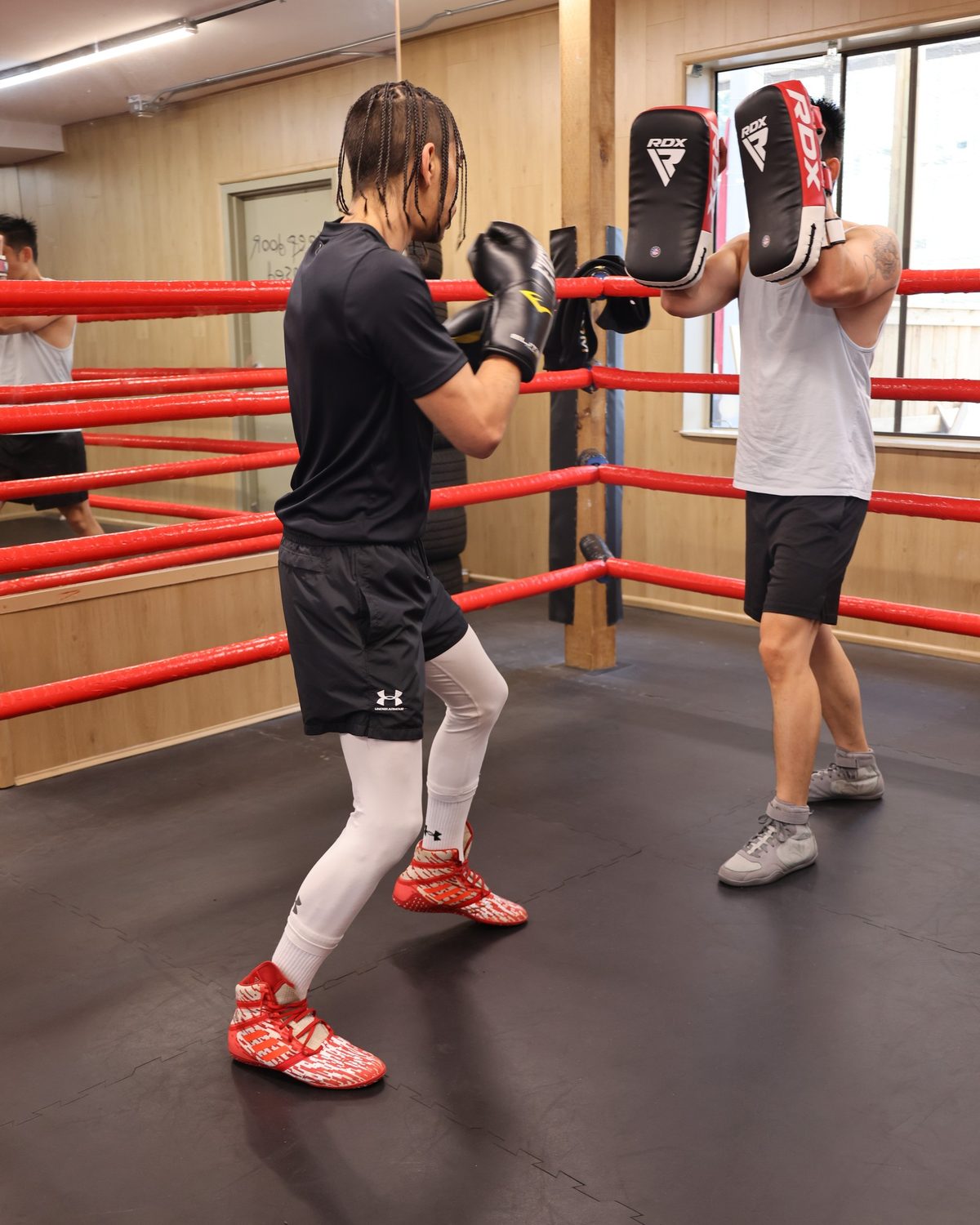
- Minutes 10 to 25: technique block. The coach demonstrates one idea, for example the jab with a step back. You practise it in the mirror, then with a partner holding pads or on the bag. Coaches walk the room correcting.
- Minutes 25 to 45: rounds. Timed rounds, usually two or three minutes with short rests, applying that idea at rising intensity on the heavy bags or with pad work.
- Minutes 45 to 55: conditioning finisher. Core work on the mats, burpees, push-ups or a short circuit, depending on the class.
- Minutes 55 to 60: cool-down. Easy movement and stretching while your breathing settles.
Do not skip those last five minutes to beat traffic back up 152 Street. Cleveland Clinic exercise physiologists explain that a proper cool-down brings heart rate, blood pressure and breathing back down gradually, and suggest three to ten minutes, with more after high-intensity intervals. Harvard Health adds that regular stretching keeps muscles flexible and preserves range of motion in the joints.
How to Judge Boxing Classes Surrey Riders Are Weighing Up
Use this checklist on any of the boxing classes Surrey has to offer, including ours.
1. Watch what the coach does while you punch
Good coaches move constantly, fixing a dropped hand or a back foot and explaining why. If the coach stays at the front of the room calling out combinations and never corrects anyone, that is a cardio class wearing boxing gloves. You will sweat, but you will not learn to box.
2. Ask how beginners are introduced
You want to hear something specific: we teach you to wrap, we start you on stance and the jab, we pair you with someone patient, we keep you away from contact until you are ready. Vague answers like “you’ll pick it up” are a warning sign.
3. Look at the ratio of technique to exhaustion
Any gym can make you sweat. Ask how many classes a week are devoted to technique, and whether conditioning and skill work are separated. At Kingdom Athletics the timetable itself answers that question: Technical and Conditioning are different classes at different times.
4. Check the culture around contact
Ask how sparring works. The right answer involves the words “light”, “controlled”, “coach-supervised” and “optional”. Boxing BC’s Safe Sport commitment describes an obligation to protect the health, safety and physical and mental well-being of everyone in the boxing community. Recreational boxing classes Surrey and White Rock gyms run should hold themselves to the same spirit.
5. Meet more than one coach
A gym that depends on one person is fragile. At Kingdom Athletics you will meet Matt, the owner; Kenny, a strength trainer and boxer; Spencer, an athletic trainer, boxer and kickboxing and Muay Thai coach; Fabian, an athletic trainer and boxer; Arion, an athletic trainer and strength coach; Khaila, an athletic trainer who coaches fitness boxing; and Nick, who works in rehab, fascial release and stretching therapy. Our mission and coaching philosophy explains how we work as a team.
6. Notice who else is training
Look around the room. Are there beginners, women, people over 40? If the only people training are young competitive fighters, a newcomer can feel out of place. We have written specifically about boxing for women in White Rock because it is one of the most common questions we hear.
7. Be honest about the timetable
Write down the three slots you could realistically attend every week, including travel. This is where most boxing classes Surrey residents sign up for fall apart: the class looked great, but it was at 5:30 pm and the drive home from work made it impossible.
Safety Basics for Anyone Starting South Surrey Boxing
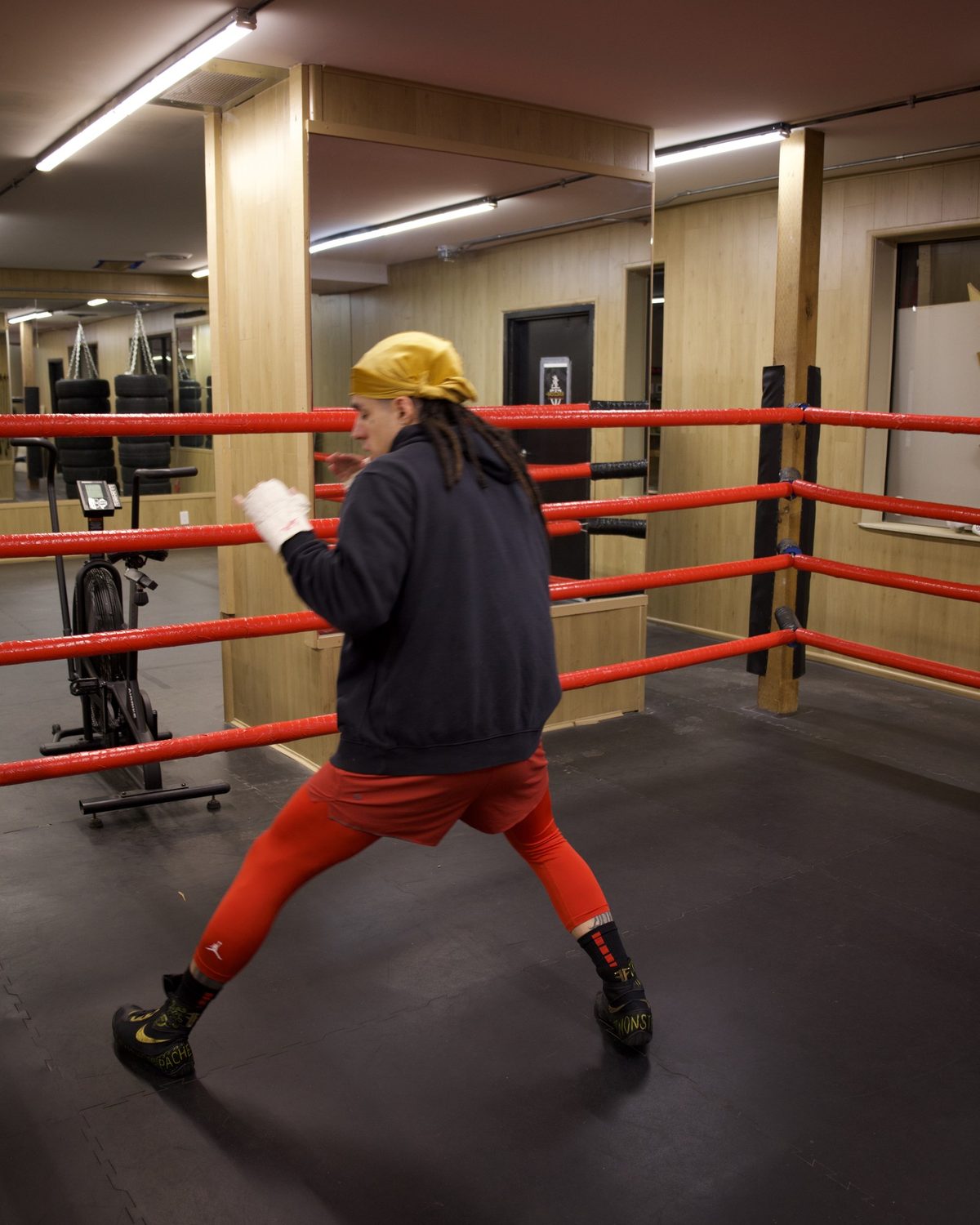
Boxing is a contact sport, even when you never spar. Whichever boxing classes Surrey or White Rock you choose, your hands, wrists and shoulders absorb a lot of force and your heart and lungs work hard. That should shape how you start, not scare you off.
- Talk to your doctor first if you need to. HealthLink BC advises that you talk to your doctor before becoming more active, especially if you have not been active for a while or have health problems. Tell your coach about anything relevant too.
- Always wrap your hands. Cleveland Clinic’s overview of boxing workouts stresses that wrapping your hands and wrists and wearing the right gloves keeps you protected, and recommends two to three workouts a week to allow recovery.
- Punch with a correct fist. A boxer’s fracture is a break in the fifth metacarpal, the bone connecting the pinkie finger to the wrist, most often caused by hitting something hard with a closed fist. Land with the first two knuckles, keep the wrist straight, and let a coach check your fist early on.
- Respect your head. According to Parachute, Canada’s injury prevention charity, a concussion is a brain injury that does not show up on routine scans, and anyone who might have one should stop the activity right away and be assessed by a doctor. Headaches, dizziness or blurred vision after contact mean you sit out.
- If your joints are fragile, adapt. A physical therapist quoted by Harvard Health notes that people with osteoporosis or osteoarthritis of the hands should be very careful and consider shadowboxing only. Tell us and we will adjust your class.
Our complete guide to boxing gloves for beginners explains weights, closures and what to avoid buying online.
Gear You Actually Need (and What You Can Skip)
Starting boxing classes Surrey or White Rock way does not take much gear. Here is the honest list.
- Hand wraps. Essential from day one. Buy two pairs so one can dry while you wear the other.
- Gloves. Many beginners start with a 12 or 14 ounce pair for bag and pad work. Heavier gloves are usual for sparring; ask a coach before buying.
- Comfortable athletic clothing and indoor shoes. Flat, light shoes are better than thick running shoes for footwork.
- Mouthguard. Not needed until you spar, but essential then.
Skip boxing boots and anything marketed as a shortcut for now.
Your First Month: A Week-by-Week Plan
This is the plan we would hand a friend from Newton or Cloverdale starting boxing classes Surrey or White Rock way for the first time. It assumes three sessions a week, which lines up with both the Canadian guidelines and Cleveland Clinic’s two-to-three-sessions recovery advice. If you can only manage two, keep the Technical classes and drop a Conditioning one.
| Week | Sessions | Main focus | You will know it is working when |
|---|---|---|---|
| Week 1 | 2 Technical, 1 Conditioning | Wrapping, stance, guard, jab and cross, basic footwork | You can wrap your own hands and hold your guard for a full round |
| Week 2 | 2 Technical, 1 Conditioning | Hooks, the 1-2-3 combination, stepping in and out of range | The coach corrects the same thing less often |
| Week 3 | 2 Technical, 1 Kickboxing or Conditioning | Slips and rolls, returning punches after defence | You breathe out on every punch without thinking about it |
| Week 4 | 2 Technical, 1 Conditioning, optional Saturday visit to watch Light Sparring | Uppercuts, putting four-punch combinations together, pacing a three-minute round | You finish the last round with your hands still up |
Week 1: learn to stand
Everything in boxing comes from the stance. Feet roughly shoulder-width apart, lead foot pointing at your target, rear heel slightly raised, knees soft, chin down, hands by your cheekbones. Harvard Health’s article on fitness boxing points out that simply holding this wide, bent-knee crouch strengthens your core, back and legs. Homework: ten minutes of mirror shadowboxing on off days, jabs only. Our beginner boxing intro has pictures of each position.
Week 2: add power the right way
The cross and the hook feel like arm punches until someone shows you how they start at the feet. The rear foot pivots, the hip turns, the shoulder follows, and the arm is just the last link in the chain. Drill it by throwing a slow cross and freezing at full extension: rear heel up and turned, chin tucked behind your lead shoulder.
Week 3: start defending
Defence is what separates boxing from bag-hitting. In Technical Class you will practise slipping a jab by moving your head just off the centre line, and rolling under a hook by bending the knees rather than the waist. The key habit is always returning a punch after you defend. Slip, cross. Roll, hook.
Week 4: string it together
By now you have the ingredients for real combinations. Work on four-punch strings like jab, cross, lead hook, cross, and finish every combination by moving, either stepping back out of range or pivoting off to the side. If you are curious, watch a Saturday Light Sparring class; it is a great lesson in timing.
For more about the specific surprises of those first sessions, including the ones people rarely warn you about, read ten things nobody tells you before your first boxing class and our four steps for your first month at a boxing club.
Making Training Stick Around a Surrey Commute
The biggest threat to progress in any boxing classes Surrey commuters attend is not a lack of talent. It is the Tuesday in November when it has rained for nine straight days, King George is crawling, and the couch looks wonderful. Plan for that Tuesday now.
Anchor your classes to something you already do
If you work in South Surrey or White Rock and live further north, training straight after work lets the traffic thin out while you are in class. If you work from home, the noon class may suit you better. Pick the slot that makes the drive easier, not harder.
Find a training partner
HealthLink BC’s advice on staying active is simple and it works: find an activity partner, add variety, and when you slip up, work out what happened and get straight back into your routine. Carpooling with a friend from your neighbourhood covers the first two at once.
Mix classes to stay fresh
Because one flat membership covers every class, you can rotate. If Technical is feeling mentally heavy one week, drop into Kickboxing. If you are sore, swap Conditioning for an extra Technical session where the pace is slower.
Use the rest of the week well
The Canadian guidelines also recommend several hours of light activity and 7 to 9 hours of good-quality sleep. That is where the promenade or a walk around your own neighbourhood comes in. If you want to add structured strength work, our coaches have written about strength training that supports boxing, and personal training is there for one-to-one work.
The reward is real. The World Health Organization’s fact sheet on physical activity states that people who are insufficiently active have a 20 to 30 percent higher risk of death than people who are sufficiently active, and that 31 percent of the world’s adults do not meet the global recommendations. The Heart and Stroke Foundation also lists better sleep and lower stress among the benefits of staying active. We would add a less measurable one: something to look forward to after work.
Beyond Fitness: Why Boxing Keeps People Coming Back
Boxing asks you to stay calm while tired, to think while moving, and to keep your hands up when you would rather not. Those habits leak into the rest of life, and our piece on why it is never too late to start martial arts as an adult explores that side of training.
There is also real skill to chase: learning to slip a jab and land a counter never gets boring. Boxing sits well alongside self defence skills too, and if you are unsure how much coaching you need, read our look at group fitness versus personal training, or browse all classes at Kingdom Athletics.
Boxing Classes Surrey FAQ: Your Questions Answered
Do I need any boxing experience to join?
No. Plenty of people looking at boxing classes Surrey has to offer have never boxed. Start with the Technical Class, tell the coach it is your first session, and we will build from the stance up.
How far is Kingdom Athletics from central Surrey?
We are at 1493 Johnston Rd #101 in uptown White Rock. Because 152 Street becomes Johnston Road, the drive from Fleetwood or Guildford is essentially one straight road south. Aim to arrive 10 to 15 minutes early.
Will I have to spar?
Never. Light Sparring runs on Saturdays at 10:00 am and 11:00 am, and it is entirely optional. If you want to try, a coach will help you decide when you are ready.
What should I bring to my first class?
Comfortable athletic clothes, indoor shoes, a water bottle and hand wraps if you have them. No gloves yet? Ask when you book.
Can my kids train while I do?
Our Junior Gloves program runs at 4:00 pm on weekdays for kids aged 6 to 12, and taekwondo classes for younger children start from 3:15 pm on weekdays.
How many classes a week should a beginner take?
Two to three is ideal. That gives you enough repetition to learn and enough rest to recover.
Your Next Step: Boxing Classes Surrey Residents Can Start This Week
The best boxing classes Surrey residents can choose are the ones they will still be attending in six months. That means skilled coaching, a clear mix of technical, conditioning, kickboxing and sparring classes, a culture that welcomes beginners, and a timetable and route that fit real life. Among the boxing classes Surrey commuters can reach, we think a short drive down 152 Street or King George Boulevard to White Rock is well worth it.
Look over the current class schedule, pick the slot that suits your commute, then get in touch to book your first class or call (778) 237-5905. Bring your wraps and tell the coach it is your first time. You can also browse more beginner guides on the Kingdom Athletics blog or head to our homepage to learn more about the gym.