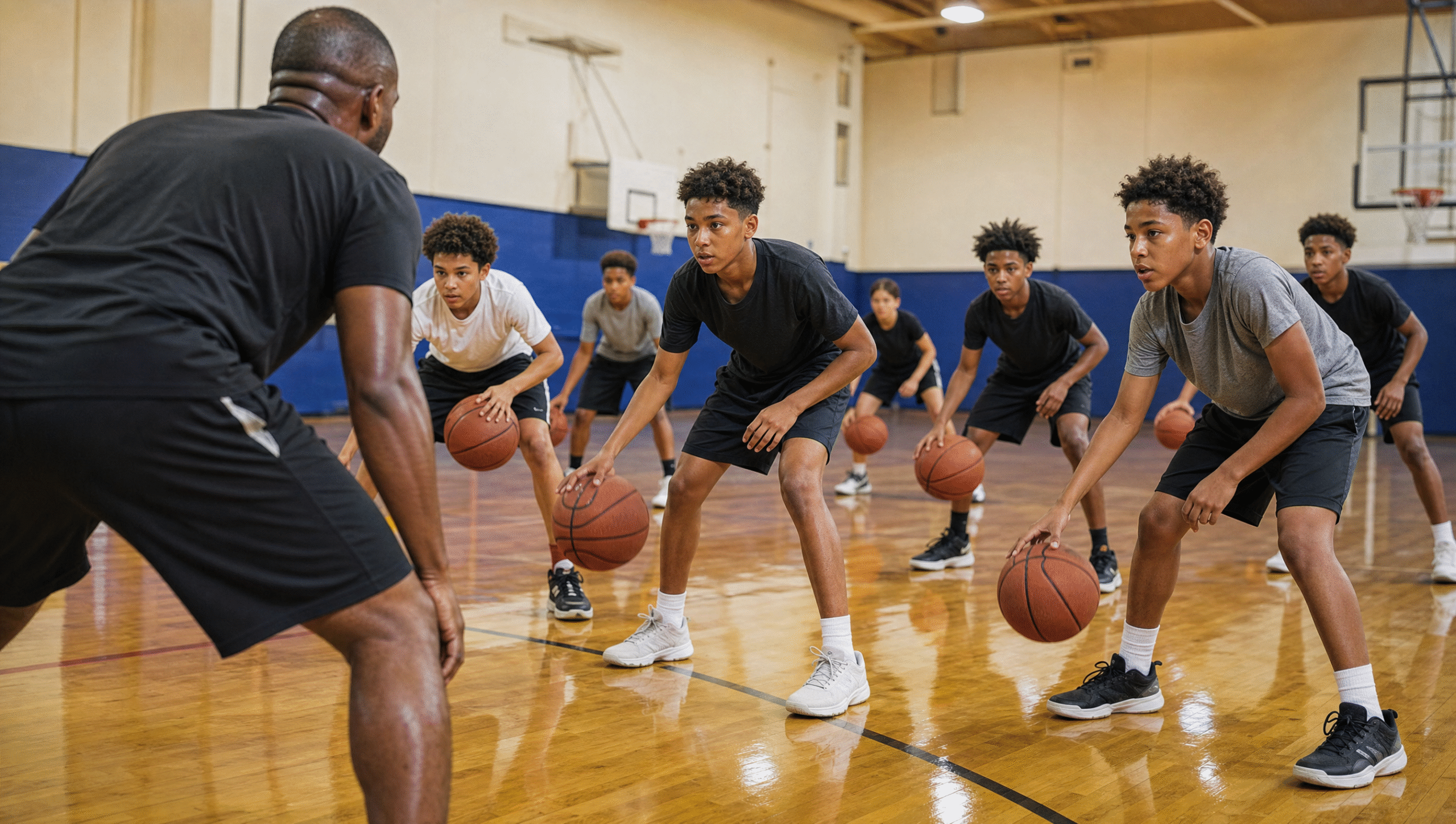
Great youth football training is the foundation of every young athlete’s success on the field. Whether your kid is just learning the game or chasing high-performance honors, structured youth football training builds the speed, agility, and toughness that transfer directly to game day. This guide walks through 6 proven drills and the principles behind them.

Why youth football training is different from adult training
Young athletes are not small adults. Their nervous systems are wiring up coordination, their joints are still growing, and their attention spans demand variety. Quality youth football training accounts for all three. Sessions are short, varied, and skill-rich — not weight-room grinders.
According to the American Academy of Pediatrics, kids develop best when training emphasizes skill and play over volume.
1. Linear speed mechanics
Sprinting form is the single biggest leverage point in youth football training. Drill A-skip, B-skip, wall drives, and 10-yard accelerations. Teach knee drive, ankle stiffness, and arm action. Small form fixes here produce massive speed gains over a season.
2. Lateral agility and change of direction
- 5-10-5 pro shuttle
- L-drill (three-cone)
- Lateral cone hops
- Reactive mirror drills
Football is rarely run in straight lines. Change-of-direction work separates average players from great ones at every age.
3. Ball-handling under pressure
Whether your athlete is a quarterback, running back, or receiver, secure ball-handling is non-negotiable. Drill high-and-tight carry, hand-off mechanics, and route stems with a coach reaching for the ball. Youth football training that ignores this guarantees fumbles in real games.
4. Tackle technique (safe and progressive)
Modern youth football training teaches shoulder-led, heads-up tackling. Drill it slow, then medium, then live with a coach signing off on form. Done right, this skill protects necks and reduces injury rather than causing it.
5. Position-specific footwork
Linemen need 3-point stance footwork and pull steps. Skill players need release moves, breaks, and back-pedals. The best youth football training programs split position-specific work into short, focused blocks every session.
6. Position-relevant conditioning
Football is a power sport, not a long-distance sport. Conditioning should mimic play length: 5–8 second bursts with 20–40 second recovery, repeated for 8–12 sets. This is the energy system football actually uses.
What a great youth football training session looks like
- 10 min dynamic warm-up
- 10 min speed mechanics
- 15 min agility / footwork
- 15 min position-specific skill work
- 10 min conditioning
- 5 min cool-down + recap
Common mistakes in youth football training
- Too much hitting, not enough technique
- Skipping speed mechanics in favor of conditioning
- Ignoring weak-side or off-position skill development
- Year-round one-sport specialization too early
- Not enough recovery between hard sessions
How parents support youth football training at home
- Prioritize sleep — 9 to 11 hours is the sweet spot
- Make protein and water habits, not afterthoughts
- Encourage other sports for off-season cross-training
- Let coaches coach — back off the sideline critique
FAQs about youth football training
What age should we start?
Movement and skill work can begin at 7 to 8. Live contact typically waits until 10 to 12 depending on league rules.
How many sessions a week?
2 to 3 quality sessions plus practice and one game day is plenty up to age 14.
Do you offer 1-on-1 training?
Yes — both private and small-group youth football training are available.
Start youth football training with us this season
Our youth football training programs at Kingdom Athletics combine speed, skill, and intelligent conditioning — coached by people who actually played the game. Whether your kid is rec league or all-star, we will meet them at their level and build from there.
Want to chat? Visit our contact page to book a free assessment.