Great youth basketball training is not just running plays — it is teaching young athletes the habits that win games and protect their bodies. Whether your child plays house league, school ball, or rep, the right youth basketball training program builds confidence, coordination, and basketball IQ that will pay off for years. This guide breaks down 7 proven drills and the structure every program should have.
Why youth basketball training matters at every age
Skills built between ages 7 and 14 form the technical ceiling for the rest of a player’s career. Footwork, handle, and shooting form learned early become automatic. Bad habits learned early become very hard to unlearn later. That is why structured youth basketball training is worth the investment even for casual players — it sets them up for whatever level they eventually want to reach.
According to the American Academy of Pediatrics, kids benefit most when sport practice emphasizes skill, play, and recovery — not just game volume.
1. The Mikan drill (finishing both hands)
Right under the rim, the player alternates left- and right-hand layups for 30 to 60 seconds. Simple, brutal, and the fastest way to build ambidextrous finishing. Every solid youth basketball training session starts with the Mikan.
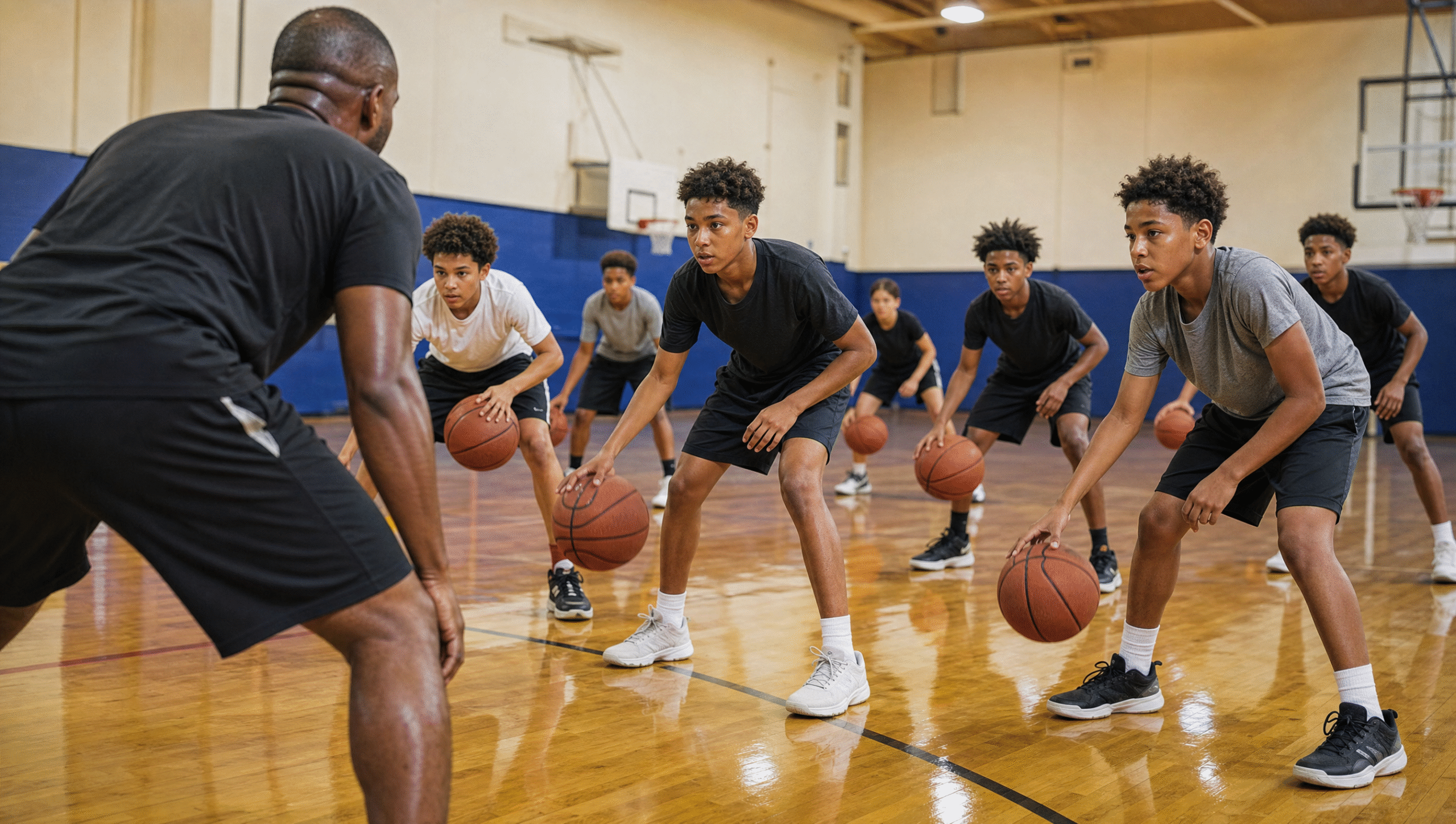
2. Stationary ball-handling series
- Pound dribbles (right, left, alternating)
- Crossovers (low, hard, eyes up)
- Between-the-legs and behind-the-back
- Two-ball dribbling for advanced players
Two ball drills are the secret sauce. They build coordination both hands can handle game pressure with.
3. Form shooting from 3 spots
Five shots each from close, mid, and free throw, with strict mechanics. Elbow under the ball, follow-through held, balanced base. Quality over quantity — this is where consistent shooting form is built.
4. Defensive slides and close-outs
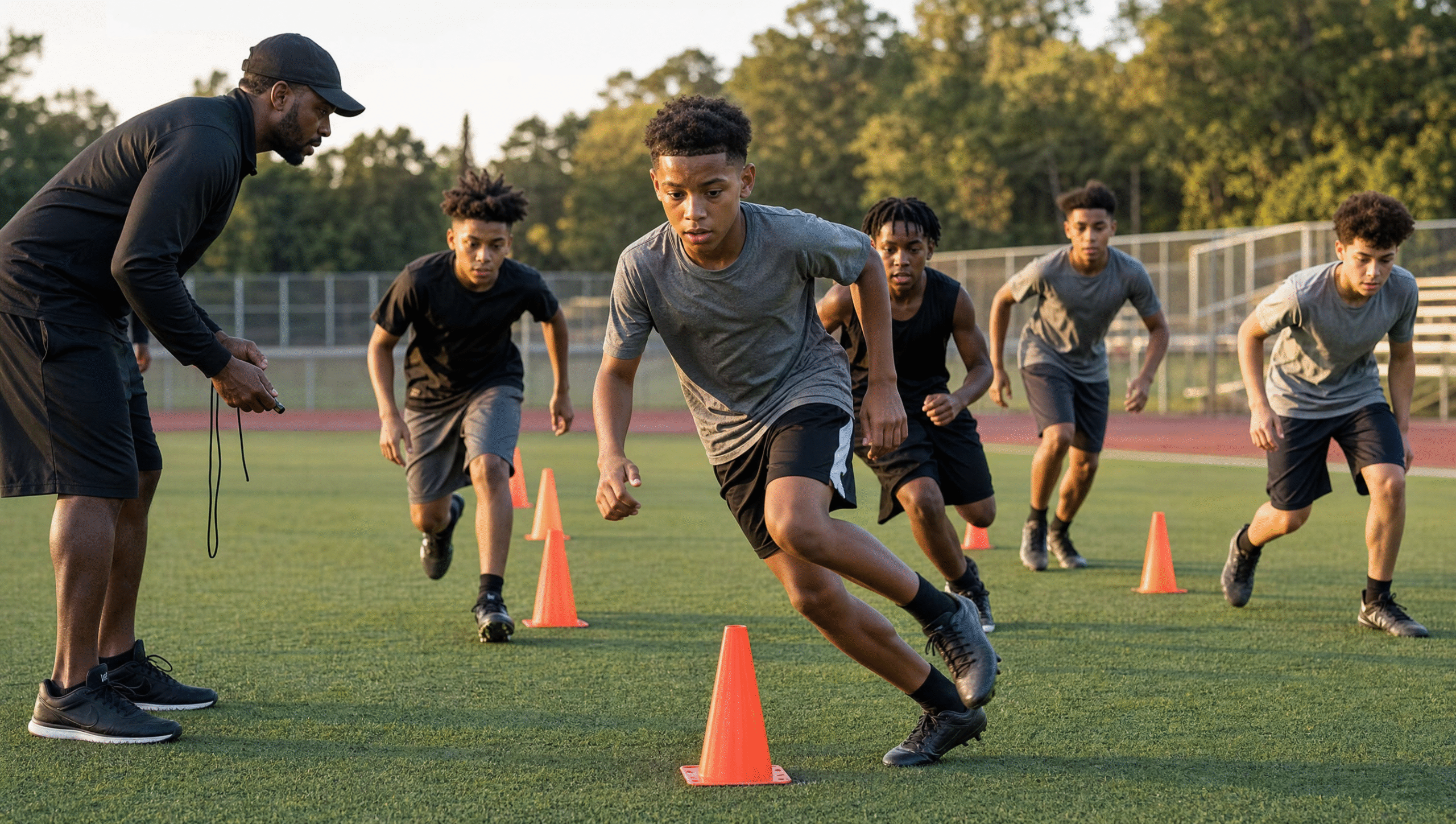
Defense wins games at every level. Drill lateral slides without crossing the feet, then add close-outs — sprinting at a shooter and breaking down into stance. This single skill is the difference between a defender who gets blown by and one who forces tough shots.
5. 1-on-1 from the wing
Two players, one ball, live action from the wing. Offense gets three dribbles. This drill teaches reading the defender, attacking close-outs, and finishing through contact. Youth basketball training without live 1-on-1 reps leaves a huge gap in real-game readiness.
6. Transition decision-making
3-on-2 and 2-on-1 fast-break drills force quick decisions: pass, attack, or pull up. This is where basketball IQ grows. The best youth basketball training programs run these drills every session because they translate directly to live game outcomes.
7. Conditioning with the ball
- 17s (full-court suicides)
- Ladder drills with a ball
- 5-spot shooting under fatigue
Game shape is different from gym shape. Conditioning with a ball in hand mirrors the demands of actual play.
What a great youth basketball training session looks like
- 5 min dynamic warm-up
- 10 min ball-handling block
- 10 min shooting block
- 10 min defensive footwork
- 15 min live 1-on-1 / small-sided
- 10 min conditioning
- 5 min cool-down + recap
Common mistakes in youth basketball training
- Too much scrimmaging, not enough skill work
- Ignoring weak-hand development
- Skipping defensive footwork
- Specializing in one position too early
- Not enough rest between hard sessions
FAQs about youth basketball training
What age should we start?
Fundamentals can begin as young as 6 or 7. Real skill work typically starts around 8 to 10.
How many sessions a week?
2 to 3 skill sessions plus 1 game day is ideal up to age 12. Older players can handle 4 to 5.
Do you offer 1-on-1 sessions?
Yes — private and small-group youth basketball training are both available.
Get your young athlete into youth basketball training today
Our youth basketball training programs at Kingdom Athletics combine private coaching, small-group skill work, and game-situation drills built specifically for developing athletes. Whether your child is brand-new to the sport or chasing rep ball, we will meet them where they are and build from there.
Want to learn more? Visit our contact page to book a free assessment.